For overall shots, a mirrorless camera kit with a suitable standard zoom could be a good starting point. For tiny seams and fabric textures, however, the magnification of the lens you actually use is what matters. Getting consistent fabric colours also depends on steady lighting, a suitably adjusted white balance and a fixed set-up – not just the camera. Canon Academy also notes that artificial light can cause banding or colour shifts, so check test shots using your specific light source.
Who is this equipment for?
Sellers with a range of fabric colours
If you want to show several colour options for a bag in a way that makes them easy to compare, consistent lighting and a suitably adjusted white balance can help. Nikon USA explains how white balance can affect colour reproduction, while Canon Germany describes the benefits of using a consistent frame for product ranges.
Beginners taking overall shots of bags
If your main aim is to show the whole bag, check whether the supplied lens gives you the frame you want from the shooting distance available. Canon Germany and Nikon Germany each list a standard zoom with the kits considered here.
Photographers capturing seam details
If you want seams, fabric textures or small fastenings to fill more of the frame, check the lens magnification and mount together. Canon Germany lists the close-up limits of the RF-S 18–45 mm; Nikon Germany describes a separate Z-mount macro lens with a 1:1 reproduction ratio.
What should you look for when buying?
Standard zoom for overall shots
A good fit if: You want to show the shape and size of the whole bag, and you have enough space to get the frame you want.
Consider: A kit zoom is not automatically a macro lens for very small details.
Compatible macro lens for details
A good fit if: You want seams, fabric texture or fastenings to appear larger; the lens and camera mount must be compatible.
Consider: The NIKKOR Z MC 50 mm 1:2,8 is a separate add-on and is not included in the Z50II standard zoom kit considered here.
Existing camera with a controlled set-up
A good fit if: Your framing and level of detail are already adequate, and you want to start by adjusting the lighting, white balance and camera position.
Consider: A fixed set-up cannot make up for a lack of close-up capability; test your light source for banding and colour shifts.
| Buying priority |
What to check before buying |
Who is it most relevant to? |
| Consistent fabric colours |
Check the white balance and, if you plan to edit your images, the photo file format. Photograph a reference under the lighting you’ll actually use. |
If you want to show colour options side by side, a consistent starting point matters more than a single camera-body specification. Around 33% of consumers make consistent fabric colours their main priority. |
| The whole bag in the frame |
Compare the supplied focal-length range with the bag size, shooting distance and tripod position; check whether you’re buying a kit or a body-only camera. |
If you want to photograph the entire bag in the space available, the lens needs to give you the frame you want. Around 27% of consumers prioritise an overall view. |
| Showing seams and fabric texture up close |
Check the magnification ratio, mount and what’s included. Also consider whether the space needed between the camera and subject leaves room for lighting. |
If you want small seams, fabric textures or fastenings to fill the frame, the lens is key. Around 20% of consumers prioritise these details. |
| Repeatable shots |
Plan a fixed camera position and check test shots with your light for banding or colour shifts. Check the camera model’s documentation for anti-flicker settings. |
If you want to capture several views consistently, a stable set-up and tested lighting are important. Around 20% of consumers focus on consistent image sets without distracting effects from artificial light. |
Common buying mistakes
-
Assuming more megapixels mean better close-ups
Sensor resolution alone doesn’t tell you how large seams or fabric textures will appear in the frame. For the RF-S 18–45 mm at 45 mm, Canon specifies a maximum magnification of 0.16x with autofocus and 0.26x with manual focus; Nikon gives a 1:1 reproduction ratio for the separate NIKKOR Z MC 50 mm 1:2,8.
First decide how large you want details to appear in the image. Then check the specific lens rather than looking only at the camera body’s resolution.
For very small details, you may need an additional macro lens that’s compatible with your camera mount.
-
Expecting a new camera body alone to solve fabric colour issues
White balance, the light source and your entire shooting process all affect how fabric colours look in your photos. Changing the camera body alone won’t automatically make your shots more consistent.
Test the lighting with a reference and a consistent set-up before deciding that colour differences mean you need a new camera.
For a series of products, you may need to allow extra time for test shots and colour matching.
-
Treating a camera body, kit and accessories as the same package
The offers considered here differ in the lens and accessories included. Nikon explicitly notes that the Z50II kit does not include a charger.
Before buying, compare the exact offer name and the list of items included.
-
Assuming banding under artificial light means the camera is faulty
Canon Academy describes banding and colour shifts as possible effects when photographing under artificial light. This alone doesn’t prove that the camera body is faulty.
Check test shots using your light source and look up the settings documented for your specific camera model.
Camera brands to consider
Canon
The EOS-R50 kit with RF-S 18–45 mm is an option for overall shots. For very small details, bear in mind the limits of the kit zoom.
- Canon confirms that the kit includes the RF-S 18–45 mm lens and uses the RF mount.
- For this lens at 45 mm, Canon specifies a maximum magnification of 0.16x with autofocus or 0.26x with manual focus. Image stabilisation does not make it a 1:1 macro lens.
- Canon Academy’s guidance on artificial light does not confirm that the EOS R50 has a specific anti-flicker function.
Nikon
The Z50II kit with Z DX 16–50 mm is a standard zoom option; the NIKKOR Z MC 50 mm 1:2,8 is a separate macro lens for details.
- Nikon gives the NIKKOR Z MC 50 mm 1:2,8 a 1:1 reproduction ratio and confirms that it can be used with Z-series DX cameras.
- The macro lens is not included in the Z50II standard zoom kit considered here.
- Nikon notes that the Z50II kit considered here does not include a charger.
Fujifilm
The X-S20 with X mount is a body-only option if you want to choose your lens and RAW photography workflow separately.
- Fujifilm’s specifications list 26.1 million effective pixels, 14-bit RAW and mechanical and electronic shutters.
- These camera-body specifications don’t tell you how well an unspecified lens performs for close-ups, nor do they prove better colour accuracy than other brands.
Sony
The ILCE-6400 with E-mount is an APS-C camera-body option if you already have a compatible lens or plan to choose one separately.
- Sony lists 24.2 million effective pixels and RAW shooting for the ILCE-6400.
- The camera-body specifications alone don’t tell you exactly what’s included in a kit or whether it’s suitable for very small bag details.
Add-ons for lighting and set-up
The following products add controlled lighting or a repeatable set-up to a camera you already own; they are not cameras and don’t replace lenses.
 No image available
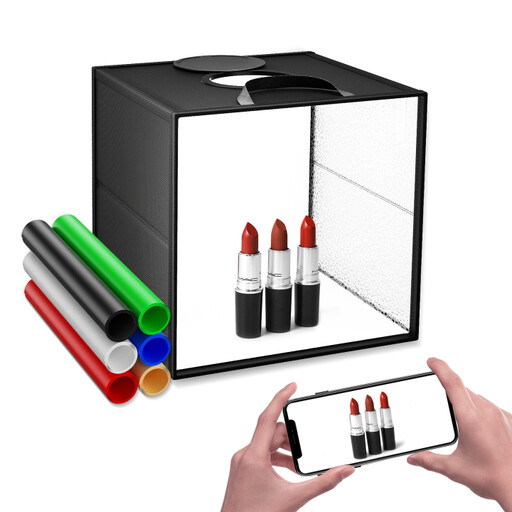
30 × 30 cm photo box with dimmable lighting
Can help create a controlled set-up for product photography with a camera you already own.
Foldable; the product title lists six coloured backgrounds.
View at Joybuy
 No image available
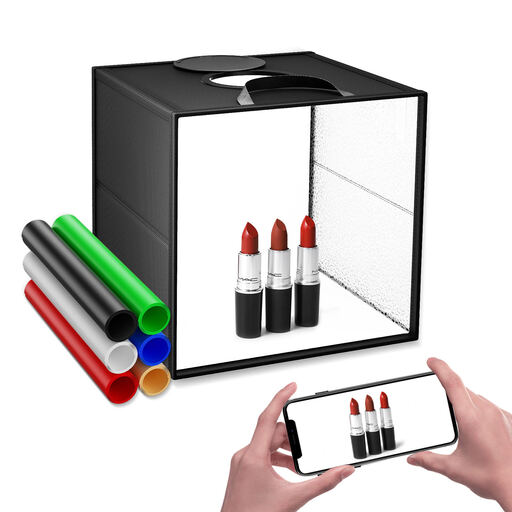
Photo box with dimmable 120 LEDs
An add-on for shooting under artificial light with a camera you already own.
The product title lists 5600 K, 120 dimmable LEDs and six coloured backgrounds.
View at Joybuy
 No image available
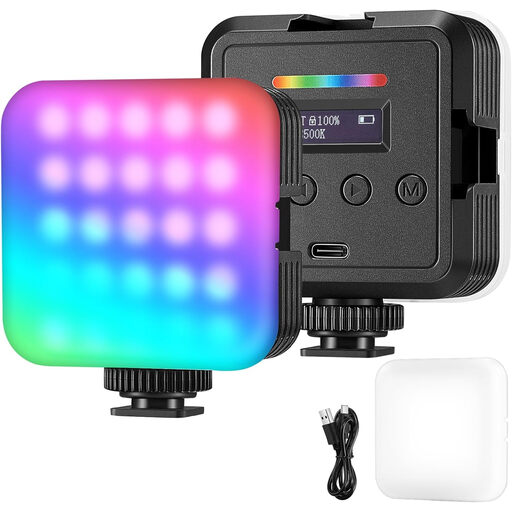
RGB LED light for photography and video
Can provide extra lighting for photography with a camera you already own.
The product title lists RGB and adjustable lighting modes.
View at Joybuy
 No image available
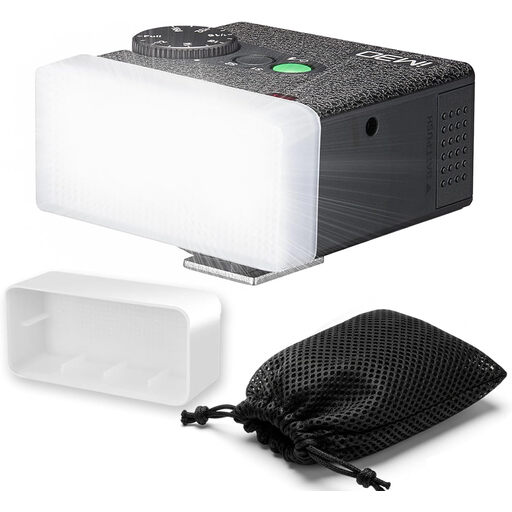
Godox IM30 Mini Camera Flash Kit
A manual flash option to add to a camera you already own.
The product description lists a diffuser and seven manual power levels. TTL and HSS are not supported.
View at Joybuy
 No image available
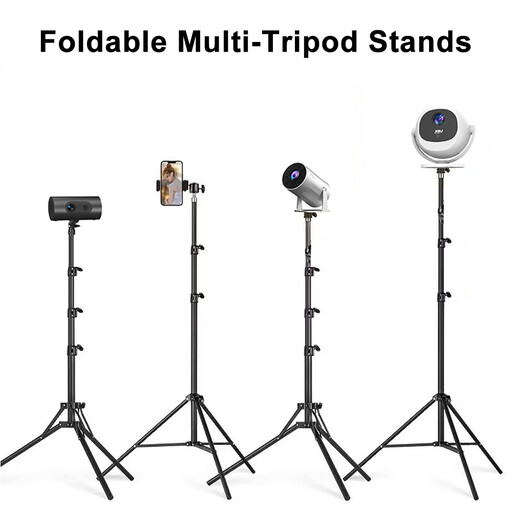
Height-adjustable projector stand with camera mount
Can help keep the camera in a fixed position for repeatable shots.
The product details list a height adjustment from 40 to 160 cm, a folded length of 60 cm and a 1/4-inch connection.
View at Joybuy
Frequently asked questions
Is a standard zoom enough to photograph an entire fabric bag?
A standard zoom can be a good starting point if the framing and shooting distance work in your space. Canon and Nikon include standard zooms in the kits considered here. Check the distance and size of your bag to see whether it will fit fully in the frame.
How can I get more consistent colours under artificial light?
Keep the lighting as consistent as possible and photograph a suitable reference under the same light source. Nikon USA shows that automatic white balance and white balance set using a reference can produce different results. Check how your fabrics look rather than treating any camera brand as a guarantee of accurate colour.
How can I avoid banding or colour changes in my photos?
Take test shots using the lighting you’ll actually use and check them for banding and colour shifts. Canon Academy describes these as possible effects under artificial light and discusses anti-flicker functions on some EOS cameras. You’ll need to check separately whether a function can help with your specific model.
What extras should I check when buying a kit?
Before buying, check whether a lens and charger are included. Nikon notes that the Z50II kit considered here doesn’t include a charger; a 1:1 macro lens is not part of this standard zoom kit.
Can I easily return a camera bought online in Germany?
According to Verbraucherzentrale, consumers generally have a 14-day right of withdrawal for eligible distance-selling contracts. You must notify the seller that you’re withdrawing from the contract; simply sending the item back is not a reliable way to do this. Check the exceptions and how a business purchase is treated under the specific contract.


