Households dealing with muddy marks on footstools
If muddy marks end up on your fabric footstool after an outing, an upholstery tool that’s easy to reach is important for treating them precisely.


For muddy marks on a fabric footstool, a compact spray-extraction spot cleaner with an upholstery nozzle is an obvious choice – but only if the care instructions for that particular fabric allow wet cleaning. For occasional spots, a targeted nozzle and cleaning the machine afterwards are key. If you regularly clean other surfaces too, tank capacity and reach become more important. Steam isn’t essential for mud stains, and it must also be suitable for the fabric.
If muddy marks end up on your fabric footstool after an outing, an upholstery tool that’s easy to reach is important for treating them precisely.
If you want to clean with water, first check the care instructions for that particular fabric. Klar GmbH points out that a W care code doesn’t mean you can use any amount of water.
If you regularly clean other suitable upholstery or carpets as well as your footstool, tank capacity, reach and caring for the machine after use become more important.
For a fabric footstool, first check that wet cleaning is suitable. Then choose the nozzle, machine care features and tank capacity to suit how you plan to use it.
A good choice if: you want to treat individual spots on a footstool that’s suitable for wet cleaning and store the machine without taking up much space.
The trade-off: Smaller tanks may need filling or emptying more often when you’re cleaning several surfaces.
A good choice if: you regularly clean other suitable upholstery or carpets and want to refill less often.
The trade-off: Greater tank capacity or reach may mean the machine takes up more space and is more effort to handle.
A good choice if: you also want to use the additional mode on other surfaces that are explicitly suitable for it.
The trade-off: Steam doesn’t remove the need to check the care instructions for the specific fabric, or to extract water when wet cleaning.
| Buying priority | What to check before buying | Who is this important to? |
|---|---|---|
| Fabric compatibility and residual moisture | Check the care instructions to see whether wet cleaning is suitable; test the water and recommended cleaning solution on a hidden area, then let it dry. | If I want to avoid soaking or discolouring the fabric unnecessarily, I’ll first check that it can withstand the treatment. Around 36 % of consumers would prioritise fabric compatibility. |
| Targeted treatment for mud | Check which upholstery and crevice nozzles are included with the specific model; remove as much loose dirt as possible without rubbing it in. | If there are only a few muddy marks, I want to reach the spots and edges of the footstool precisely, rather than treating the whole surface unnecessarily. Around 29 % of consumers would prioritise targeted mud removal. |
| Ease of use and machine care | Check where you’ll keep the machine and how you’ll store it; compare how accessible the dirty-water tank is and whether the machine has a hose-rinsing function. | For occasional use, I want setup, emptying and storage to be straightforward. Around 21 % of consumers would prioritise ease of use and machine care. |
| Cleaning other surfaces | Compare the clean- and dirty-water tanks separately; check the cable, hose and included nozzles for use on other surfaces. | If I regularly clean other suitable upholstery or carpets too, reach and fewer refills matter to me. Around 14 % of consumers would prioritise using the machine on several surfaces. |
The machine’s stated use describes what the cleaner is designed for, not whether a particular furniture fabric can be treated. Unsuitable wet cleaning can cause water marks or colour changes.
Check the care instructions first and test your planned treatment on a hidden area.
The manufacturer’s claim of improved stain removal is a manufacturer’s own statement; the stated short drying time applies to the independent steam mode. Neither proves what the result will be on your footstool.
First check whether the fabric can be wet cleaned and whether spraying and extraction will meet your needs. Only then consider any additional mode.
An additional mode may go unused if the care instructions don’t allow you to use it on the fabric.
According to the manufacturer, the Kärcher SE 2 Spot Care has a 1,5 l clean-water tank and a 0,8 l dirty-water tank. Tank sizes vary between models.
Compare both tanks and check how easy they are to empty and clean.
A smaller dirty-water tank may mean extra stops to empty it during longer cleaning sessions.
The package may include a limited amount of cleaning solution, which may not be enough for repeated use.
Check what’s included, what the machine instructions recommend and whether suitable replacements are available.
Repeated cleaning may require a suitable cleaning solution and, where necessary, replacement parts.
The SE model ranges include machines for targeted stain treatment, as well as versions supplied with upholstery and crevice nozzles.
SpotClean upholstery cleaners are available in several versions; the HydroSteam Pro comes with additional steam modes.
The Clean It IN5020F0 is designed to tackle stains on suitable upholstery and other fabric surfaces.
The AQUA FleckWasher is aimed at households looking to clean other suitable surfaces as well as upholstery.
The StainStriker PX200EUT is another compact machine for tackling stains.
The Joybuy products below are listed for targeted wet cleaning of upholstery. The care instructions for your particular footstool fabric remain essential.
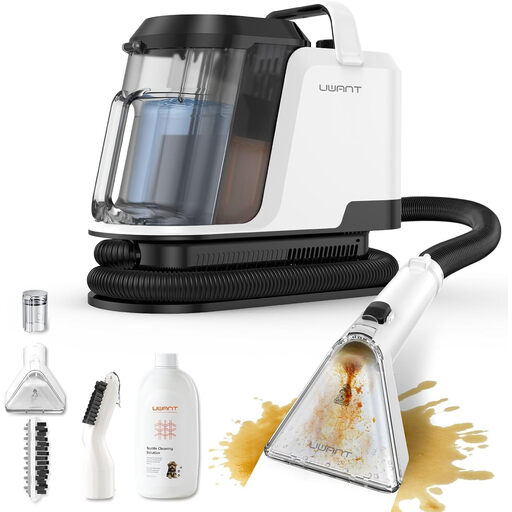 No image available
For individual stains on upholstery that’s suitable for wet cleaning; check the footstool’s care instructions first.
The product name lists 18 kPa, 600 W, separate clean- and dirty-water tanks, and one-button self-cleaning.
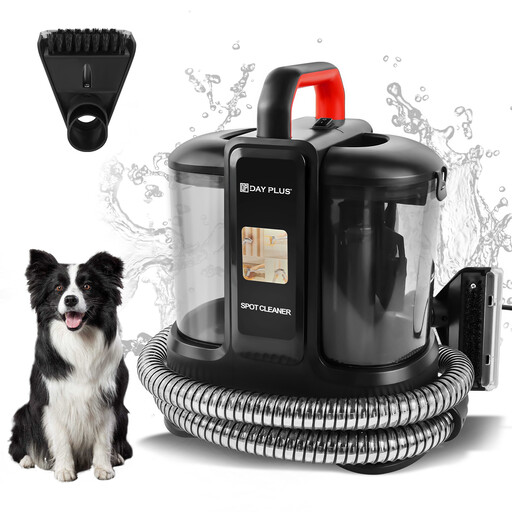 No image available
For targeted wet cleaning of upholstery, provided the footstool fabric is suitable.
The product name lists 15 kPa, a 4,25 m cable and water tanks with capacities of 0,6 l and 1,2 l.
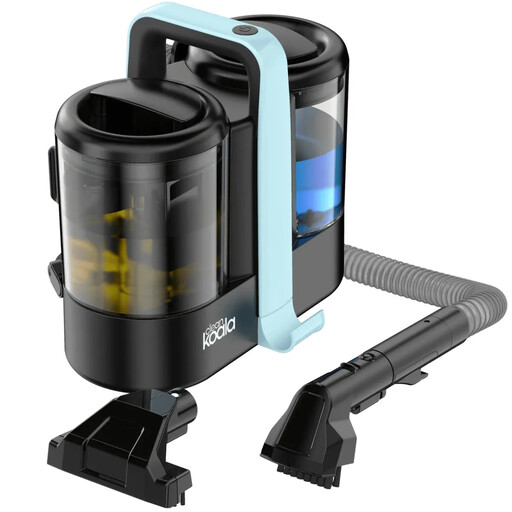 No image available
For stains on suitable upholstery; first test your planned wet-cleaning treatment on a hidden area of the fabric.
The product name lists 450 W, 12.000 Pa, a 1.500 ml clean-water tank, an 800 ml dirty-water tank and a cleaning brush.
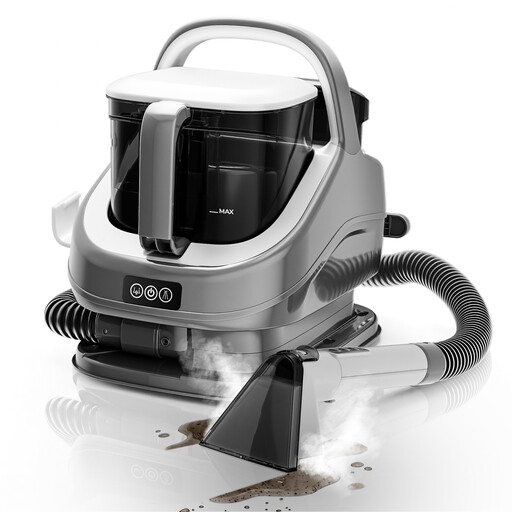 No image available
The product description excludes non-water-resistant fabrics; check the footstool’s care instructions before considering a wet-cleaning or steam mode.
The product name lists 13 kPa, 1.300 W, two water tanks, and cold-water, hot-water and steam modes.
 No image available
Listed as a wet cleaner for upholstery and fabrics; remove loose dirt before wet cleaning and check the fabric’s care instructions.
The product name lists 17 kPa and says it can be used on sofas, carpets, stairs, car seats and textiles.
No. The care instructions for the specific footstool and whether the fabric can withstand the planned treatment are what matter. You can’t assume that US care codes such as W or WS apply to European furniture. Test water and cleaning solution on a hidden area and let it dry completely. If you’re unsure whether the fabric is suitable, don’t wet-clean it based on the machine’s advertising alone.
Don’t rub loose dirt into the fabric. First check the care instructions, remove as much loose dirt as possible without rubbing it in, and test the recommended cleaning solution on a hidden area. Only treat the spot with a suitable upholstery tool once you’ve confirmed the fabric is suitable, and extract as much liquid as possible afterwards.
Empty and clean the tanks you’ve used, following the machine’s instructions. Some models have a hose-rinsing function or come with accessories for it; check whether the specific model offers this rather than assuming all spot cleaners do.
It depends on the machine, the solution and how often you use it. Compare what’s included with the machine’s instructions and check whether suitable cleaning solutions and replacement brushes are available. A sample bottle included with the machine may not be enough for repeated cleaning.
Consumers generally have a right to cancel a distance purchase; Section 355 of the German Civil Code (BGB) sets out a 14-day period, though when it starts and any exceptions depend on the contract and legal requirements. Claims for faulty goods are generally subject to a two-year limitation period from delivery. The Verbraucherzentrale distinguishes these statutory rights relating to faulty goods from a voluntary manufacturer’s guarantee.