A stain cleaner is only suitable for a fabric footstool if the care instructions for the specific upholstery and, where applicable, the padding allow wet cleaning. For individual spots, a narrow upholstery attachment and a suitably long hose are important; if you have several suitable upholstered surfaces to clean, tank capacity and accessories matter more. Dried acrylic paint or permanently fixed fabric markers are not stains you can reliably expect a machine to remove.
Who is a stain cleaner suitable for?
Cautious footstool owners
If you’re unsure about the upholstery, check which cleaning methods are permitted before buying. Michael Jon Designs explains care codes W, S, WS and X, which distinguish between water-based cleaning, solvent cleaning and surface-only care, among other things.
Crafters dealing with the odd stain
For small splashes or stains on a footstool that can be wet-cleaned, brush width and hose reach can make targeted treatment easier. Rowenta and Philips describe their respective models as suitable for spot cleaning and soft surfaces.
Households with several upholstered items
If you regularly want to clean other suitable upholstered items, you may want to give more weight to tank capacity, the range of attachments and ease of cleaning the machine. BISSELL and Rowenta list different tank and accessory features for their respective models.
What should you look for when choosing one?
Compact spray-and-suction cleaner
A good fit if: You mainly want to treat individual stains on a footstool that is explicitly suitable for wet cleaning, and need a machine that’s easy to store.
The trade-off: Smaller tanks may need filling and emptying more often when cleaning several surfaces. Check the capacity listed for the specific model.
Larger tanks and multiple attachments
A good fit if: You regularly clean several suitable footstools or other upholstered items and need to reach both narrow spots and larger areas.
The trade-off: Larger tanks and more accessories can take up more storage space and make cleaning the machine more involved.
Model with a steam function
A good fit if: You need the additional function for a surface that the manufacturer explicitly says is suitable for steam cleaning.
The trade-off: Consider the steam function, the machine’s weight and the recommended cleaning solution for the specific model. Approval for water-based stain treatment does not automatically mean steam can be used.
No electric wet cleaner
A good fit if: The care instructions rule out wet cleaning, or you’re unsure whether the upholstery and padding are suitable.
The trade-off: Another approved care method may be less convenient, but it avoids assuming without evidence that spray water or steam is suitable for the footstool.
| Consideration |
What to check before buying |
Who will find this most important? |
| Material compatibility |
Care instructions for the upholstery and, where applicable, the padding; don’t assume wet cleaning is suitable based on the fibre type alone. |
If I want to avoid damage from unsuitable treatment, I check first that it’s approved. Around 36% of consumers say material compatibility is their top buying priority. |
| Targeted stain treatment |
Upholstery brush width and hose reach; identify the type of craft stain before treating it. |
For individual splashes and edges, a handy, well-suited attachment matters more to me than a wide cleaning head. Around 29% of consumers prioritise targeted spot cleaning. |
| Several suitable surfaces |
The capacity of both tanks, plus the brushes, hose and cable supplied with the specific model. |
If you regularly want to clean other suitable upholstered items as well as the footstool, it’s worth considering how well the machine fits into your cleaning routine. Around 21% of consumers prioritise cleaning several surfaces. |
| Machine care and ongoing needs |
Removable tanks, a hose-cleaning tool, and the recommended cleaning solution and spare parts for the exact model number. |
If I want to spend less time dealing with residue and cleaning the machine after use, I check how it needs to be maintained. Around 14% of consumers put this first. |
What mistakes should you avoid?
-
Assuming “fabric” means “suitable for water and steam”
Suitability depends on the specific upholstery and how it is made. A suitable machine won’t make unsuitable fabric safe to wet-clean; moisture can cause damage or leave tide marks.
Check the care instructions for the upholstery and, where applicable, the padding. Only consider steam if it is explicitly listed as suitable.
-
Expecting every craft stain to disappear
Liquitex describes dried acrylic paint on textiles as permanent. edding says that fixed fabric markers are wash-resistant. These claims don’t apply to every type of paint or pen, but they show why a machine can’t guarantee removal.
Identify the craft material used, and don’t rely on a particular cleaning result for dried paint or permanently fixed marks.
-
Focusing only on the machine itself
Even with a compact stain cleaner, you’ll need to empty the tanks and remove residue according to the model’s instructions. Cleaning solution and compatible spare parts may also be needed regularly.
Check what’s included, which cleaning solution is recommended, how to care for the tanks and what spare parts are available, using the full model number.
Key brands at a glance
BISSELL
According to BISSELL, the SpotClean HydroSteam Pro 3700N combines spray cleaning and suction with an additional steam function.
- BISSELL lists 7-cm and 12-cm brushes, separate tanks and a HydroRinse tool.
- The stated weight of 5.9 kg and the cleaning solution recommended for this model are worth considering. Manufacturer information doesn’t prove that it will remove stains from any fabric footstool.
Rowenta
Rowenta offers the Clean It Compact IN3010 for spot cleaning and the Clean It IN5020 with larger tanks and multiple attachments.
- For the IN3010, Rowenta lists an 8-cm brush, a crevice tool and tanks with capacities of 1.4 l and 0.85 l. For the IN5020, the manufacturer lists 8-cm and 15-cm brushes, plus tanks with capacities of 2.3 l and 1.5 l.
- These specifications apply to the respective models and are not the result of a comparative cleaning test.
Philips
Philips describes the 3000 Series XW3192/11 stain cleaner as suitable for soft surfaces, including upholstery.
- The manufacturer lists a 3-in-1 nozzle; a compatible replacement brush head is available for the 3000 Series.
- The manufacturer’s description doesn’t confirm that a specific footstool fabric is suitable, or that dried craft paint can be removed.
Sichler
Sichler describes the ZX-6601-919 wet vacuum cleaner as suitable for upholstery and other appropriate textile surfaces.
- The manufacturer lists narrow and wide brush attachments, separate tanks and a hose-cleaning function.
- The manufacturer’s claims about suction power and cleaning results are not an independent comparison with other models.
Joybuy products
The machines below are wet cleaners for suitable upholstery. A steam function, if included, does not mean this footstool is suitable for treatment.
 No image available
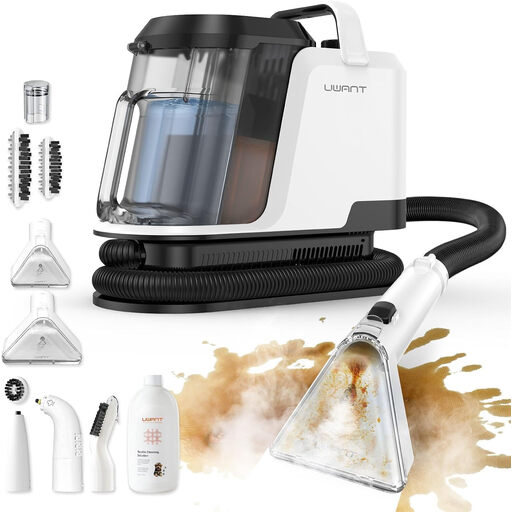
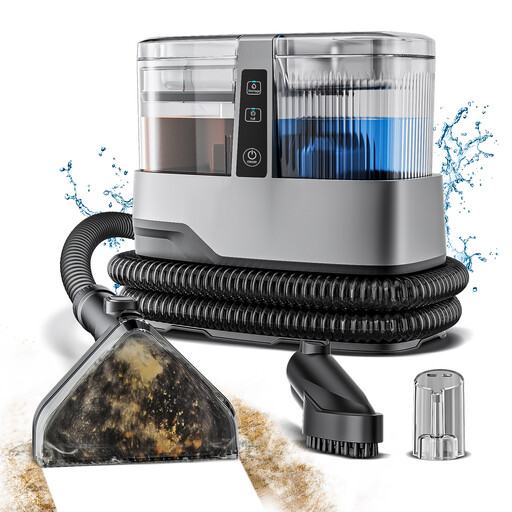
UWANT Y100 upholstery cleaner
For individual stains on upholstery whose care instructions allow wet cleaning; the product description lists upholstery and sofas as suitable uses.
The product name lists 600 W, 18 kPa and separate tanks. The description lists seven brushes, a 1.5-m hose and a self-cleaning function for the hose and internal components.
The steam function described is not general approval for use on fabric footstools. Check the care instructions for the specific upholstery before use.
View at Joybuy
 No image available
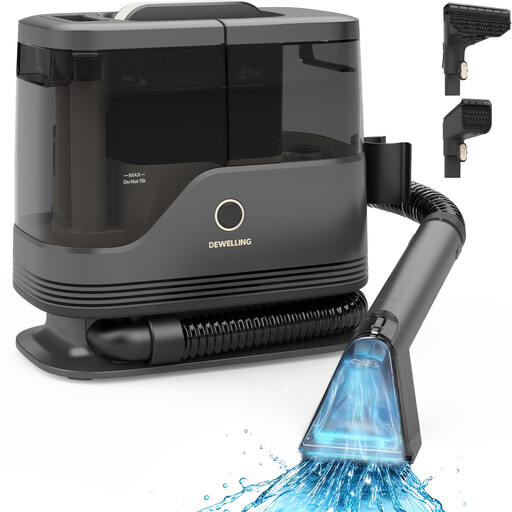
Portable upholstery wet cleaner with self-cleaning function
For spot cleaning suitable upholstery; the product description lists sofas and car seats as suitable uses.
The product name lists 400 W and 13 kPa. The description specifies separate tanks with capacities of 1 l and 0.55 l, a 1.15-m hose, and standard and wide nozzles.
Only use the machine on your footstool if its care instructions allow wet cleaning.
View at Joybuy
 No image available
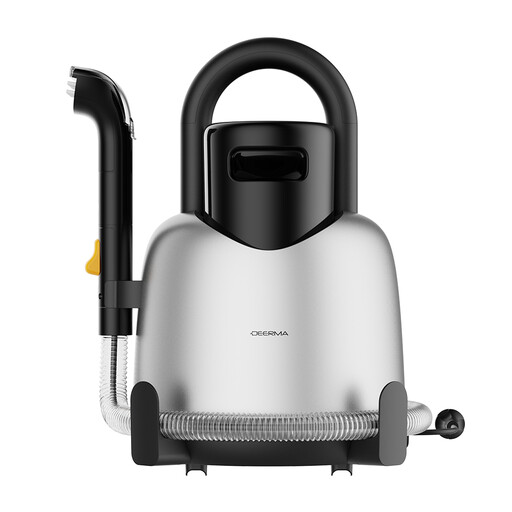
Deerma BY700 S stain cleaner
For suitable upholstery and sofas that the care instructions say can be wet-cleaned; the steam function doesn’t replace this check.
The product name lists 1700 W and 13 kPa. The description lists two tanks with capacities of 1.7 l and 1.4 l, plus five brush attachments.
The description lists cold-water, hot-water and steam modes. Before use, check which cleaning method is suitable for your specific footstool.
View at Joybuy
 No image available
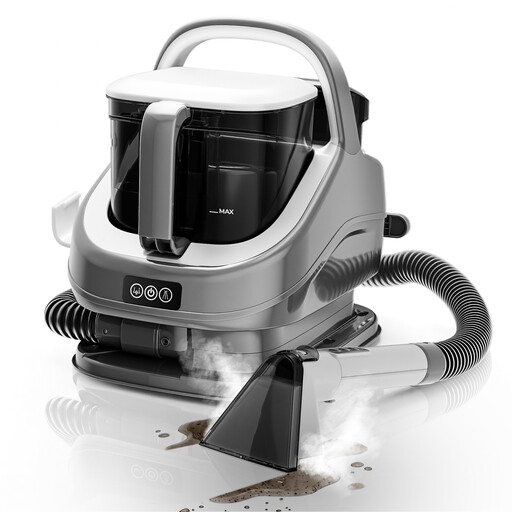
ROUNY U2 Heat upholstery cleaner
The product description lists sofas and other upholstery as suitable uses. It’s only suitable for a footstool if the care instructions allow it.
The description lists separate tanks with capacities of 1.4 l and 1.2 l, a 1.1-m hose and a 3-m cable. The product name lists 13 kPa, as well as cold-water, hot-water and steam modes.
The product description explicitly rules out fabrics that aren’t water-resistant. Check the care instructions rather than assuming the steam function makes it suitable.
View at Joybuy
 No image available
OMESER C688A upholstery cleaner
For suitable upholstery and sofas, provided the care instructions for the specific fabric allow wet cleaning.
The product name lists 600 W and 17 kPa. The description lists a 15-cm cleaning head, an XL sliding brush, separate tanks and a 1.5-m hose.
Check that the supplied attachments are the right size for the area you want to clean.
View at Joybuy
Frequently asked questions
Can I wet-clean any fabric footstool with a stain cleaner?
No. What matters is the care guidance for the specific upholstery and, where applicable, the padding. An indication that water-based cleaning is suitable doesn’t automatically mean you can soak the fabric or use steam. If the instructions aren’t clear, check with the furniture manufacturer before treating it.
How should I treat a stain left after crafting?
First identify the upholstery material and the type of craft product, and follow the relevant care instructions. For suitable water-based stains, a narrow upholstery attachment can help you target the spot. Liquitex describes dried acrylic paint on textiles as permanent; edding says that fixed fabric markers are wash-resistant. A machine can’t guarantee removal of this kind of residue.
What should I clean on the machine after use?
Empty and clean the tanks according to the instructions for the specific model. Some models come with a tool for flushing out the hose; check what’s included with the machine you’re considering.
Are cleaning solution and spare parts included?
It depends on the specific model and offer. For the models described here, BISSELL and Rowenta list a limited amount of cleaning solution as included. Philips lists a compatible replacement brush head for its 3000 Series. Check the full model number and what’s included.


