What to look for when buying
First, check where you can dry your napkins and how much space you actually have available. The following points can then help you weigh up the heating function, room climate and fabric care.
| Buying consideration |
What to check |
Who it matters most to |
| Footprint and storage |
Compare the dimensions in use and when stored separately. For the Adler AD 7821, the manufacturer gives dimensions of 148 × 52,5 × 90 cm when open and 113 × 52,5 × 8 cm when folded; for the Leifheit Quartett 20, the suitable holder depth of 1–11 cm is relevant. |
If you want your floor space back after drying, the size of the airer in use is what counts. Roughly 29% of consumers would make space their top buying priority. |
| Drying speed |
Check whether heated rails and, where available, a timer suit the way you’ll use the airer. The manufacturer’s stated power rating doesn’t prove a particular drying time for fabric napkins. |
If you regularly need your napkins again quickly, a heating function may be appealing; the drying time will still depend on the fabric and conditions. Around 23% of consumers would put speed first. |
| Humidity in the room |
Plan a suitable place to set up the airer and make sure you can ventilate the room. The German Environment Agency recommends taking particular care to ventilate regularly when drying wet laundry indoors. |
If you can only dry your laundry indoors, remember to allow for ventilation: a heating function doesn’t remove the moisture released into the air. Around 18% of consumers would prioritise the room climate. |
| Electricity use |
For a heated appliance, you can calculate estimated consumption as power in watts ÷ 1,000 × running time in hours, giving a figure in kWh. This isn’t a measurement of actual consumption. The German Environment Agency suggests airers or washing lines as an alternative. |
If you’re not in a hurry, you can first consider an option without active heating. Roughly 18% of consumers would make electricity costs their top priority. |
| Fabric care |
Follow the care label on your napkins and check whether they should be hung up or dried flat. The appliance’s features alone don’t prove that heat is suitable for every fabric. |
If you don’t want to risk damaging your specific napkins with a heating function, let their care labels guide how you dry them. Around 12% of consumers would consider fabric care first. |
Joybuy product selection
This selection includes heated and unheated wall-mounted options, as well as folding airers for limited drying space. For mains-powered appliances, also check the documentation for the specific product and make sure there are German-language instructions with safety information.
 No image available
Heated wall-mounted towel rail with touch controls
Wall mounting may suit you if you can keep the floor clear and have a suitable place to install it.
The product name lists touch controls, a digital temperature display and a top shelf.
View at Joybuy
 No image available
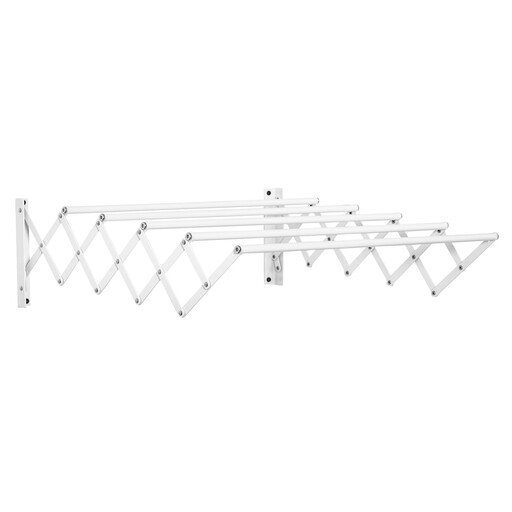
Extendable wall-mounted clothes airer, 63,5 × 60 × 20 cm
This model could be a good unheated wall-mounted option if you want to free up floor space after drying.
The product name lists dimensions of 63,5 × 60 × 20 cm and the colour white. Check that the wall and fixings are suitable for the installation location.
View at Joybuy
 No image available
Folding heated clothes airer, 144 × 53 × 96 cm
This model could suit you if you’re looking for a folding heated airer and have enough floor space for it when in use.
The product name lists a temperature of 45–55 °C and dimensions of 144 × 53 × 96 cm. Being foldable doesn’t mean the airer takes up little space while in use.
View at Joybuy
 No image available
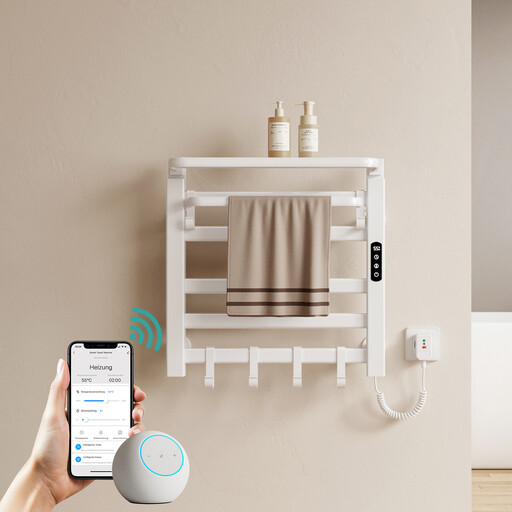
EMKE electric towel radiator, 50 × 50 cm, 140 W
The stated size may help with your planning if you’re looking for a heated towel solution for a limited space.
The product name lists dimensions of 50 × 50 cm, 140 W, a foldable shelf, six unheated hooks and IPX5. Check that the design and installation suit where you plan to use it.
View at Joybuy
 No image available
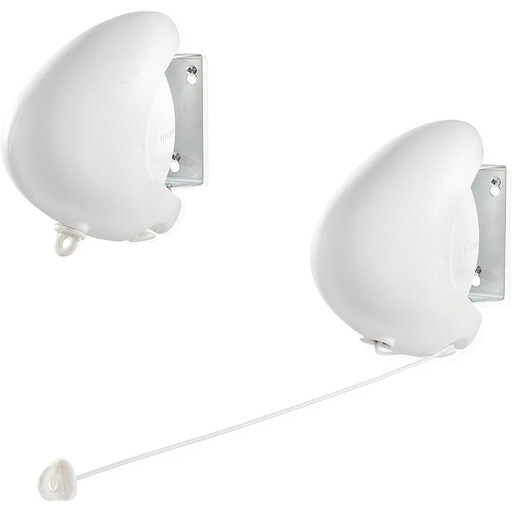
Leifheit Rollfix Single 80, wall-mounted washing line with 8 m of line
This unheated wall-mounted washing line is an option if you want to dry laundry without active heating and have suitable fixing points.
The product name lists a line length of 8 m. You’ll need suitable fixing points on two sides to extend and secure it.
View at Joybuy
Frequently asked questions
How much drying space do I need for fabric napkins?
First, count how many napkins you want to dry at once and check that they’ll each fit on the airer when it’s set up. A hanging airer may be enough for small loads; the key factors are the space available and the care instructions for the fabric.
Can I put a heated clothes airer in the bathroom?
It depends on the specific model and its instructions. DOMO lists IPX4 and freestanding or wall-mounted use for the DO7117DR, while Todeco requires its Airer Heater to be placed on a dry, level surface at least 1,5 m from sources of water or heat. Don’t assume the details for one model apply to another.
Do I need to ventilate the room when drying laundry on heated rails?
Yes. The German Environment Agency recommends increased ventilation when drying laundry indoors to remove moisture. A heating function doesn’t replace ventilation.
How can I estimate the electricity use of a heated airer?
As a rough calculation, multiply the rated power in kilowatts by the running time in hours. For the DOMO DO7117DR, 150 W over two hours works out at 0,30 kWh; this assumes the appliance runs continuously at its rated power and isn’t a measurement of actual consumption. To calculate the cost, you’ll also need your price per kWh.
What should I check for electrical safety in Germany?
Mains-powered electrical appliances covered by the EU Low Voltage Directive must meet the relevant conformity requirements, including CE marking. Check the details for the specific product and look for German-language instructions with safety information; Germany’s Federal Network Agency lists such instructions as one of the points checked during market surveillance. CE marking is the manufacturer’s declaration of conformity; it doesn’t prove that an independent body has tested every appliance.


