If you can spread your fabric napkins out on a suitable surface after washing and ventilate the room sufficiently, a washing machine followed by air-drying is the obvious choice. If you regularly lack the space, a washer-dryer could help. Check its drying capacity, which is usually lower than its washing capacity, and compare the consumption figures for the combined wash-and-dry cycle.
Which option is right for you?
Households with no space for drying
If you wash fabric napkins regularly and have very little room to hang them up, check whether a washer-dryer can handle the amount you need to dry in one cycle. The Verbraucherzentrale (German consumer advice centre) points out that many washer-dryers have a lower drying capacity.
Households with limited drying space
If you can still hang up smaller loads, compare a washing machine with air-drying against a washer-dryer. Consider the space available for the appliance and, if drying indoors, how well you can ventilate the room. The Umweltbundesamt (German Environment Agency) notes that damp washing adds moisture to the air.
Households with delicate table linen
If you want to remove stains without treating the fabric in a way the care instructions prohibit, follow the care label on each napkin when choosing the washing temperature and drying method. GINETEX Germany explains that a crossed-out tumble-dryer symbol means the item must not be tumble-dried.
What should you look for when buying?
First, choose a drying method that suits your routine and the care labels. The Verbraucherzentrale recommends looking at washing and drying capacities separately for washer-dryers, and checking the consumption figures for the cycle you actually plan to use.
Washing machine and air-drying
A good fit if: You have space to spread out the washed load and can ventilate the room sufficiently.
What to consider: You’ll need drying space and time after every wash. The Umweltbundesamt recommends ventilating regularly when drying laundry indoors.
Washer-dryer
A good fit if: You don’t have enough drying space or room for a separate tumble dryer, and the napkins’ care labels allow tumble-drying.
What to consider: The load for a complete wash-and-dry cycle may be smaller than the washing load. Compare the figures for the combined cycle too.
Washing machine and separate tumble dryer
A good fit if: Air-drying isn’t practical, but you have room for a second appliance and regularly need to dry larger loads.
What to consider: You’ll need to allow for the space and connections required by two appliances. Check the tumble dryer’s energy label separately.
| Buying priority |
What to check before buying |
Who it matters most to |
| Drying space and load size |
Compare the space available for the appliance and for drying, as well as the separate washing and drying capacities of a washer-dryer. |
If I have little room to hang laundry, I want to dry as much of the load as possible without having to transfer it; around 36 % of consumers would make drying space their top buying priority. |
| Stains and fabric care |
Check the care label and make sure the permitted washing temperature and drying method are compatible with the programmes available. |
If I want to remove stains from table napkins without treating the fabric inappropriately, fabric care comes first; around 29 % of consumers would make it their top buying priority. |
| Energy and water use |
Compare kWh per 100 cycles and water per cycle on the same basis, particularly for the wash-and-dry cycle. |
If I use the machine frequently, I want to compare the figures for the washing and drying programmes I use most often; around 21 % of consumers would prioritise ongoing energy and water use. |
| Small, occasional loads |
Check your usual load size and the programmes available, and look at the conditions for washing small loads. |
If I only have a few napkins to wash, I want to plan a suitable load with other compatible laundry; around 14 % of consumers would make small loads their top buying priority. |
Common buying mistakes
-
Assuming the washing capacity applies to a complete wash-and-dry cycle
With a washer-dryer, the load you can dry afterwards may be smaller than the washing load. The Verbraucherzentrale recommends considering the capacities separately.
For a cycle without transferring the laundry, check the stated drying capacity and size your load accordingly.
-
Comparing only the efficiency rating for washing
The energy label lists figures for washing and for the combined wash-and-dry cycle separately. The Verbraucherzentrale recommends comparing figures for the cycle you plan to use.
Check the energy and water consumption for the same cycle and on the same label basis.
-
Assuming tumble-dryer or steam programmes override the care label
The care label sets the permitted washing temperature and drying method; a programme doesn’t change those limits. GINETEX Germany explains what the care symbols mean.
Check the labels on your napkins before buying, and only plan to tumble-dry them if the care instructions allow it.
-
Assuming you can air-dry laundry indoors without planning for space and ventilation
Damp laundry increases the moisture in a room. The Umweltbundesamt recommends ventilating regularly when drying laundry indoors.
Check where you can spread out the napkins to dry and whether the room can be ventilated sufficiently.
Brands to consider
AEG
AEG lists the L9WEF80690 washer-dryer, with heat-pump drying, as a combination appliance for households looking to wash and dry in one machine.
- AEG gives this model a washing capacity of 9,0 kg and a drying capacity of 6,0 kg.
- AEG states that it uses 49 kWh per 100 wash-only cycles and 252 kWh per 100 combined cycles. These figures relate to different cycles and should be considered separately; they don’t indicate how well the appliance removes stains from table napkins.
Bosch
The WUU28T71 is an under-counter washing machine for households with a separate way to dry their laundry.
- Bosch gives this model an 8 kg capacity, a maximum spin speed of 1.400 rpm and dimensions of 845 × 598 × 590 mm.
- This model doesn’t have built-in drying. Bosch notes that the maximum spin speed may be reduced if the load is unbalanced.
Siemens
The WN54C2070 is a washer-dryer. Its washing and combined capacities are both important when planning a load.
- Siemens gives it a capacity of 9,0 kg for washing and 6,0 kg for washing and drying, with dimensions of 848 × 598 × 622 mm.
- The stated capacity for a complete wash-and-dry cycle is lower than the washing capacity. This doesn’t tell you whether individual napkins are suitable for tumble-drying.
LG
The V7WD96H1A is a washer-dryer with stated washing and drying capacities of 9 kg and 6 kg respectively.
- The capacity figures make it easy to distinguish between the washing load and the load for a combined cycle.
- Features advertised on the product page, such as AI DD and steam, are manufacturer claims. The AI DD function described there applies to certain programmes. Fabric-protection comparisons with other models and textiles don’t demonstrate an effect on table napkins washed in this model.
Samsung
The WD8ETA049BX/EG is a washer-dryer with a different capacity combination from the 9-kg/6-kg models.
- Samsung gives it a washing capacity of 8 kg and a drying capacity of 5 kg, with dimensions of 600 × 850 × 600 mm.
- Samsung describes AirWash as a way to freshen clothes using warm air instead of water; this isn’t the same as washing soiled napkins.
Joybuy products
This selection includes washing machines and washer-dryers for households with limited drying space. For each model, check that the capacity suits your load and that your napkins’ care labels allow tumble-drying.
 Image unavailable
LG WT1210EGF WashTower
The washing machine and heat-pump tumble dryer combination could suit households looking to stack their washing and drying appliances.
It has a stated washing capacity of 12 kg, a drying capacity of 10 kg and a spin speed of 1.350 rpm.
View at Joybuy
 Image unavailable
LG WT1210WWF washer-dryer
This combined washing and drying appliance could be a good option if you don’t have a separate space for drying.
It has stated washing and drying capacities of 12 kg and 10 kg respectively. The drying capacity is lower than the washing capacity for a complete wash-and-dry cycle.
View at Joybuy
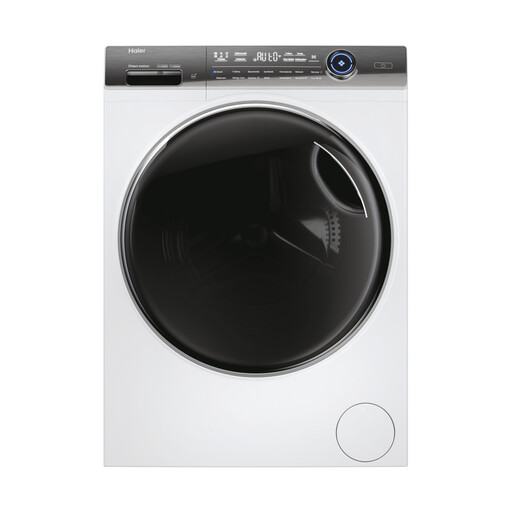 Image unavailable
Haier I-Pro 7 Plus HW80-BD14979EU1
This washing machine is a better fit if you have a suitable way to air-dry the load afterwards.
It has a stated washing capacity of 8 kg, a spin speed of up to 1.400 rpm and a depth of 50 cm. No built-in drying function is listed for this model.
View at Joybuy
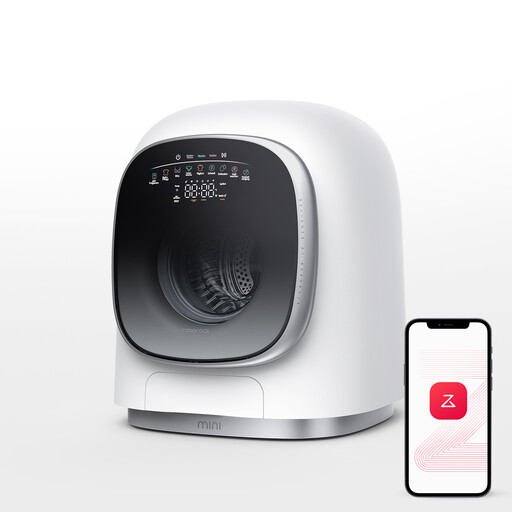 Image unavailable
Roborock Zeo Mini Washer Dryer
This mini appliance could be useful for very small loads; make sure its capacity suits the number of napkins you actually need to wash.
It has stated washing and drying capacities of 1 kg and 0,5 kg respectively.
View at Joybuy
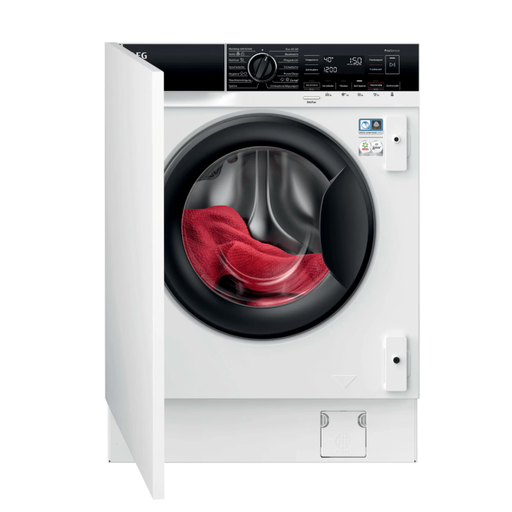 Image unavailable
AEG LWR8WI7680 8000 PowerCare built-in washer-dryer
This built-in washer-dryer could suit you if you have a suitable space and want to wash and dry with one appliance.
It has stated washing and drying capacities of 8 kg and 4 kg respectively, and a spin speed of 1.600 rpm. The specified niche must be at least 82 cm high.
View at Joybuy
Frequently asked questions
Can I tumble-dry all fabric napkins in a washer-dryer?
No. You can’t tell from the type of appliance alone. Check the drying symbol on each napkin: a crossed-out tumble-dryer symbol means the item must not be tumble-dried. Other care symbols may also restrict how it can be treated. GINETEX Germany explains what the symbols mean.
Do table napkins always need to be washed at 60 °C?
No. A high washing temperature isn’t automatically necessary for everyday household laundry. Follow the care label and take the level of soiling into account. For specific hygiene concerns, the Umweltbundesamt advises against assuming that special treatment is needed without a good reason.
Which capacity matters on a washer-dryer?
If you want to wash and dry without transferring the load, the drying capacity determines how much laundry you can dry afterwards. The Verbraucherzentrale notes that a washer-dryer’s drying capacity may be lower than its washing capacity, so plan your load around the lower figure.
Which consumption figures should I compare?
Compare the figures for the cycle you actually plan to use. The European Commission lists separate figures for washer-dryers, including energy consumption. Don’t compare the figures for a combined wash-and-dry cycle directly with those for a wash-only cycle.


