Patch makers
You work on small patches, edges and seams, and need heat you can control in a confined space.


For small patches in hard-to-reach spots, a craft iron with a pointed tip may be a good fit. For larger patches, a wider dry-heat surface or a compact heat press is more practical. If you also iron clothes, a travel or steam iron can handle several tasks, but it won’t necessarily take up less space. The key considerations are the instructions for the specific patch, the care label on the fabric and a suitable surface to rest the tool on.
You work on small patches, edges and seams, and need heat you can control in a confined space.
You apply patches occasionally and need to find room for both the tool and a safe resting place for it in a small home.
You want one tool for applying patches and smoothing clothes, and are happy to choose a different shape and size from a craft iron with a pointed tip.
| What matters when buying | What to look for | Who is it important to? |
|---|---|---|
| Precision and pressing surface | Compare the size and shape of the heated surface with the patch and where it will go. Check the patch instructions too. | When I’m working on small or hard-to-reach areas, I want to be able to press with control. This is the main consideration for around 33% of consumers. |
| Storage and space to set it down | Consider the tool’s dimensions, cord management and whether you have a suitable place to rest it while you work. | In a small flat, I need room to work and a safe place to set the tool down, not just a compact appliance. Storage and space to set it down are the top considerations for around 27% of consumers. |
| Patches and clothes | Check the temperature settings, whether the tool can be used dry according to its instructions, and how often you’ll actually use it for laundry. | If I also iron clothes occasionally, I’m looking for a tool that can do both, and I may be willing to choose a different shape and size. This is the main consideration for around 20% of consumers. |
| Fabric compatibility and workspace setup | Check the care label, patch instructions, and the tool’s guidance on where to place it and how to use it safely. | When the backing fabric is delicate, I want to know how it can safely be treated and have a safe place to set the tool down. This is the main consideration for around 20% of consumers. |
An iron that smooths clothes isn’t automatically suitable for a particular patch. The instructions for the patch may specify requirements for heat, pressure and using a pressing cloth.
Check the patch instructions against the care label on the fabric and the tool’s instructions, rather than assuming that laundry features mean the patch will stick properly.
Pressing without checking that everything is compatible could damage the fabric or stop the patch from attaching as intended.
Even in a small flat, you need space to rest the tool safely. A compact design alone doesn’t solve this problem.
Check your workspace and what comes in the box. Prym sells a compatible mini rest separately; Cricut lists an insulated base for the EasyPress Mini – 6 x 3.
Depending on the tool you choose, you may need to buy a suitable rest separately.
A small ironing tip is useful for tight spots, but it may not cover a wide patch in one go.
Compare the heated surface with the size and position of the design. For larger patches, a suitable wider surface may be more practical.
The Mini Steam Iron 611915 is designed for detailed sewing projects and occasional garment care.
The Mini Iron II with EU adapter 8003EU is designed for small-scale sewing and patchwork projects.
The EasyPress Mini – 6 x 3 is a compact heat press for small to medium-sized heat-transfer projects.
The 22470-56 travel iron combines a compact design with features for occasional garment care.
The FreeStyle 3 FI3194BK is better suited to regular clothes ironing, with occasional patch projects.
The products below include compact heat presses and mini hand irons for textile DIY projects. Whether a particular iron-on patch and its backing fabric can be treated with one of these tools still depends on the patch instructions, care label and tool instructions.
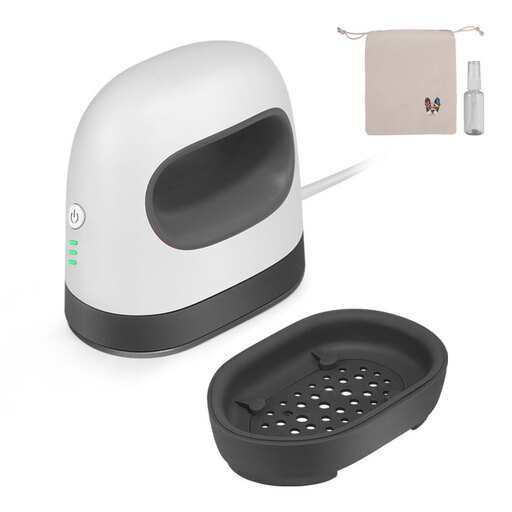 No image available
Its portable design is described as suitable for compact DIY transfer projects. Check the instructions to see whether it’s suitable for your patch.
Features listed include a heating plate and a storage bag.
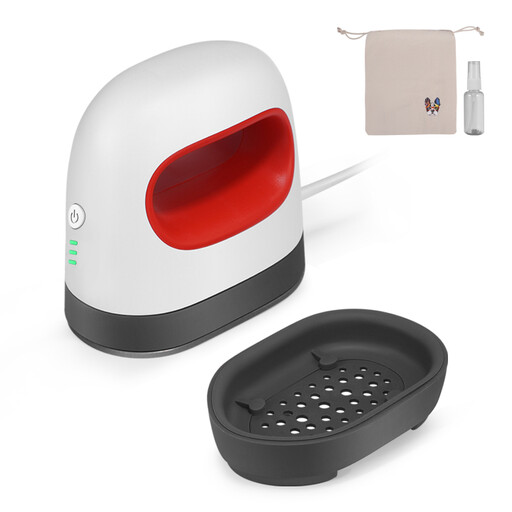 No image available
This mini press is described as suitable for textile DIY transfers. Check the patch instructions before using it on an iron-on patch.
Features listed include a dry-heat ceramic-coated plate, an insulated base, a storage bag and a spray bottle.
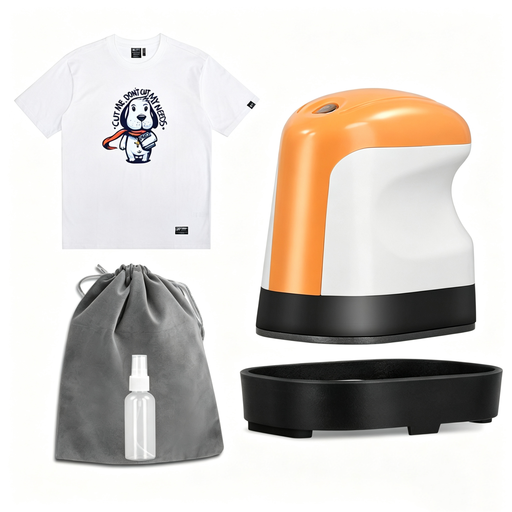 No image available
This tool is described as suitable for DIY embroidery and textile projects. Check the guidance for your patch and backing fabric.
The product details specify a white and orange finish and accessories.
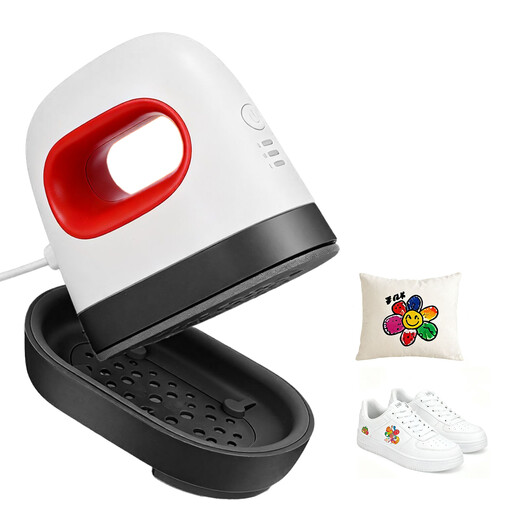 No image available
The compact heated surface is described as suitable for smaller textile and transfer projects. Compare its size with your design.
Features listed include three temperature settings, an insulated base, a storage bag and a red spray bottle.
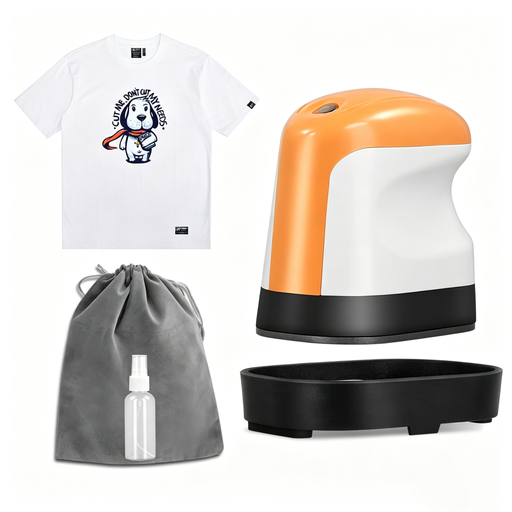 No image available
This mini press is described as suitable for textile DIY and transfer projects. Check that it’s suitable for your patch by following its instructions.
Features listed include three temperature settings, a base, a storage bag and a spray bottle.
No. Paul & Clara’s instructions apply to its own patches and specify a minimum temperature of 120 °C, covering the patch and pressing with pressure. Check the instructions for your patch as well as the care label on the backing fabric. The iron symbol shows how the garment can be treated.
Make sure you have a work surface and a place to rest the tool that comply with its instructions. Cricut lists an insulated base for the EasyPress Mini – 6 x 3; Prym sells a compatible silicone rest for its mini iron. Before buying, check what’s included with the product you’ve chosen.
No. When you buy in Germany, your statutory consumer rights apply in relation to the seller. A manufacturer’s warranty is a separate, voluntary benefit with its own terms and conditions. The Verbraucherzentrale explains the difference between the two.
Mains-powered irons covered by low-voltage regulations must carry the CE marking. According to the European Union, the manufacturer uses it to declare that the product meets the relevant EU requirements; it is not an independent quality mark. Check the specific product you’re buying.