Owners of delicate outdoor jackets
If you want to repair a tear or worn area, first check whether the outer fabric, coating and care label allow heat. GORE-TEX Brand advises following the garment manufacturer’s care instructions.


First, check the care label and the instructions for the specific patch. An iron is only an option if both allow ironing. For delicate outdoor clothing, a suitable self-adhesive repair patch may be an option. If the fabric is specifically approved for ironing, adjustable temperature matters more than a powerful burst of steam. Without guidance for the specific materials, it’s not possible to give blanket approval for a particular jacket and patch combination.
If you want to repair a tear or worn area, first check whether the outer fabric, coating and care label allow heat. GORE-TEX Brand advises following the garment manufacturer’s care instructions.
For a fabric patch on suitable material, the patch instructions, fabric care requirements and a clean work surface all need to be taken into account. Prym describes its iron-on cotton appliqués as suitable for medium-weight cotton outerwear.
If you also iron your regular laundry, as well as occasionally applying patches, check whether the temperature and steam can be adjusted to suit both uses. Philips lists these adjustment options for its refurbished DST1030/20R1 model.
This table helps you prioritise your purchase according to what matters most when occasionally applying patches to outdoor clothing.
| What matters | What to check | Who is this important to? |
|---|---|---|
| Heat resistance | Check the care label and patch instructions together. A temperature setting does not override a warning against ironing. | When I’m repairing a delicate outdoor jacket, I first want to know whether it can be ironed at all. Around 36% of consumers put material suitability first. |
| Patch and fabric | Check whether the patch material and fabric are compatible according to the instructions, and what preparation is required. | For a fabric that can be ironed, I want the patch and material to be compatible, and the area to be prepared properly. Around 29% of consumers prioritise material compatibility and preparation. |
| Everyday use | Check the temperature and steam settings for your other laundry too. Steam boost specifications don’t tell you whether an iron is suitable for applying a patch. | If I regularly iron other laundry too, I want an appliance that suits those needs without losing sight of the patch instructions. Around 21% of consumers prioritise this versatility. |
| Simple dry ironing | If you only iron occasionally, check whether a basic appliance will do, or whether a suitable self-adhesive patch could be an option. | For occasional repairs, I want a straightforward solution, but only if the garment can withstand ironing. Around 14% of consumers primarily look for a simple, steam-free option. |
Instructions for caring for or refreshing a garment don’t automatically mean it can withstand the heat required by a particular iron-on adhesive. Using one when it’s not suitable can damage the material.
Check the care label and the instructions for the specific patch together. If they don’t match, don’t iron the patch on.
For the self-adhesive repair patch described here, cleaning and drying the affected area are part of the preparation.
Prepare the area according to the instructions for the patch you’re actually using, and check that it’s suitable for the fabric.
Steam specifications for regular laundry don’t prove that an iron is suitable for a particular patch or safe to use on an outdoor coating.
First, work out which repair method is suitable. Then compare dry and steam irons based on what you need for your other laundry.
The BA 3211 is a dry iron for buyers who don’t need steam for other laundry.
The 1000 Series DST1030/20R1 is an option for households that want adjustable steam for other laundry, as well as for occasional patch application.
The FreeStyle 3 FI 3194 BK is a steam iron for general laundry.
The Easygliss Plus FV5714E0 is a steam iron for everyday laundry.
This selection includes steam irons for people who want to combine occasional patch application with ironing other laundry. Before applying an iron-on patch, always check that the care label and patch instructions allow it.
 No image available
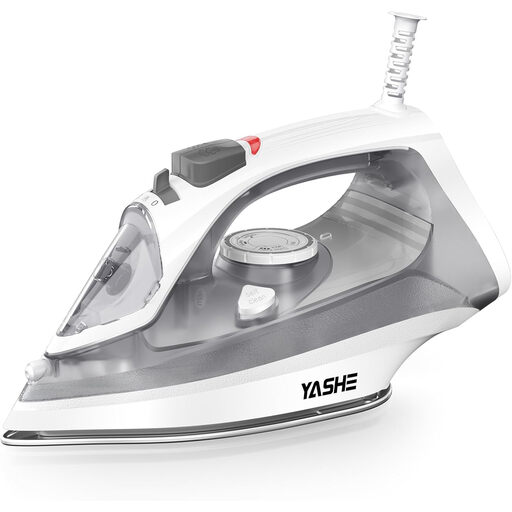
Only consider it for patch application if the care label and patch instructions allow ironing. The product description lists an adjustable thermostat and a steam control that can be set to dry ironing.
2300 W; water tank: 300 ml; steam boost: 150 g/min; non-stick soleplate; self-cleaning and anti-drip functions.
 No image available
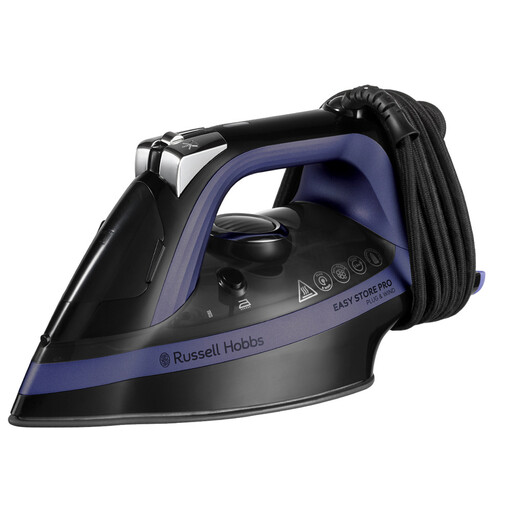
The lack of a temperature control dial is worth noting for precise patch application. According to the product description, you can’t adjust the heat precisely to suit the care label and patch instructions.
2400 W; One-Temp technology; steam boost: 200 g/min; water tank: 320 ml; ceramic soleplate; automatic shut-off.
 No image available
For occasional patch application, check whether the specific model’s settings are suitable, along with the care label and patch instructions. Steam output specifications don’t replace these checks.
2500 W; continuous steam output: 40 g/min; steam boost: 160 g/min; 250-ml water tank; anti-drip system.
 No image available
The product description lists selectable heat and steam settings. Check the instructions for the specific patch and garment to see whether these are suitable.
Steam boost: 280 g/min; vertical steam; anti-scale system; anti-drip function; automatic shut-off.
 No image available
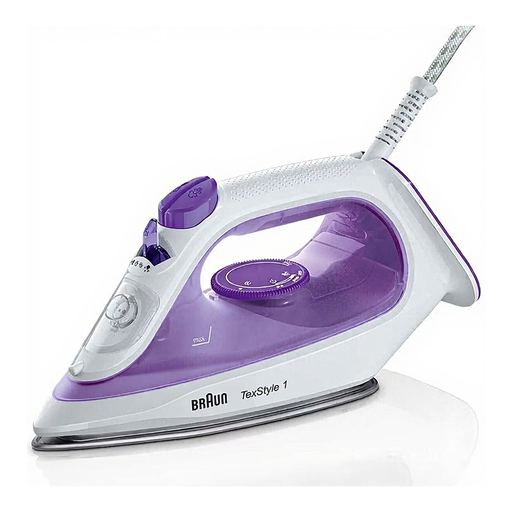
The product description lists a temperature control and a dry ironing mode. Still, check that the permitted temperature is suitable for the care label and instructions for the specific patch.
Ceramic soleplate; precision tip; automatic shut-off; Eco, Turbo and dry ironing modes.
No, there’s no blanket approval. Check the jacket’s care label and the patch instructions together. GORE-TEX Brand’s care guidance for ironing at a low temperature without steam relates to the care described; it doesn’t automatically mean any iron-on adhesive can be applied.
For the self-adhesive repair patch described here, the affected area should be cleaned and dried. Also check the instructions for the specific patch and whether it’s suitable for the fabric, particularly if the material is stretchy or coated.
Electric irons must meet the relevant EU product safety requirements, including the required CE marking. The European Union lists electrical and electronic equipment as a product group requiring CE marking. Check the marking on the specific appliance: it isn’t an independent quality mark or confirmation that the iron is suitable for applying patches.