
Lieferung heute & morgen

Qualitätsgarantie

Willkommens-Angebote freischalten: KOSTENLOSE Lieferung | Bis zu 80 % RABATT | Kostenlose 30-Tage-JoyPlus-Testphase
App herunterladen
A fabric wardrobe is a practical and flexible solution when space is limited or a temporary storage option is needed. Whether in a dorm room, as a transitional solution during a move, or for the seasonal wardrobe in the basement – a collapsible closet like this seems to be the ideal answer to many storage problems. But the market is flooded with models of widely varying quality. Many buyers face nasty surprises after just a short time.
Before you make a decision, it's important to know the typical weak points that can quickly render an inexpensive wardrobe useless.
A close look at the product details is therefore essential to avoid a bad purchase and find a durable solution.
To separate the quality options from the subpar ones, you should check three central technical features before buying. These objective criteria will help you assess the actual quality and stability of a model.
The stability of a collapsible wardrobe depends directly on its frame. Pay attention to the diameter of the metal tubes. Models with a tube diameter of 16 mm or more offer significantly greater stability than those with thinner rods. The connectors are just as important. High-quality PP (polypropylene) plastic connectors are robust and precision-made, which prevents the structure from wobbling. Cheap models often use brittle plastic that easily breaks under tension.
The quality of the cover, which protects your clothes from dust, is indicated in grams per square meter (g/m?). A good benchmark is a non-woven fabric with a density of 120 g/m? or more. This material is more tear-resistant and durable than thinner variants. Also, check the workmanship of the zippers. Double stitching is an indicator of higher durability. A well-designed fabric wardrobe also offers roll-up doors that can be secured with Velcro fasteners for easy access.
Don't rely on product images, but on the maximum static load capacity specified by the manufacturer. This is listed separately for the clothes rail and the individual shelves. A clothes rail should be able to support at least 15 kg to accommodate heavier jackets. Shelves with a load capacity of 5 kg per shelf are a solid standard. Models like a 150 cm wide wardrobe offer plenty of storage space but also require corresponding stability to use this volume safely.
Based on these objective criteria, we have identified some models that represent a considered choice for different needs and living situations.
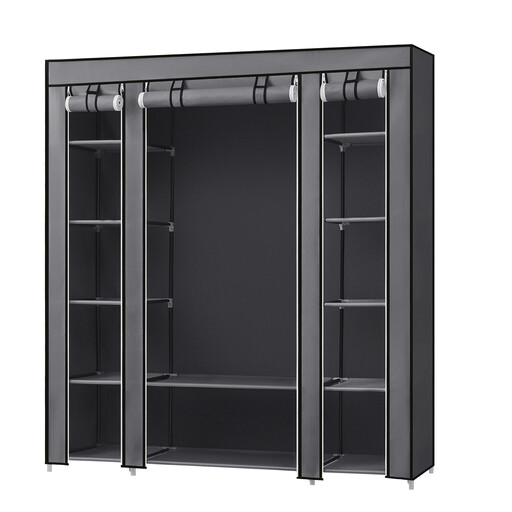
Why It's a Good Fit: Ideal for students or a first apartment. At 150 cm wide, it offers plenty of storage space at a great price without compromising on fundamental stability features. Assembly is tool-free and straightforward.
According to the manufacturer, the frame consists of 16 mm metal tubes and is assembled with PP plastic connectors, which counteracts typical instability. The cover, made of 120 g/m? non-woven fabric, is also more resilient than many alternatives in this price range.
Large capacity with 12 compartments and one clothes rail. The load capacity is clearly defined (15 kg for the rail, 5 kg per shelf), which allows for safe use.
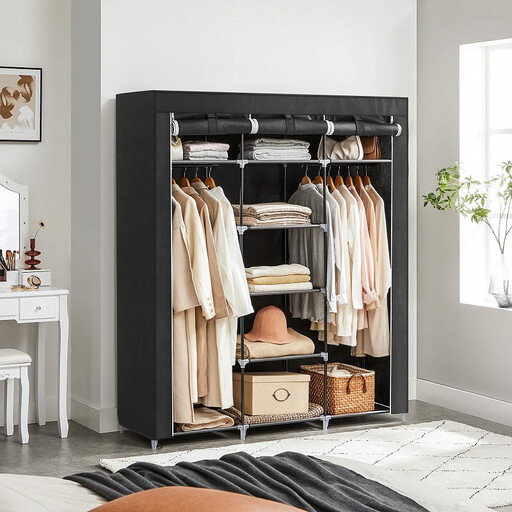
Why It's a Good Fit: A versatile solution for a guest room, seasonal wardrobe, or as a supplement in the bedroom. The thoughtful layout with a full-length clothes rail and multiple shelves makes it easy to organise clothes, bedding, and accessories.
This model relies on a robust metal frame that ensures reliable stability. The description highlights its suitability for various use cases, suggesting a well-thought-out and durable construction for repeated use.
The combination of a long clothes rail and several fixed shelves offers an optimal balance for hanging and folded items. The freestanding design requires no wall mounting.
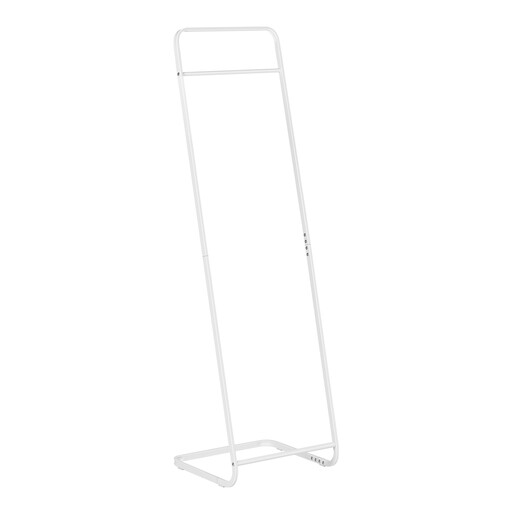
Why It's a Good Fit: Perfect for unused corners in the hallway, bedroom, or office. This open clothes storage is not a classic closed solution but a space-saving coat rack, ideal for quick access to jackets and coats.
The L-shape and an additional brace at the bottom provide high inherent stability and prevent wobbling. The construction of painted metal tubes is designed for durability and resistance to scratches.
Extremely space-saving with a footprint of only 0.16 m?. The minimalist design blends discreetly into various interior styles. The space under the rail can be used for shoes.
We have compiled a complete, up-to-date list of products that fully meet these strict selection criteria and applicable safety regulations.
The stability of a fabric wardrobe depends critically on the materials used. Models with a frame made of metal tubes at least 16 mm in diameter and robust PP plastic connectors offer reliable stability. It is also crucial to adhere to the manufacturer's specified maximum load capacity per shelf and for the clothes rail. Many models also come with an anti-tip kit for wall mounting, which further enhances safety.
The lifespan of a collapsible wardrobe is determined by the quality of its components and how it is used. A wardrobe with a dense non-woven fabric (e.g., 120 g/m?), a sturdy metal frame, and carefully crafted zippers can last for several years with proper use. To maximize its lifespan, the wardrobe should not be overloaded and should be protected from direct sunlight, as UV light can degrade the fabric cover over time.
Yes, most fabric and collapsible wardrobes are designed for easy, tool-free assembly by one person. They are based on a push-fit system where the tubes are inserted into the connectors. Clear instructions and numbered parts further simplify the process, making assembly typically quick and straightforward.