
Lieferung heute & morgen

Qualitätsgarantie

Willkommens-Angebote freischalten: KOSTENLOSE Lieferung | Bis zu 80 % RABATT | Kostenlose 30-Tage-JoyPlus-Testphase
App herunterladen
A fabric wardrobe is a flexible and affordable solution for creating more storage space—ideal for students, flat-sharers, or as an interim solution. However, the market is flooded with models of widely varying quality. Many buyers find their new portable closet becomes unstable after just a few months, the fabric tears, or the structure collapses under the weight of their clothes.
As a Joybuy Product Recommendation Officer, I analyse product data to help you avoid such disappointments. This guide highlights the three most common design flaws and explains which technical features you need to look for to find a durable and stable storage solution.
A low price is tempting, but it often leads to compromises in material quality. Pay special attention to these three weak points, which frequently lead to a bad purchase:
To avoid the aforementioned flaws, you should check three core parameters before making a purchase decision. This information is usually found in the product specifications and reveals the true quality and durability of a fabric wardrobe.
The stability of a portable closet depends directly on its frame. A robust frame is the foundation for long-term use.
The cover, often called the textile wardrobe shell, should be more than just a thin layer. It contributes to the overall stability and protects your clothing.
A portable wardrobe must stand securely, even when fully loaded. The maximum load capacity is therefore an essential specification.
no-drill wardrobe is often not the safest option when it comes to tall units.Based on the criteria above, we have identified a few models that are suitable for different user profiles.
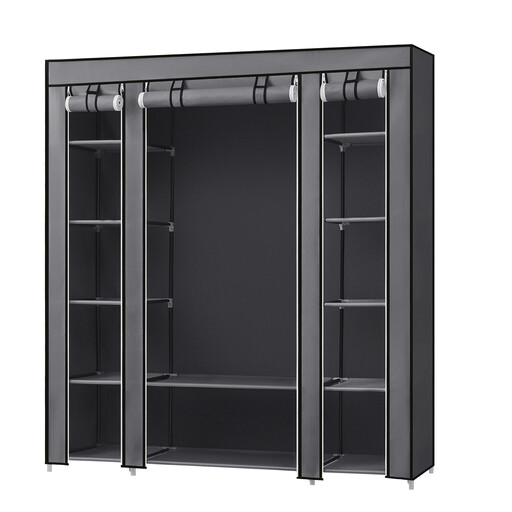
Why it's a great fit: Ideal for a first apartment, student dorm, or as a secondary wardrobe in the bedroom. It offers a large capacity at an attractive price without skimping on the core components.
The construction is based on 16 mm metal tubes and a cover made of 120 g/m? non-woven fabric. This directly counteracts the typical weak points like an unstable frame and tearing fabric.
High load capacity for the hanging rail (15 kg) and shelves (5 kg each) according to the manufacturer. Assembly is tool-free thanks to a simple plug-in system.
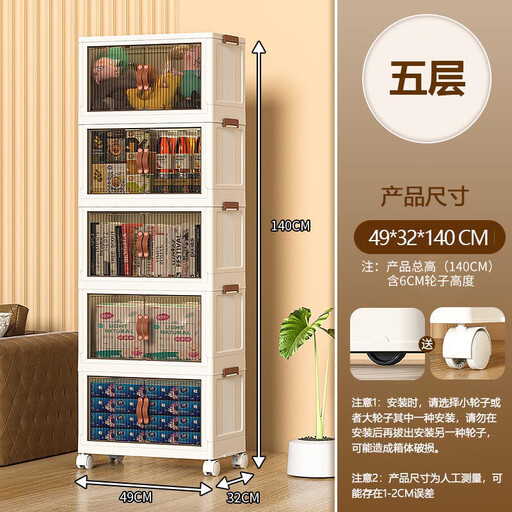
Why it's a great fit: Perfect for people who move frequently or need extremely flexible storage for the basement, attic, or even as a camping wardrobe. The innovative folding system allows for setup in seconds.
This system bypasses the typical weaknesses of a fabric wardrobe. Instead of a frame with a fabric cover, it uses a stable, self-contained box structure made of robust polypropylene that doesn't wobble or sag.
Extremely fast, tool-free assembly and disassembly. The modular design allows you to stack multiple units and adapt the storage solution to the available space.
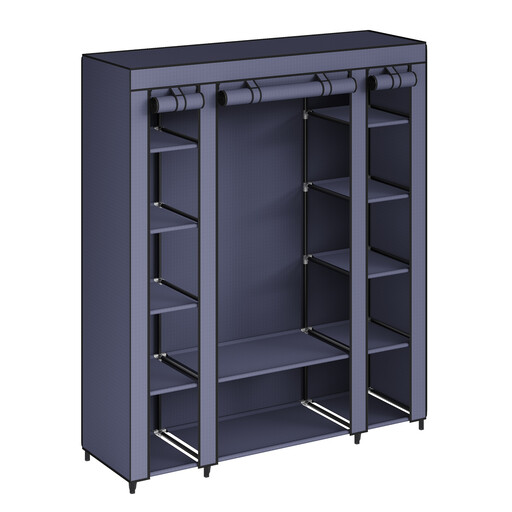
Why it's a great fit: With its generous 150 cm width and well-designed layout of a hanging rail and 12 shelves, this wardrobe is ideal for couples or individuals with an extensive wardrobe who need a stable and spacious solution.
This model relies on thick 16 mm metal tubes and a durable 120 g/m? non-woven fabric. The high specified load capacity of the hanging rail (15 kg) and the included anti-tip kit directly address the problems of instability and safety.
Very large storage volume with a clear separation between hanging and folded items. The roll-up door cover offers flexible access while protecting from dust.
We have curated a current selection of products that meet the quality and stability criteria mentioned here. Find the right solution for your needs.
The load capacity varies greatly depending on the model. It is crucial to check the manufacturer's specifications for maximum static load capacity. Sturdy models often support up to 15 kg on the hanging rail and 5 kg on each shelf. Even weight distribution is important to prevent the frame from bending. Do not overload the wardrobe beyond the recommended limits.
The lifespan depends heavily on the material quality and usage. A model with a frame made of 16 mm thick metal tubes and a cover of 120 g/m? non-woven fabric will last for several years with proper use. Cheaper models with thinner materials can show defects after just a few months. Avoid moving the wardrobe when it is fully loaded, as this puts significant stress on the connectors.
Many models come with an anti-tip kit that should be anchored to the wall for maximum safety. This is the manufacturer's recommended and safest method. If you are looking for a no-drill wardrobe solution, you should choose a lower, inherently more stable model. For very lightweight wardrobes, special adhesive brackets might be an alternative, but they do not offer the same level of safety as a secure screw-in fixture.