
Lieferung heute & morgen

Qualitätsgarantie

Willkommens-Angebote freischalten: KOSTENLOSE Lieferung | Bis zu 80 % RABATT | Kostenlose 30-Tage-JoyPlus-Testphase
App herunterladen
A fabric wardrobe can provide extra storage without the need to move or permanently install a heavy wardrobe. That makes a portable wardrobe a practical choice for rented homes, student accommodation, guest rooms or seasonal clothing. However, models vary considerably in their frames, weight limits and dust protection.
Before you buy, make sure you avoid these three common pitfalls:
One popular size is the 150 x 45 x 175 cm wardrobe. These dimensions usually refer to the width, depth and height. With a width of 150 cm, you can combine space for hanging clothes with several storage shelves. Still, check that:
A wardrobe with a hanging rail is ideal for jackets, shirts, dresses and trousers on hangers. Folded clothes, shoes and accessories are better stored in a fabric wardrobe with shelves.
The frames of folding models are usually made from metal tubes joined with plastic connectors. The tube diameter matters, but so do the stated static weight limits.
For example, the JOYFURNOS model measuring 150 x 45 x 175 cm is listed as having 16 mm metal tubes, PP plastic connectors, a weight limit of up to 5 kg per shelf and up to 15 kg on the hanging rail. These figures apply to evenly distributed, static loads. Don’t place heavy boxes on individual shelves if that would exceed the weight limit.
It’s also important to check whether a portable wardrobe has anti-tip protection. According to the product details, the black JOYFURNOS model should be secured to the wall using the included anti-tip kit. Remove all clothing before moving it.
A non-woven fabric cover can help protect clothes from dust, but it’s no substitute for a dry, well-ventilated space. Look for:
A dust-protected wardrobe is particularly useful for seasonal clothing. If you open the wardrobe often, a roll-up cover can make it easier to reach your clothes. Fabric wardrobes are only suitable for damp cellars if the space stays dry and is aired regularly.
The models below are grouped by specific use cases. This makes it easier to decide whether you need a complete portable wardrobe or extra clothes storage.
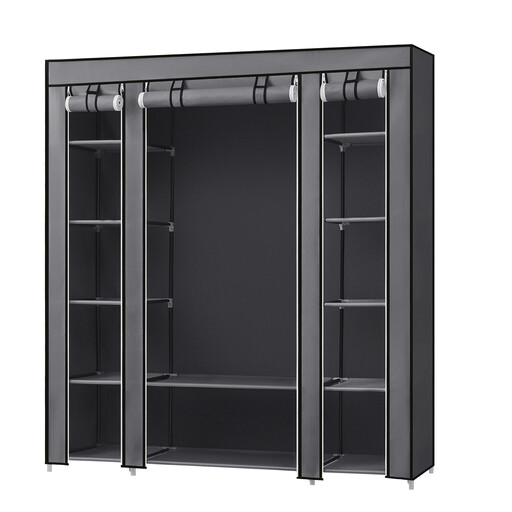
Why it suits this use: This grey fabric wardrobe combines a hanging rail with 12 storage compartments, making it a good fit for a bedroom, guest room or first home.
The product details give the exact dimensions and weight limits of 5 kg per shelf and 15 kg for the hanging rail. This makes it easier to plan what to store before assembling the wardrobe.
45 x 150 x 175 cm, 12 compartments, 120 g/m² non-woven fabric cover and a product weight of 5.3 kg.
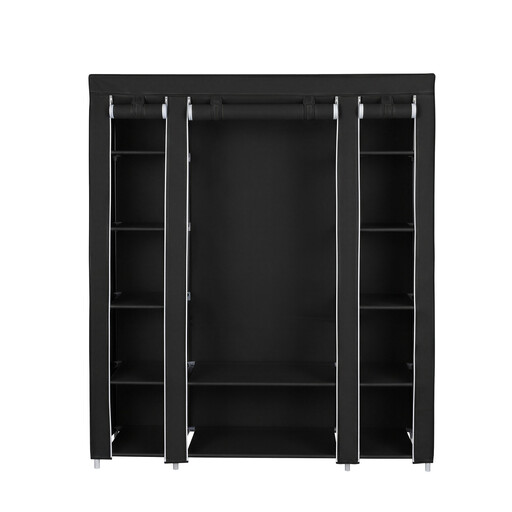
Why it suits this use: The layout, with a movable hanging rail and 12 shelves, helps you keep hanging clothes, laundry and accessories neatly separated.
The cover can be zipped closed or rolled up. An anti-tip kit is also included; make sure the wardrobe is completely empty before moving it.
16 mm metal tubes, 120 g/m² non-woven fabric, a 15 kg weight limit for the hanging rail and tool-free assembly.
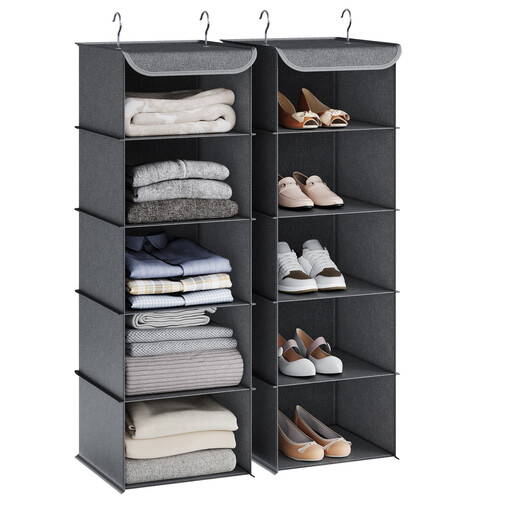
Why it suits this use: These hanging shelves add storage without taking up extra floor space. They’re suitable for jumpers, jeans, bags and laundry.
The stated weight limits are 2 kg per compartment and 10 kg per organiser. This makes it easier to avoid overloading than with products that don’t give separate limits.
Foldable design, metal hooks, bamboo inserts and two organisers in the set; no tools needed for assembly.
We’ve put together a complete, regularly updated list of products that meet these strict selection criteria and fully comply with the safety regulations in force in the EU.
Most folding wardrobes can be assembled without tools, using tubes and plastic connectors. Sort the parts according to the instructions and check that all the connectors are fully pushed together before adding your clothes. Try to distribute the weight evenly across the shelves.
For everyday use, we recommend organising your clothes as follows:
For extra clothes storage, folding boxes measuring 30 x 30 x 30 cm are a good option, as long as the compartments are large enough. Drawer organisers, on the other hand, are designed for socks, underwear, scarves and ties, and aren’t a substitute for a load-bearing shelf.
Its stability depends on the frame, connectors, floor surface and how it’s loaded. The key thing to check is the stated weight limit for the shelves and hanging rail. Use any anti-tip protection provided with taller or wider models.
There’s no single answer. It depends on whether you stay within the weight limits, keep the wardrobe in a dry place and protect the cover from sharp objects. Regularly dusting it and opening the zip carefully can help reduce wear and tear.
No. A fabric wardrobe doesn’t need electricity. The only ongoing costs are indirect, such as cleaning or buying additional storage boxes if needed. The main thing is to make sure the dimensions, shelf layout and weight limits suit the way you plan to use it.