
Lieferung heute & morgen

Qualitätsgarantie

Willkommens-Angebote freischalten: KOSTENLOSE Lieferung | Bis zu 80 % RABATT | Kostenlose 30-Tage-JoyPlus-Testphase
App herunterladen
A fabric wardrobe with clothes rail can bring clothes, shoes and accessories together in a small space. For bedrooms, guest rooms, dressing rooms or temporary accommodation, a portable wardrobe is often more practical than a fixed wardrobe. However, construction, load capacity and dust protection can vary considerably.
If you focus only on the stated number of compartments or a particularly low price, you can easily overlook important details. Three common buying pitfalls are particularly relevant:
Before buying, you should therefore consider the dimensions, materials, load limits and intended use together.
A space-saving wardrobe needs more than just a narrow width. Depth is also important: at around 45 cm deep, it remains compact while still allowing hangers, jackets and shirts to be hung lengthways. A height of around 175 cm is sufficient for many items of clothing, but should be checked against the room height and any existing skirting boards.
Compartments complement the clothes rail for storing:
A portable wardrobe with twelve compartments can make it easier to organise your belongings. However, its actual usability depends on whether the compartments can be accessed individually and how much weight each compartment can support.
A portable wardrobe usually uses a metal tube frame as its supporting structure. 16 mm metal tubes and PP plastic connectors are specific details that make it easier to compare different models than general claims such as “particularly sturdy”.
The fabric cover should be described as non-woven fabric with a stated fabric weight. A cover made from 120 g/m² material provides a verifiable specification. It is also important to check whether the front is fully enclosed, can be rolled up or is simply open. A zip can improve dust protection, but it does not replace regular cleaning and should not be considered an airtight seal.
The load capacity should be specified separately for the compartments and the clothes rail. The following models, for example, are stated to support up to 5 kg per compartment and up to 15 kg on the clothes rail. These figures refer to static loads. Heavy winter coats, full clothing boxes or uneven loading can place greater strain on the structure.
These points are therefore important for families or frequent users:
If you are not looking for a fabric solution, you could alternatively consider a wall-mounted clothes rail solution for individual garments. It takes up less floor space, but does not offer enclosed storage.
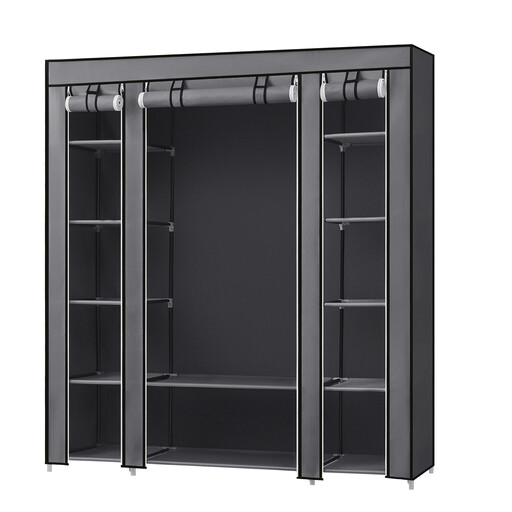
Why this product suits this profile: With a width of 150 cm, twelve storage compartments and a clothes rail, this wardrobe is ideal for anyone looking for manageable fabric-based clothing storage without a fixed wardrobe carcass.
The specifications state the exact dimensions, along with a static load capacity of 5 kg per compartment and 15 kg for the clothes rail. This makes it easier to plan how to load the wardrobe than with advertising based solely on capacity.
45 x 150 x 175 cm, 12 compartments, 16 mm metal tubes and a 120 g/m² non-woven fabric cover; the stated product weight is 5.3 kg.
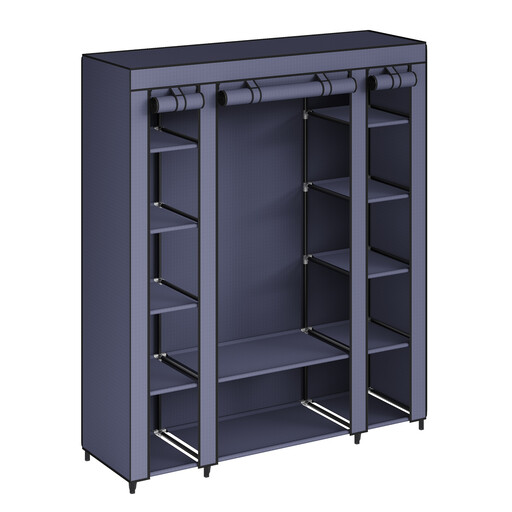
Why this product suits this profile: The closable front, roll-up door and movable clothes rail offer several ways to use it in bedrooms, guest rooms or rented accommodation.
The product specifications explicitly mention wall mounting with tip protection. They also state the load limits and materials, as well as tool-free assembly.
12 compartments, 16 mm metal tubes, 120 g/m² non-woven fabric, 5 kg per compartment and 15 kg for the clothes rail; the front can be closed or rolled up.
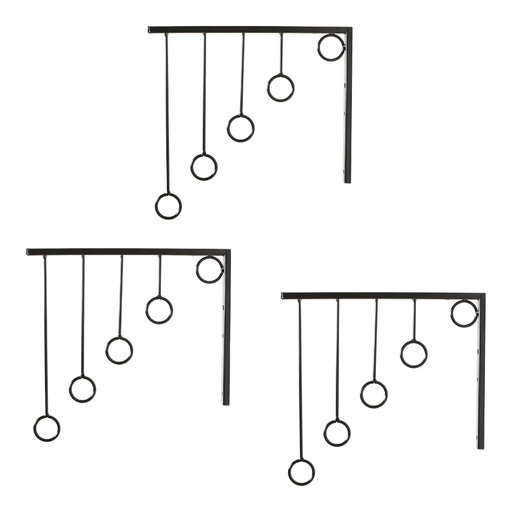
Why this product suits this profile: This wall-mounted solution is designed for households, boutiques and retailers that want to display garments visibly or create a clothes storage area without taking up additional floor space.
The vertical arrangement keeps garments visible instead of creating hard-to-reach piles. As mounting hardware is not included, you will need to choose fixings separately to suit your wall.
Three metal garment racks, each with five descending rings; dimensions per element: 27.9 x 29.2 x 2 cm. Suitable for residential and commercial spaces.
We have put together a complete, regularly updated list of products that fully meet these strict selection criteria and the safety regulations applicable in the EU.
A fabric wardrobe can usually be assembled without specialist tools. Even so, you should not rush the process. Numbered parts and clear instructions help prevent mix-ups when connecting tubes and connectors.
For safe use, we recommend:
A clothes organiser with a fabric cover is particularly suitable for clothing you use regularly. For textiles that are only used occasionally, closed boxes can also be useful. A wall-mounted clothes rail with storage compartments, on the other hand, is a practical addition when you want individual jackets, shirts or accessories to be visible and within easy reach.
Stability depends on the tube diameter, connectors, base area, load and tip protection. Specific details such as 16 mm metal tubes, 5 kg per compartment and 15 kg for the clothes rail make it easier to assess. The stated limits should not be exceeded.
It is not possible to give a reliable general lifespan. Among other things, it is influenced by the daily load, the quality of the connectors, the assembly and how the fabric cover is handled. Even loading, placing the wardrobe in a dry location and opening it carefully can help reduce wear.
Yes, provided you measure the width, depth and door-opening area beforehand. A model around 45 cm deep can save space in bedrooms or guest rooms. In a very confined space, you should also check whether the cover can be opened fully and whether the wardrobe will remain accessible for cleaning.