
Lieferung heute & morgen

Qualitätsgarantie

Willkommens-Angebote freischalten: KOSTENLOSE Lieferung | Bis zu 80 % RABATT | Kostenlose 30-Tage-JoyPlus-Testphase
App herunterladen
A fabric wardrobe is a practical and cost-effective solution when you need extra storage space. Whether for a first apartment, a student dorm, the basement, or as a flexible camping wardrobe—the benefits are clear. However, the market is flooded with models of widely varying quality. Certain weaknesses in construction and materials often mean that a supposed bargain becomes unusable after just a few months.
To help you make an informed decision, we'll show you the most common flaws to watch out for and which technical features truly matter.
Many budget-friendly models have flaws that only become apparent with daily use. Pay close attention to these three points to avoid a bad purchase:
To avoid the problems mentioned above, you should check three key technical parameters before buying. These provide reliable information about the durability and functionality of your fabric clothes storage.
The stability of a fabric wardrobe depends directly on its frame. A solid portable wardrobe should have a frame made of metal tubes. Pay attention to the diameter: tubes with a 16 mm diameter offer significantly more stability than thinner 12 mm or 14 mm versions. The connectors are just as important. High-quality models use robust PP plastic connectors that fit precisely and do not give way or break even when fully loaded.
The fabric cover is more than just a shell. A crucial indicator of quality is the grammage, which is the fabric's weight per square meter. A value of 120 g/m? is considered a robust standard, offering sufficient tear resistance and effective dust protection. Some covers are also coated, making them water-repellent and easier to clean. Also, check the quality of the zippers—smooth-running and well-made zippers are a sign of a well-thought-out overall design.
Don't rely on general advertising claims; instead, look for specific figures on maximum static load capacity. Reputable manufacturers provide these values separately for the clothes rail and the individual shelves. Typical, reliable values are, for example:
With these values, you can estimate whether the fabric wardrobe is suitable for your clothing—be it light summer dresses or heavy coats.
Based on the criteria above, we have identified several models that offer a suitable solution for different needs and living situations.
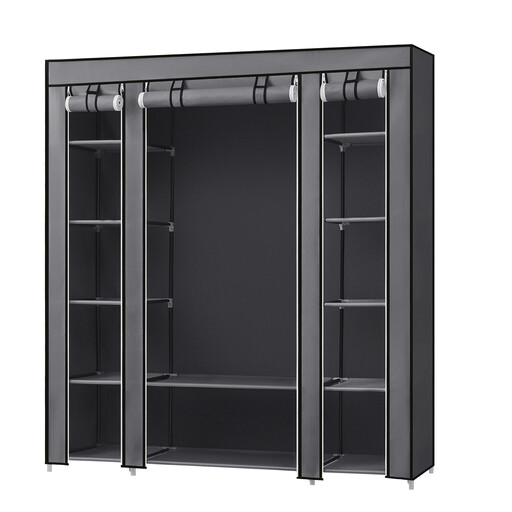
Why This Fits Their Persona: Ideal for students or as a temporary solution in a first apartment. With a width of 150 cm and 12 compartments, it offers plenty of storage for a complete wardrobe without breaking the bank. The neutral grey colour fits into almost any room.
The construction is based on 16 mm thick metal tubes and a cover made of 120 g/m? non-woven fabric. This directly counteracts the typical weak points—instability and tearing fabric.
Generous storage space with a clothes rail and shelves. Assembly is tool-free and straightforward thanks to numbered parts.
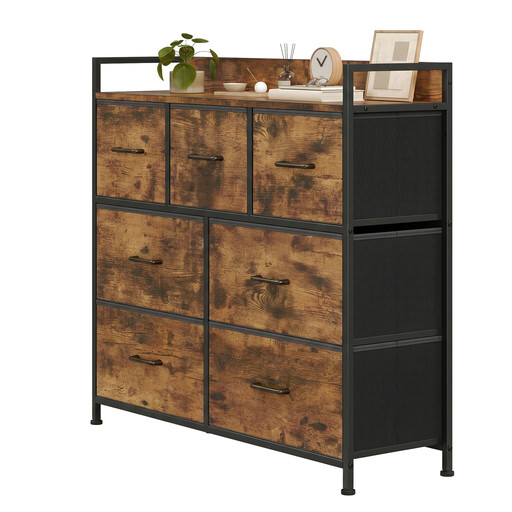
Why This Fits Their Persona: Perfect for anyone who needs to neatly store many smaller items like socks or accessories in addition to hanging clothes. This dresser combines the lightness of fabric with the stability of a piece of furniture and can also be used in the living room or hallway.
The construction, featuring a steel frame and a particleboard top, offers high stability. The problem of impractical organization is solved by the seven separate drawers, allowing for targeted storage.
High total load capacity (up to 71 kg according to the manufacturer) and an included anti-tip kit for added safety. Versatile in use.
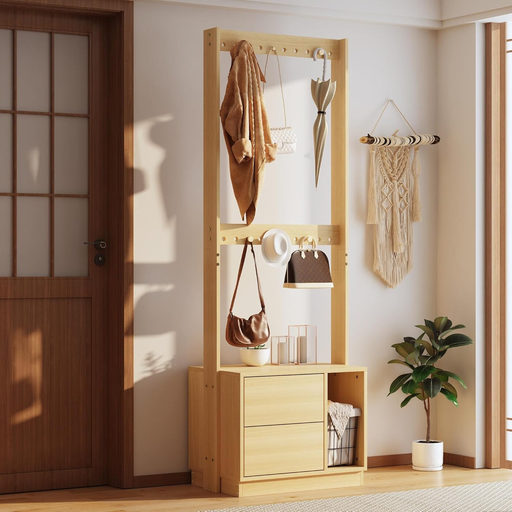
Why This Fits Their Persona: With a width of just 60 cm, this wardrobe rack fits perfectly into small nooks, narrow hallways, or as an open-concept addition to a bedroom. The minimalist design feels airy and doesn't visually weigh down the space.
This model bypasses the low-quality fabric trap with its open design. The construction of MDF boards and a metal frame ensures defined and reliable stability for daily use.
Very compact dimensions and a modern aesthetic. The combination of hanging storage, shelves, and drawers is optimized for small spaces.
We have compiled a comprehensive, up-to-date list of products that meet these selection criteria.
How much weight can a fabric wardrobe hold? The load capacity varies by model. It's important to check the manufacturer's specifications for the maximum static load capacity. As a rule of thumb, a sturdy clothes rail should be able to hold about 15 kg, while individual shelves are designed for about 5 kg. Avoid overloading to ensure the longevity of the structure.
Can you assemble a collapsible wardrobe by yourself? Yes, most models are designed for simple, tool-free assembly. The parts are usually numbered, and the instructions provide a step-by-step guide. One person can typically assemble such a wardrobe in 20 to 30 minutes.
How do you clean the cover of a fabric wardrobe? The non-woven fabric cover is generally not suitable for machine washing. To clean it, simply wipe the fabric with a slightly damp cloth. On most models, the cover's primary purpose is dust protection and it should not be treated with harsh cleaning agents.