Commuters with just a few cloths
If you only need to dry a few face cloths after getting home, look for separate hanging spaces and a footprint that fits the room you have available.


If you regularly need to dry just a few suitable cloths, a compact heated airer with enough space to hang them separately could be a good fit. If you have several items, usable drying space and the airer’s dimensions when open matter more. An unheated airer uses no electricity for heating, but you’ll still need to ventilate the room when drying laundry indoors. Before choosing a specific mains-powered model, check its conformity documents, required markings and German-language safety instructions.
If you only need to dry a few face cloths after getting home, look for separate hanging spaces and a footprint that fits the room you have available.
If you have other small laundry items to dry as well as face cloths, check that the rails or tiers offer enough usable space and that the airer fits in the room when open.
If you want to avoid using electricity for heating or need to keep an eye on humidity in the drying room, an unheated airer may be suitable. You’ll still need to ventilate the room to remove moisture when drying laundry indoors.
A good fit if: you want to hang a few heat-suitable cloths separately and have a small space for drying.
The trade-off: Fewer hanging spaces limit how much laundry you can dry at once. The heating function uses electricity and doesn’t replace ventilation.
A good fit if: you want to dry several cloths or other suitable laundry items at once and have enough floor space.
The trade-off: More hanging space takes up more room; it doesn’t guarantee a particular drying time for face cloths.
A good fit if: you have plenty of time for drying and a well-ventilated space, and don’t want to use electricity for the airer.
The trade-off: The rails don’t provide extra heat, and you’ll still need to remove moisture when drying laundry indoors.
A good fit if: you’re planning a permanent drying space for considerably more laundry and have arranged installation and a power supply.
The trade-off: For the occasional face cloth, a fixed installation that needs extra space and fitting is usually more than you need.
| Your priority | What to look for when buying | Who it matters most to |
|---|---|---|
| Limited floor space | Footprint, number and layout of hanging spaces; measure the space available where you plan to use it. | If I only have a few cloths to dry, I want to hang them separately in a small space. Limited floor space is the top priority for around 40% of consumers. |
| Several damp items | Check the rails or tiers, how the drying space can be used and the dimensions when the airer is open. | If I have other small laundry items to dry as well as face cloths, I need enough separate hanging spaces. The amount of laundry that can be dried at once is the top priority for around 30% of consumers. |
| Indoor humidity | Choose a spot where you can ventilate regularly; heat from the airer doesn’t remove moisture from the room. | If I dry cloths indoors, I want to be able to remove the moisture afterwards. A well-ventilated drying space is the top priority for around 20% of consumers. |
| Electricity for heating | Compare the stated power in watts with how long you expect to use the airer; an unheated airer uses no electricity for heating. | If I want to avoid using electricity for heating while drying, an unheated airer could suit me. Avoiding electricity for heating is the priority for around 10% of consumers. |
A heated airer doesn’t remove water from damp cloths from the room’s air. The German Environment Agency advises ventilating more when drying laundry indoors.
Choose a drying spot where you can ventilate regularly, whether or not the airer is heated.
Details about the design and rated power don’t prove that face cloths will dry in a particular amount of time. Information from different appliances isn’t a like-for-like comparison unless conditions are the same.
Check that the hanging spaces suit your cloths, and estimate electricity use based on how long you’ll actually use the airer, rather than an assumed drying time.
Adler gives the AD 7821’s open dimensions as 148 × 52,5 × 90 cm and its folded dimensions as 113 × 52,5 × 8 cm. What matters when using it is whether the airer fits in your drying space when fully set up.
Measure the space where you plan to use it with the airer open. If you only have a few cloths to dry, a smaller or unheated airer may also be suitable.
The 850-032 and 850-048 models represent a compact heated airer and a two-tier design respectively.
The foldable AD 7821 is an electric winged airer. Adler lists 18 heating elements and gives the open dimensions as 148 × 52,5 × 90 cm.
The Classic 200 Easy Black is an unheated, foldable clothes airer. Leifheit lists 20 m of drying line and two small-item holders.
Foxydry Pro is an example of a fixed electric system with optional warm air. Foxydry lists two fans and 750 W for the warm-air function.
The following Joybuy products have heated hanging space for several cloths. Before buying a mains-powered model, check the documents and instructions for the exact version on offer.
 No image available
The fold-out side wings provide extra hanging space when you need to dry several items at once.
Stated temperature range: 45–55 °C; dimensions: 144 × 53 × 96 cm.
You’ll still need to remove moisture when drying laundry indoors. Before buying, check the conformity documents for the specific model, along with the required markings and German-language instructions for use and safety information.
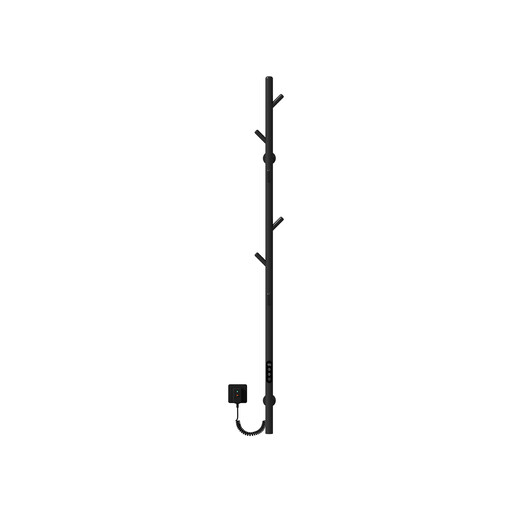 No image available
One bar and six hooks provide several places to hang individual cloths.
Stated power: 100 W; dimensions: 1500 × 125 × 140 mm; the product information says the temperature is adjustable.
You’ll still need to remove moisture when drying laundry indoors. Before buying, check the conformity documents for the specific model, along with the required markings and German-language instructions for use and safety information.
First, compare the spacing you need between hanging areas with the floor space available. A compact design may be enough for a few cloths; extra rails or tiers are mainly useful if you also have other laundry to dry. The design alone doesn’t tell you how long drying will take.
Yes. The German Environment Agency advises ventilating more when drying laundry indoors; the heat from the airer doesn’t remove moisture from the room’s air.
No. You can’t determine whether a particular location is suitable from the product name alone. Adler lists an IP22 rating for the AD 7821; check the instructions for the specific model and the conditions where you plan to use it. This doesn’t mean it’s automatically approved for every area of a bathroom.
Divide the stated power in watts by 1,000, then multiply the result by the number of hours it’s used to calculate the energy consumption in kilowatt-hours. To estimate actual use, you’ll need a realistic running time; the wattage alone doesn’t tell you how long drying will take.
Check the documents for the specific appliance version, including the applicable conformity requirements, required markings and any necessary German-language instructions for use and safety information. The German Federal Network Agency explains that the CE marking is a declaration made by the manufacturer under its own responsibility; it isn’t independent confirmation of a particular drying performance.