What to look for when buying
First decide how many items you want to dry at once and how much space you have. Then you can weigh up whether the extra heat is worth the electricity use and the need to ventilate the room.
| Consideration |
What to check before buying |
Who it matters most to |
| Drying a few cloths separately |
How many cloths will fit at once and whether you can hang them with space between them. |
If I want to hang just a few face cloths somewhere airy until my next laundry day, having the right layout matters most. Around 33% of consumers are likely to prioritise drying a few cloths separately. |
| Space and placement |
Dimensions when set up and folded away, cable length, and the instructions and protection rating for the specific model. |
If space is limited, I want to know whether the appliance will actually fit where I plan to put it and whether it can be used there. Around 23% of consumers are likely to focus on a space-saving set-up. |
| Additional laundry |
Which items you plan to dry at once and how the rails, wings and dimensions are arranged. |
If I have other laundry to dry between wash days, I need more hanging space than I would for a few cloths. Around 22% of consumers are likely to prioritise extra space for laundry. |
| Electricity use and room humidity |
Rated power and intended running time, as well as how you can ventilate the room when drying items indoors. |
If I want to limit extra electricity use and moisture in the room, I compare unheated and heated options and factor in ventilation. Around 22% of consumers are likely to consider this a priority. |
The German Environment Agency points out that damp laundry indoors makes regular ventilation particularly important. A heated rail does not remove the moisture released through evaporation from the room.
Joybuy products at a glance
This selection includes heated towel rails for a dedicated drying spot and a folding heated clothes airer for additional laundry. Before buying a heated rail, check that its installation and intended location are suitable for your room.
 No image available
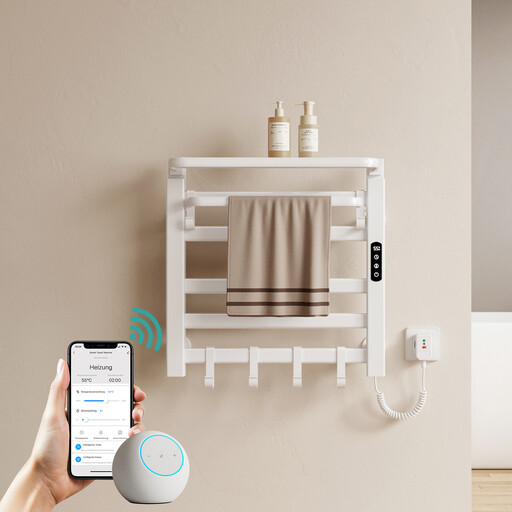
EMKE heated towel rail, 50 × 50 cm, 140 W, white
A dedicated drying station with extra hanging options could be suitable if you need space for small items as well as face cloths.
50 × 50 cm; 140 W; Wi-Fi control; IPX5 protection rating. The description lists a fold-down shelf, a towel rail and six unheated hooks.
View at Joybuy
 No image available
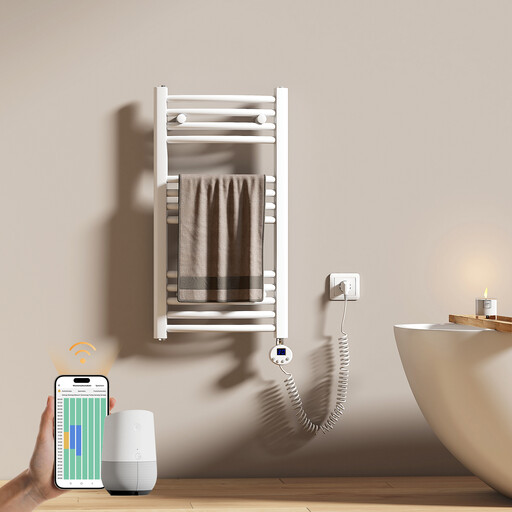
EMKE Wi-Fi heated towel rail, 750 × 400 mm, white
The stated size and programmable controls could be useful if you’re planning to use a dedicated drying spot at set times.
750 × 400 mm; thermostat, timer and weekly programme according to the description; IP44 protection rating.
View at Joybuy
 No image available
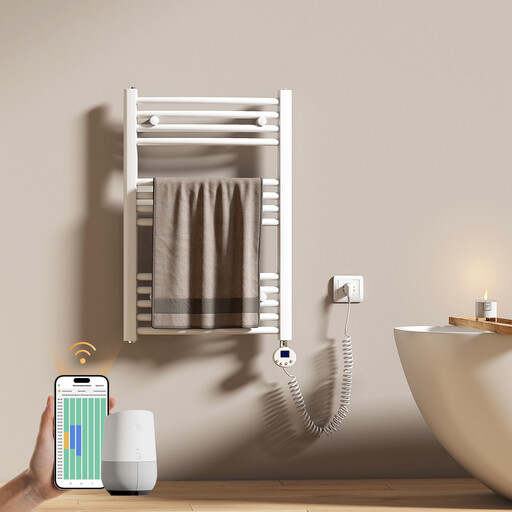
EMKE Wi-Fi heated towel rail, 750 × 500 mm, white
This version could suit a dedicated drying spot if its dimensions fit the space you have available.
750 × 500 mm; thermostat, timer and weekly programme according to the description; IP44 protection rating.
View at Joybuy
 No image available
Folding heated clothes airer, 45–55 °C, 144 × 53 × 96 cm
A folding-wing airer could be a good choice if you want to hang other laundry as well as face cloths between wash days.
The description lists 230 W, a load capacity of up to 10 kg and side wings. Dimensions when open: 144 × 53 × 96 cm.
View at Joybuy
 No image available
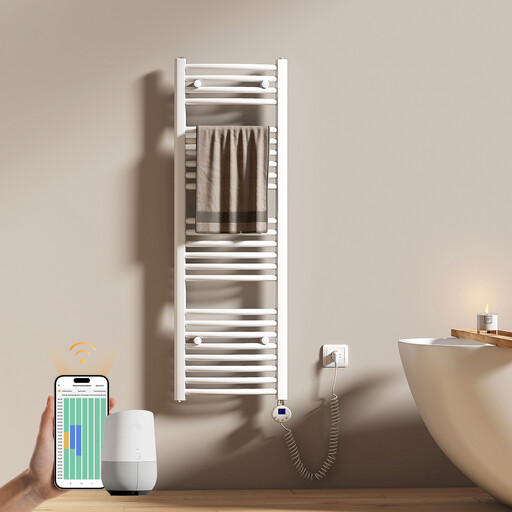
EMKE Wi-Fi heated towel rail, 1200 × 400 mm, white
This longer version could be worth considering for a dedicated drying spot if its dimensions suit the room and the way you plan to hang items.
1200 × 400 mm; thermostat, timer and weekly programme according to the description; IP44 protection rating.
View at Joybuy
Frequently asked questions
Does heat make face cloths hygienically clean?
No. Drying and washing are separate steps. For flannels, the Federal Institute of Public Health recommends washing at a minimum of 60 °C with a heavy-duty detergent containing bleach. Also follow the care instructions for the fabric.
Can I use a heated airer in the bathroom?
That depends on the appliance and its specific location. DOMO gives the DO7117DR an IPX4 protection rating, but this is not blanket approval for other models or every spot in the bathroom. Before setting it up, check the installation and user instructions for the appliance in question.
How can I estimate the electricity use of a heated airer?
For a rough calculation, multiply the power in kilowatts by the running time in hours; the result is the energy used in kilowatt-hours. Assuming the appliance runs continuously at its rated power, two hours at 150 W works out at 0,30 kWh, while two hours at 220 W works out at 0,44 kWh. These are calculated figures, not measurements for drying a particular number of cloths.
Do I still need to ventilate the room if I use a heated airer?
Yes, if drying laundry indoors releases moisture into the air. The German Environment Agency recommends paying particular attention to regular ventilation when drying damp laundry indoors; a heated rail does not remove the moisture from the room.
Which labelling and legal rights are relevant when buying?
Whether a product needs CE marking depends on the relevant EU rules. The Low Voltage Directive covers electrical equipment with 50 to 1.000 V AC; the German government portal explains that CE marking is required only where the relevant rules apply. Under EU consumer law, goods bought from a trader that are faulty are generally covered by a minimum two-year legal guarantee. Any additional manufacturer’s warranty does not replace this.


