
Lieferung heute & morgen

Qualitätsgarantie

Willkommens-Angebote freischalten: KOSTENLOSE Lieferung | Bis zu 80 % RABATT | Kostenlose 30-Tage-JoyPlus-Testphase
App herunterladen
Face masks differ in more than just fragrance, packaging or country of origin. The key factors are the type of mask, ingredients, application time and suitability for your own skin condition. If you focus solely on terms such as “Glow”, “Repair” or “Collagen”, you can quickly end up buying a product that does not fit into your everyday skincare routine.
This guide from the Joybuy Product Recommendation Officer helps you compare Korean and Japanese face masks objectively and avoid common buying mistakes.
Descriptions such as “brightening face mask”, “anti-ageing face mask” or “pore care” initially describe a desired skincare focus, but do not guarantee a particular effect. The INCI list is more informative. Moisturising formulations often contain glycerin, betaine, hyaluronic acid or Sodium Hyaluronate, for example.
When choosing a collagen mask, it should also be clear whether hydrolysed collagen is listed in the formulation and which other ingredients are included. Cosmetic face masks are not a substitute for medical treatment and should not create therapeutic expectations.
A sheet mask or fabric face mask is generally designed for a short application of around 10 to 20 minutes. Depending on the product, a hydrogel mask can be worn for considerably longer. Wash-off masks are removed with water after a specified period.
If you are looking for a mask for daily use, pay attention to application time, pack size and hygienic dispensing. A set of 30 may be more economical for regular use, but it requires careful storage and a secure seal.
Even a formulation marketed as a soothing face mask may contain fragrances or essential oils. If you have sensitive or irritation-prone skin, it is therefore worth looking out for terms such as “Fragrance”, “Parfum”, Limonene, Linalool or various plant oils.
Before using the product fully for the first time, a patch test on a small area of skin is recommended. If redness, itching or swelling occurs, stop using the product. Face masks should not be applied to damaged, inflamed or eczema-prone skin unless the product information specifically states otherwise.
The fit around the eyes, nose and mouth affects how evenly the essence remains distributed across the skin. For dry skin, a moisturising mask containing glycerin and hyaluronic acid may be a good choice. For lighter daily care, thin fabric masks with a short application time are often more practical.
For dry skin, humectants such as glycerin, hyaluronic acid and betaine are particularly important. Ceramides, panthenol or certain lipids can complement the care of a stressed skin barrier.
Centella asiatica, madecassoside, allantoin or dipotassium glycyrrhizate are often used in soothing face masks. If you have blemish-prone or oily skin, consider the entire formulation rather than focusing on just one active ingredient.
A brightening face mask may contain niacinamide or vitamin C ingredients, for example. When choosing, concentration, skin tolerance and daily sun protection are more important than a promotional product name. Claims about visible changes should not be understood as guaranteed results.
Individually packaged masks offer clear dosing and are suitable for travelling. Jars or resealable pouches containing several sheets can reduce the price per item, but they must be closed securely and kept clean. The expiry date and batch number are shown on the packaging and should be checked before use.
Follow the application time stated by the manufacturer. Leaving a sheet on your face after it has already dried is not a reliable way to achieve greater skincare benefits. After use, the remaining essence is usually gently patted into the skin; for wash-off products, follow the relevant instructions on the packaging.
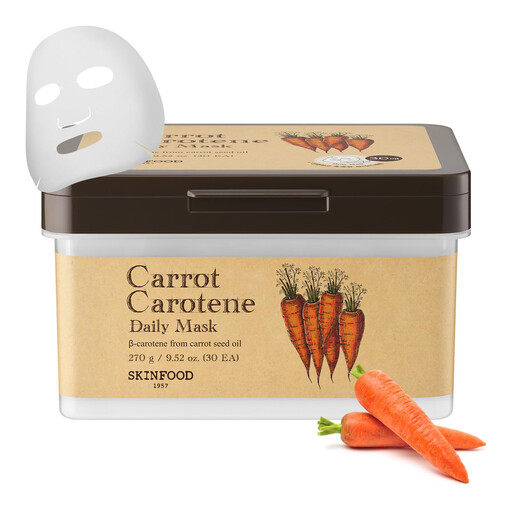
Why this product suits this profile: The set of 30 is designed for regular use and contains 270 g of product per pack. The stated application time is 5 to 20 minutes.
The number of sheets and usage instructions are clearly stated. A patch test should be carried out before first use because the formula contains essential oils.
30 individual sheet masks, niacinamide and carrot root extract according to the INCI list; designed for daily use.
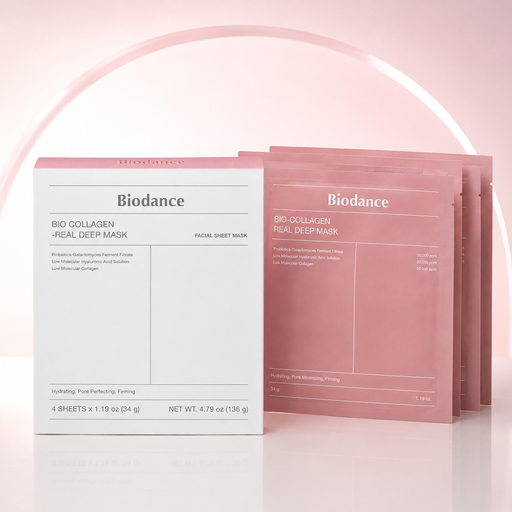
Why this product suits this profile: According to the product information, the hydrogel mask is intended to be worn for three to four hours or overnight.
The long wearing time is explicitly stated, preventing the mask from being used accidentally like a classic sheet mask.
Four hydrogel masks weighing 34 g each; the INCI list does not include collagen extract, glycerin or ceramides, but instead lists Ceratonia Siliqua Gum and other gelling agents.
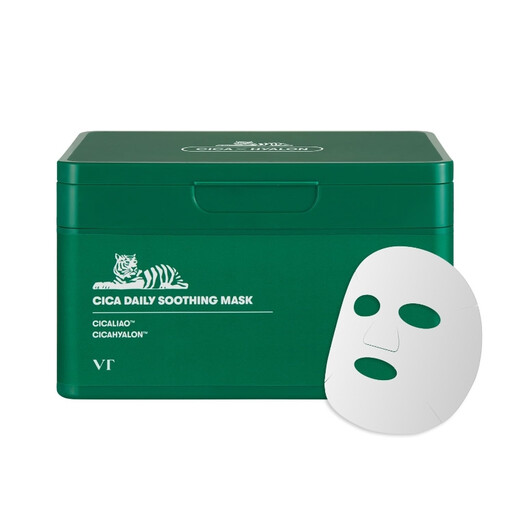
Why this product suits this profile: The hygienic dispenser with 30 sheets and the stated application time of 10 to 20 minutes make it suitable for a frequent skincare routine.
Taking out individual sheets with the enclosed tweezers supports hygienic use. Nevertheless, the formulation should be checked for fragrances.
30 fabric masks, 0.2-mm Nude-Seal fabric according to the product description, plus Centella asiatica, panthenol and Sodium Hyaluronate in the INCI list.
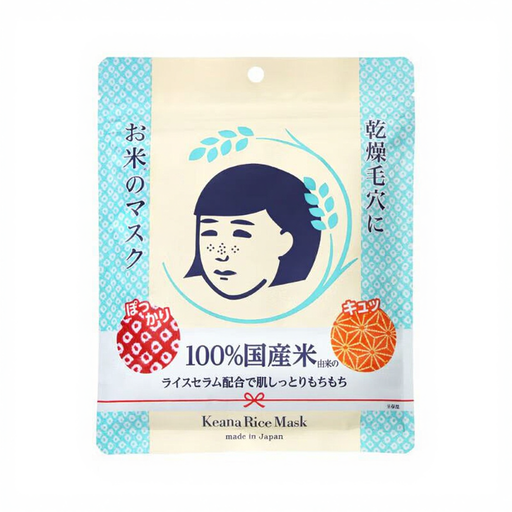
Why this product suits this profile: According to the product description, this Japanese sheet mask is aimed at dry, uneven-textured skin and is used for 5 to 10 minutes.
The short application time is clearly stated. Alcohol appears in the INCI list, so sensitive skin requires a tolerance test beforehand.
10 sheets with rice ferment filtrate, rice bran oil and glucosyl ceramide according to the stated composition.
We have put together a complete, regularly updated list of products that fully meet these strict selection criteria and the safety regulations applicable in the EU.
This depends on the product and your skin condition. Daily masks are labelled accordingly. Classic sheet masks are often used two to three times a week. If you have sensitive skin, increasing use more gradually is advisable. The specific manufacturer’s instructions on the packaging take precedence.
Many fabric masks are intended to be worn for around 10 to 20 minutes. A hydrogel mask may have a longer application time. It should not automatically be worn until it has completely dried. If you experience burning, itching or redness, remove it immediately.
The country of origin alone says nothing about skin tolerance. Korean and Japanese face masks can contain very different formulations. You should therefore check for fragrances, essential oils, alcohol, preservatives and the usage instructions. A patch test before using the mask on your face for the first time reduces the risk of an unexpected reaction, but does not replace dermatological advice.