
Lieferung heute & morgen

Qualitätsgarantie

Willkommens-Angebote freischalten: KOSTENLOSE Lieferung | Bis zu 80 % RABATT | Kostenlose 30-Tage-JoyPlus-Testphase
App herunterladen
A face sun cream SPF 50+ should provide reliable protection against UV radiation while fitting comfortably into your daily skincare routine. In practice, however, choosing the right product is often made harder by marketing claims: a lightweight texture isn’t automatically suitable for oily skin, “invisible” doesn’t necessarily mean streak-free, and a high SPF doesn’t make up for applying too little product.
That’s why our selection as Joybuy Product Recommendation Officer focuses on clear, verifiable criteria such as filters, texture, skin type, finish and ease of use.
SPF 50+ primarily describes protection against UVB radiation under standardised test conditions. It does not mean you can stay in the sun for longer without taking other precautions. Even with face sun protection SPF 50, seeking shade, wearing clothing, a sun hat and avoiding intense midday sun are still sensible measures.
A lightweight sun cream may contain alcohol, fragrances or certain skincare ingredients that not every skin type tolerates equally well. If you have sensitive skin, you should check the full INCI list. For blemish-prone skin, look for additional details such as non-comedogenic or an oil-free, fast-absorbing texture.
A tinted sun cream can even out your skin tone visually, but it usually offers less coverage than a foundation. What’s more, a universal tint can look different on very fair, dark, olive or strongly cool-toned skin. Testing it along your jawline and neck can help you avoid a purchase you’ll regret.
Look for SPF 50+ together with clearly stated UVA and UVB protection. In the EU, the UVA symbol inside a circle indicates a standardised minimum level of UVA protection relative to the UVB protection. Ratings such as PA++++ often come from Asian labelling systems and add to the product information, but they don’t replace what’s on the European packaging.
“Water-resistant” does not mean the protection stays the same after swimming, heavy sweating or towel-drying. You should reapply after any of these situations.
Using too little product significantly reduces the actual protection. For your face and neck, the so-called two-finger rule is often recommended: a line of product along two fingers. Apply your sun cream in the morning as the last step of your skincare routine, and reapply regularly if you’re spending a long time outdoors, especially after contact with water or a towel.
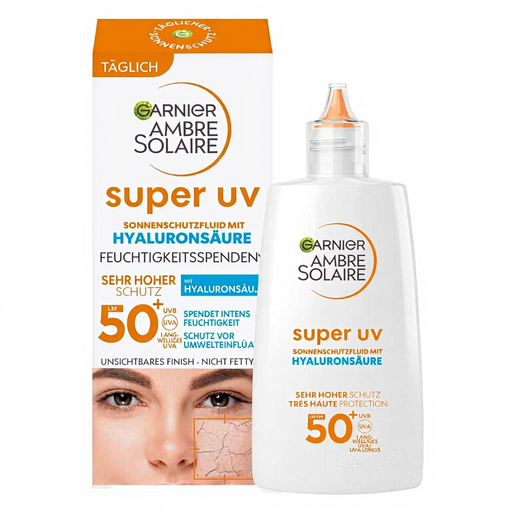
Why this product fits the profile: This fluid is designed for daily use on the face and is described as containing hyaluronic acid, having a matte finish and being suitable under make-up.
The product details state SPF 50+, UVA/UVB protection and the need for regular reapplication. This means your choice isn’t based solely on a marketing claim like “invisible”.
Fluid texture, hyaluronic acid and matte finish according to the product description.
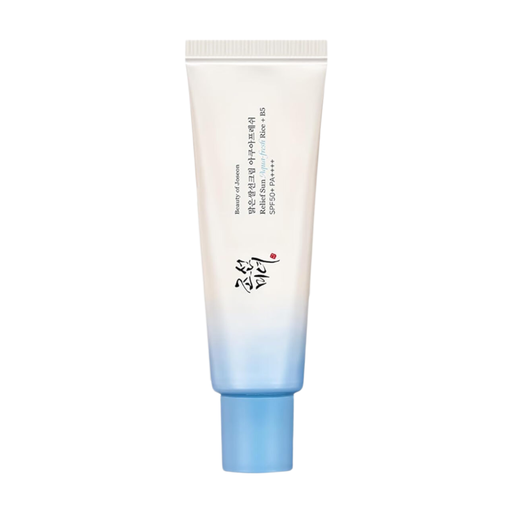
Why this product fits the profile: This Korean sun cream combines SPF50+ PA++++ with a lightweight, fast-absorbing texture, plus rice water and panthenol.
The description explicitly mentions no white cast, no greasy feel and no sticky residue – important factors for daily reapplication.
SPF50+ PA++++, panthenol and a light lotion texture according to the product information.
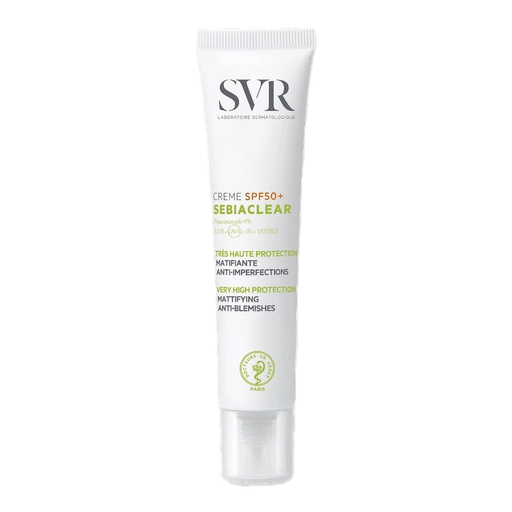
Why this product fits the profile: According to the details, this cream is aimed at oily, blemish-prone and congestion-prone skin, and is intended for use on the face and neck.
The product data mentions a non-comedogenic, non-greasy and water-resistant formula. It does contain fragrance, which should be taken into account if you have sensitive skin.
SPF50+, matte finish, plus niacinamide, azelaic acid and glycerin according to the product description.
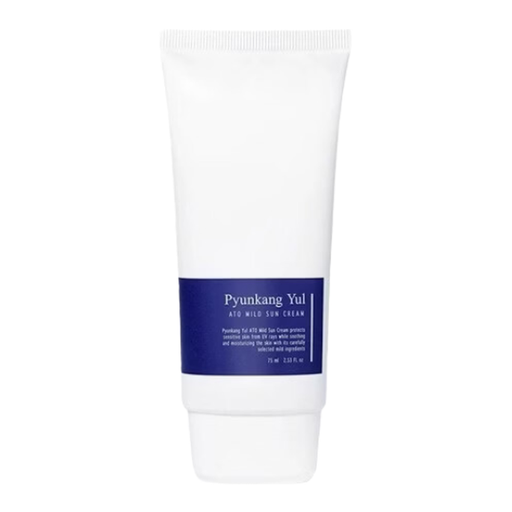
Why this product fits the profile: The ATO line is described as being for sensitive, dry or atopic-prone skin, and comes in a larger 75 ml format.
The product details mention a lightweight, non-greasy texture and reduced white residue. You should check the current INCI list before buying.
SPF 50 PA++++, 75 ml size and formulation for sensitive or dry skin according to the product description.
We’ve put together a full, regularly updated list of products that meet these strict selection criteria and fully comply with EU safety regulations.
Apply your face sun cream as the last step in your skincare routine. Spread it over your hairline, ears, bridge of the nose, jawline and neck as well. If you’re using sun protection under make-up, wait a moment for the film to set. When reapplying outdoors, a thin, fresh layer can work better than relying on a single application from the morning.
If you experience irritation, stinging or persistent redness, wash the product off and stop using it. Sun cream is for external use only and should not get into your eyes.
If you’re spending a long time outdoors, regular reapplication is recommended. Reapply after sweating, swimming or towel-drying. In an office with no direct sunlight, you won’t need to reapply as often, but a morning application is still sensible if your skin is exposed to UV.
Yes, lightweight fluids and lotions are usually best for this. Let the product absorb evenly first, then apply your foundation without rubbing too hard. A tinted sun cream can even out your complexion visually, but it doesn’t necessarily replace a foundation.
Check the best-before date and the PAO symbol on the packaging. Heat, direct sunlight and frequent opening can affect the product’s quality. Store the tube or bottle in a cool, dry place with the lid on tightly, and check the smell, colour and consistency before each use.