
Lieferung heute & morgen

Qualitätsgarantie

Willkommens-Angebote freischalten: KOSTENLOSE Lieferung | Bis zu 80 % RABATT | Kostenlose 30-Tage-JoyPlus-Testphase
App herunterladen
Sensitive skin reacts quickly to external factors. Redness, tightness, or dryness after cleansing are common symptoms. Finding a suitable facial cleanser for sensitive skin can therefore be challenging, especially since the market is flooded with promises. Many products don't deliver on their claims and can even worsen skin issues. This guide will help you understand the key criteria and avoid marketing traps.
As your Joybuy Product Recommendation Officer, I've made it my mission to filter through market information and provide you with objective, practical advice. Here are the most common pitfalls you should be aware of:
To make an informed decision, you should focus on objective features rather than marketing messages. The following three parameters are essential for a soothing facial cleanser.
The skin's surface is protected by a natural acid mantle with a slightly acidic pH of about 4.7 to 5.75. This barrier protects against harmful microorganisms and prevents moisture loss. Alkaline cleansing products (with a high pH) can disrupt this protective layer, making the skin more susceptible to dryness, irritation, and redness. A pH-balanced facial cleanser or a product with a slightly acidic pH is therefore fundamental to keeping the skin in equilibrium.
Surfactants are the cleansing agents that dissolve dirt and oil from the skin. However, their effects can vary greatly.
For sensitive skin, a short and clear ingredient list is often a good sign. Certain additives should be avoided to ensure a facial cleanser for redness.
Based on the criteria above, we have identified several products suitable for different user profiles and needs.
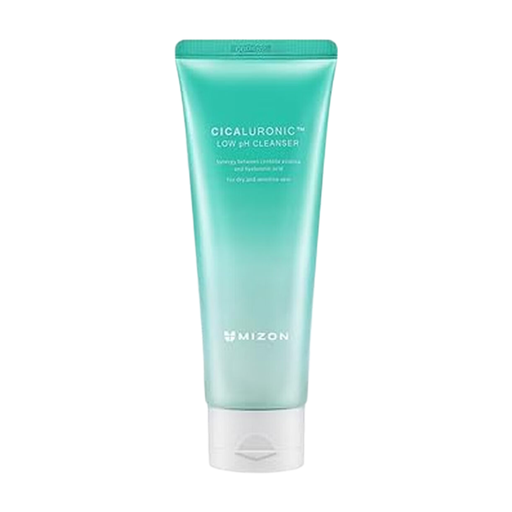
Why it's a match: Ideal for users seeking a science-backed formula without unnecessary additives. The clear focus is on strengthening the skin barrier and soothing irritation.
This product bypasses the empty "sensitive" promise with a clear declaration: The low pH level and the Cicaluronic complex are objective features that actively support the skin's acid mantle.
Combines soothing Centella Asiatica with hydrating Hyaluronic Acid. Free from sulfates, artificial colours, and fragrances.
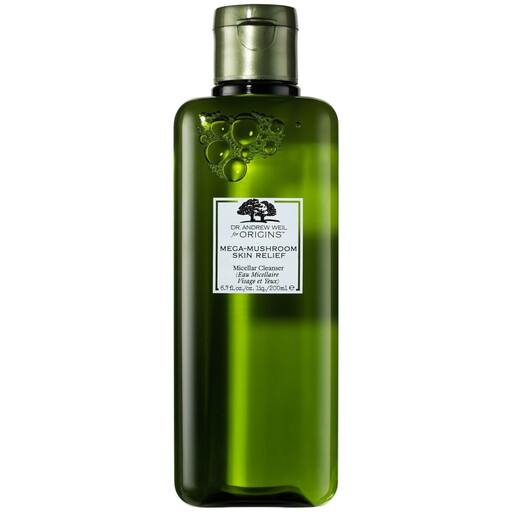
Why it's a match: Perfect for those who prefer a quick, gentle, no-rinse cleanse. Ideal for on-the-go, after the gym, or as the first step in a double-cleansing routine in the evening.
This micellar water avoids the "natural" trap. Although it's based on mushroom and berry extracts, the formula is soap- and alcohol-free and specifically designed for calming the skin, rather than relying on potentially irritating essential oils.
No-rinse cleansing is required, which minimises mechanical irritation from water and towels. The formula is designed to refresh and soothe the skin.
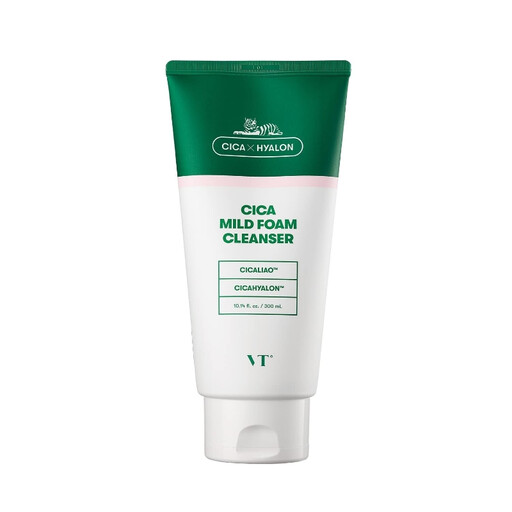
Why it's a match: For anyone looking for a reliable, gentle, and long-lasting cleansing solution. The large 300ml packaging offers excellent value for daily use.
This product debunks the foam myth. It's labelled a "Mild Foam Cleanser" and creates a soft, creamy lather based on gentle surfactants that don't strip the skin—unlike aggressively foaming products.
Contains the proven active ingredient Centella Asiatica (Cica) to soothe the skin. The formula removes impurities without disrupting the natural moisture balance.
We have compiled a complete, up-to-date list of products that fully meet these strict selection criteria.
For most people with sensitive skin, cleansing twice a day—morning and evening—is ideal. The morning cleanse removes sweat and sebum that have built up overnight. The evening cleanse is essential to remove makeup, sunscreen, dirt, and pollutants from the day. If your skin is extremely dry or irritated, rinsing your face with just lukewarm water in the morning and performing a thorough but gentle cleanse in the evening may be sufficient.
Yes, a cleansing foam for sensitive skin can be an excellent choice, provided it is formulated correctly. The crucial factor isn't the foam texture itself, but the type of surfactants used. Modern foams often use mild surfactants derived from coconut or amino acids, which create a soft, creamy lather without compromising the skin barrier. Look for products explicitly labelled as sulfate-free and pH-balanced.
The term "pH-neutral" can be misleading. Chemically, neutral is a pH of 7. However, in skincare, "pH-balanced" or "skin-friendly pH" means the product's pH level matches the skin's natural, slightly acidic pH (around 5.5). Such a formula helps keep the skin's acid mantle intact and is therefore beneficial for all skin types, but especially for dry and sensitive skin.