
Lieferung heute & morgen

Qualitätsgarantie

Willkommens-Angebote freischalten: KOSTENLOSE Lieferung | Bis zu 80 % RABATT | Kostenlose 30-Tage-JoyPlus-Testphase
App herunterladen
By the Joybuy Product Recommendation OfficerUpdated July 28, 2026
Choosing the right facial cleansing foam can be a challenge given the overwhelming number of products and marketing claims. An unsuitable product won't just clean ineffectively; it can also lead to skin irritation, dryness, or worsen existing skin conditions like acne. To help you navigate the options, we'll highlight the most common pitfalls and show you which objective criteria truly matter when making your selection.
Many users invest in products that fail to deliver the desired results. This is often due to pervasive marketing myths or misunderstood product features.
To avoid making the wrong purchase, you should focus on the product's fundamental properties. These three parameters are decisive for effectiveness and skin compatibility.
Surfactants are the active cleansing agents responsible for foam creation and cleaning power. Their quality determines how gentle a product is on the skin.
A good cleansing foam should be tailored to your specific skin concerns. Look for the following ingredients:
The skin's surface naturally has a slightly acidic pH of around 5.5. This acid mantle fends off harmful microorganisms and keeps the skin supple. A cleansing product should have a similar, skin-neutral pH. Products with a high (alkaline) pH can disrupt this protective layer, leading to dryness, irritation, and an increased susceptibility to blemishes.
Based on the criteria above, we have identified several products that are particularly well-suited for specific user profiles and their needs.
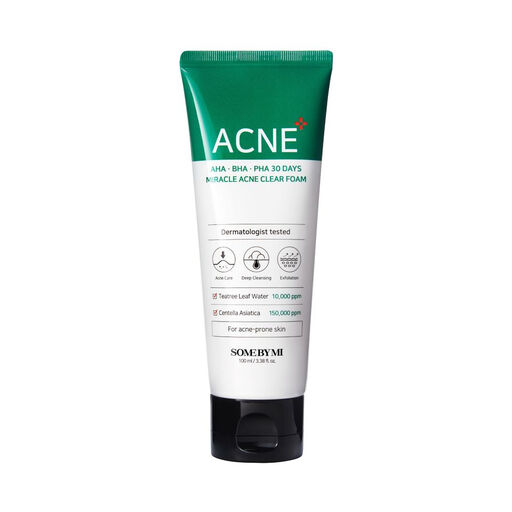
Why it's a match: Developed specifically for acne-prone skin, this foam combines various acids to target impurities and clogged pores effectively.
Sidesteps the misleading ingredient trap with a clear formulation containing 5,000 ppm of Salicylic Acid (BHA) and soothing additives like Centella Asiatica to avoid unnecessary irritation.
The combination of AHA, BHA, and PHA provides multi-level exfoliation that works both on the skin's surface and deep within the pores.
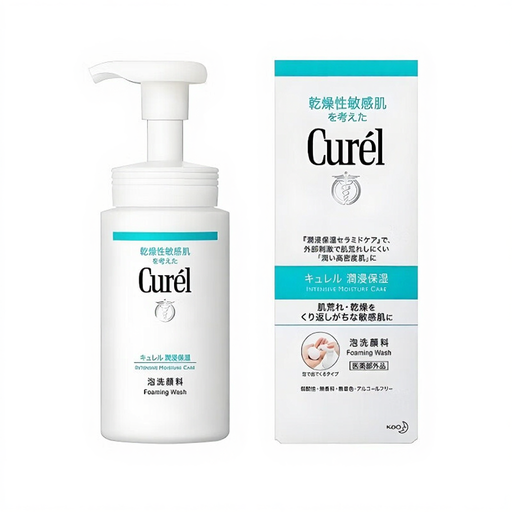
Why it's a match: This formulation is specifically designed for sensitive skin. The focus is on a gentle cleanse that preserves the skin's moisture balance.
Avoids the "squeaky clean" trap by using mild surfactants (Sodium Cocoyl Glutamate) and a hydrating formula that doesn't strip the skin or leave it feeling tight.
The formula is designed to protect and maintain the skin's natural moisture barrier, making it suitable for very sensitive skin conditions.
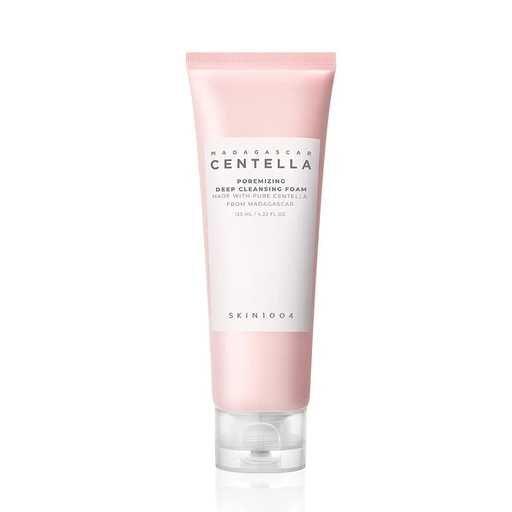
Why it's a match: This foam directly targets the needs of oily skin with enlarged pores by effectively removing excess sebum and impurities.
Evades the "for all skin types" myth with a specific formulation for oily and combination skin. Instead of relying solely on surfactants, it uses Kaolin clay for deep pore cleansing.
Combines pore-purifying Kaolin with soothing Centella Asiatica extract from Madagascar for an effective yet balancing cleanse.
We have compiled a complete, up-to-date list of products that fully meet these strict selection criteria and current regulations.
As a general rule, use it morning and evening to remove makeup, dirt, and excess sebum. For very dry or sensitive skin, a single application in the evening may be sufficient to avoid over-stripping the skin. Observe your skin's reaction and adjust the frequency as needed.
An unsuitable cleansing foam can dry out the skin. This happens when the formulation is too harsh and disrupts the skin's natural moisture balance. Look for products with a skin-friendly pH (around 5.5) and mild, sulfate-free surfactants. A good hydrating cleansing foam will clean thoroughly without leaving a tight feeling.
Most products of this type are designed for daily use. However, a cleansing foam with salicylic acid can be drying for some skin types. It's advisable to start with one application per day. If dryness or irritation occurs, you can reduce the frequency to a few times a week. Following up with a moisturizer is always recommended.