
Lieferung heute & morgen

Qualitätsgarantie

Willkommens-Angebote freischalten: KOSTENLOSE Lieferung | Bis zu 80 % RABATT | Kostenlose 30-Tage-JoyPlus-Testphase
App herunterladen
A facial peel can loosen dead skin cells and leave the skin’s surface looking smoother. At the same time, choosing the right product is not always straightforward: a physical scrub often feels effective immediately, while a chemical peel works with acids and requires a different application method. Anyone who focuses only on terms such as “glow”, “detox”, or “pore-refining” can easily end up buying a product that does not fit their skincare routine.
With a physical peel, fine particles or cellulose components help remove residue through gentle massage. Applying too much pressure, however, can place unnecessary stress on the skin. This is particularly important when using a facial peel for sensitive skin: application should be brief and involve no vigorous scrubbing.
A peeling gel for the face may form small rolls during massage. Depending on the formulation, these can consist partly of cellulose and are not necessarily made exclusively of dead skin cells. The rolls are therefore not a reliable indicator of the peel’s actual intensity.
General suitability for all skin types says little about individual sensitivities. Alcohol, fragrance, essential oils, or multiple acids may be problematic for some users. The complete INCI list on the packaging therefore remains essential.
For sensitive or redness-prone skin, it is advisable to begin with a patch test on a small area. Products should not be applied to broken, irritated, or inflamed skin.
Depending on the product, a gentle facial peel is generally used once or twice a week. Acid-based products may require an even lower frequency. Using an AHA peel, BHA peel, and physical peel at the same time increases the overall strain on the skin.
After exfoliation, the routine should include a suitable moisturiser and sunscreen during the day. If irritation persists, discontinue use and seek medical advice if necessary.
An AHA peel is often chosen for dry or rough-feeling skin. A BHA peel containing salicylic acid is particularly interesting for oily skin and clogged pores. A PHA peel with gluconolactone is considered a milder acid option, but should still be used according to the manufacturer’s instructions.
The strength of the product should be compatible with your existing skincare routine. A PHA product containing 10% gluconolactone needs to be assessed differently from a solution containing 30% AHA and 2% BHA. For The Ordinary AHA 30% + BHA 2% Peeling Solution, the product instructions recommend applying it for no more than ten minutes, a maximum of twice weekly, and only to dry skin.
Leaving the product on for longer or applying a larger amount does not improve the intended application. Shoppers should therefore check the instructions on the current packaging, as formulations and usage guidance may change.
For dry skin, moisturising ingredients such as glycerin or hyaluronic acid are relevant. For oily or blemish-prone skin, salicylic acid or LHA may be worth considering. However, a peel for blemish-prone skin is not a substitute for dermatological treatment and should not be applied to open or severely irritated areas.
Anyone who does not tolerate fragrance well should examine products containing “Parfum” or essential oils more closely. A Korean facial peel is not automatically gentler either; what matters is the specific formula, acid concentration, and usage instructions.
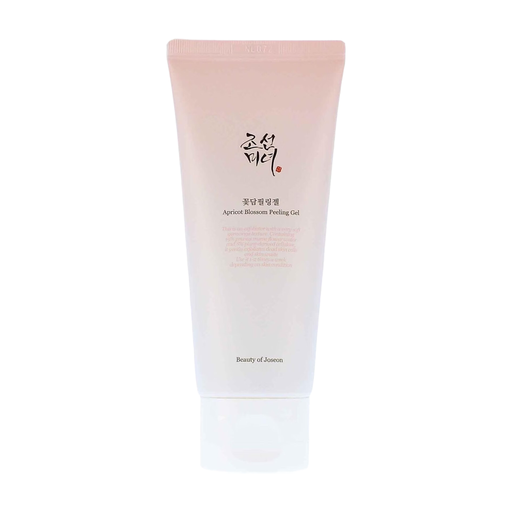
Why it suits this profile: The rinse-off gel is designed for a manageable weekly routine and, according to the product description, can be used on the face and body.
The recommended use is clearly defined: massage gently onto dry skin for around 20 seconds, then rinse with lukewarm water. This eliminates the need for a lengthy contact time.
19% Prunus mume flower water, 8% plant-based cellulose, and 100 ml of product.
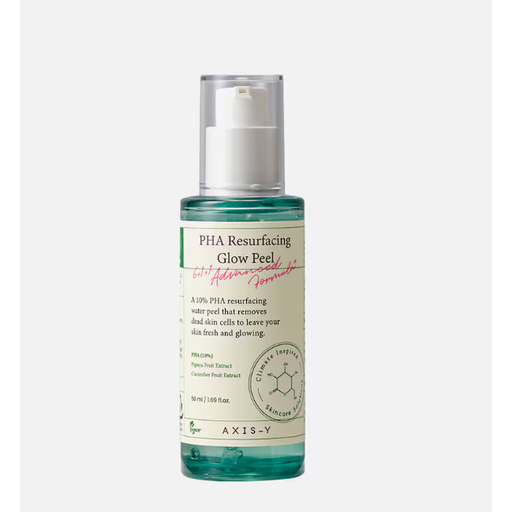
Why it suits this profile: According to the product description, this gel-water peel from South Korea is suitable for all skin types and contains 10% gluconolactone.
The concentration is stated transparently. The recommended contact time is 10 to 15 minutes, making the routine easier to plan.
10% gluconolactone, glycerin, and plant extracts including cucumber, papaya, and Centella asiatica.
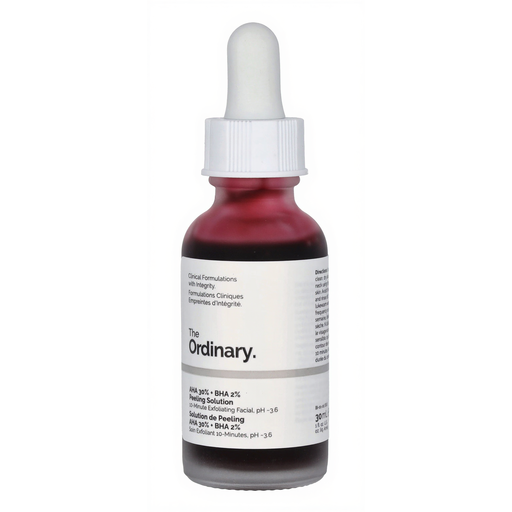
Why it suits this profile: The solution explicitly states its AHA and BHA concentrations and is aimed at shoppers who prefer a clearly defined evening application with a short contact time.
The instructions limit use to no more than twice weekly and ten minutes. A patch test and daytime sun protection are expressly recommended.
30% AHA combined with 2% BHA, 30 ml of product, and clear instructions for use on dry skin.
Our selection includes further facial peels for different skin types, peel formats, and skincare routines.
When using a peel for radiant-looking skin, do not judge it solely by the immediate feel of your skin. Tolerance, an appropriate frequency, and a consistently well-balanced routine are more important.
This depends on the product and your skin type. Many peeling gels are used once or twice a week. Stronger chemical peels should not be used more frequently than stated on the packaging. For dry or sensitive skin, allowing more time between applications is advisable.
It can be, provided the formula is gentle and fragrance and high acid concentrations are taken into consideration. A patch test is advisable. Irritated, broken, or freshly shaved skin should be avoided.
For oily or blemish-prone skin, BHA or LHA are often selected, as these ingredients are intended to support pore care in appropriate formulations. Cosmetic use is not a substitute for medical treatment. A low starting frequency, thorough rinsing, and avoiding several intensive peels at the same time remain essential.