
Lieferung heute & morgen

Qualitätsgarantie

Willkommens-Angebote freischalten: KOSTENLOSE Lieferung | Bis zu 80 % RABATT | Kostenlose 30-Tage-JoyPlus-Testphase
App herunterladen
A facial sheet mask can be an easy addition to your skincare routine. The range includes Korean sheet masks and Japanese facial skincare, as well as hydrogel masks, hand masks and brightening facial masks. At the same time, bold claims about active ingredients and different pack sizes can make comparisons difficult.
If you want to shop with confidence, do not focus solely on terms such as “glow”, “anti-ageing” or “clinical”. The key factors are the INCI list, the mask material, the recommended wear time, the pack size and your specific skin’s needs.
Collagen, hyaluronic acid, niacinamide, rice extract and snail secretion filtrate are ingredients, not guarantees of a particular result. A collagen facial mask, for example, may be designed to leave skin feeling smoother and the surface more hydrated. Claims such as “reduces wrinkles” or “repairs the skin” should therefore not automatically be taken as proven effects.
If you have sensitive skin, it is worth checking for potential fragrances, alcohol, essential oils and plant extracts. Even a soothing facial mask may contain ingredients that not everyone tolerates.
A sheet mask should leave suitable openings for the eyes, nose and mouth, while fitting closely to the contours of your face. If the material is too stiff or too small, individual areas may dry out more quickly. Very thin sheet masks can feel comfortable to wear, while thicker sheets may hold more serum. However, the material specification alone does not tell you whether the shape will suit your face.
A pack containing 10, 18 or 21 masks can be practical for regular use. With resealable pouches, the packaging must be closed carefully after every mask is removed. If the masks dry out, the apparent saving becomes impractical. Individual sachets are generally better for trying a new product or when your skin’s needs vary.
For dry or dehydrated skin, formulations containing glycerin, hyaluronic acid, panthenol, betaine or ceramides are typical selection criteria. A hydrating facial sheet mask mainly provides moisture through the serum-soaked sheet. Applying a cream afterwards can help maintain that cared-for feeling for longer.
A sheet mask for sensitive skin should ideally have a straightforward formulation. Check the ingredients list for fragrance and alcohol, and test new products on a small area of skin first to assess tolerance. For blemish-prone skin, lightweight, non-heavy textures are often more practical than very rich formulations.
For mature skin, shoppers often look for an anti-ageing facial mask or a mask advertised as firming. Here, you should pay attention to the actual ingredients and the directions for use. A skincare product can improve how your skin feels, but it cannot replace dermatological treatment.
The recommended wear time should match the product description. Leaving a sheet mask on for longer once it has already dried is not a sensible substitute for following the instructions correctly.
For multipacks, compare the price per application and the amount of serum included. Information such as “30 g per sheet” or “28 g contents” can help you assess the product, but on its own says nothing about how well it will be tolerated. The complete INCI list on the packaging remains the deciding factor.
Store sheet masks in a cool, dry place, protected from direct sunlight and significant temperature fluctuations. For products with packaging that may be particularly sensitive, check the best-before date and batch code before purchase or upon delivery.
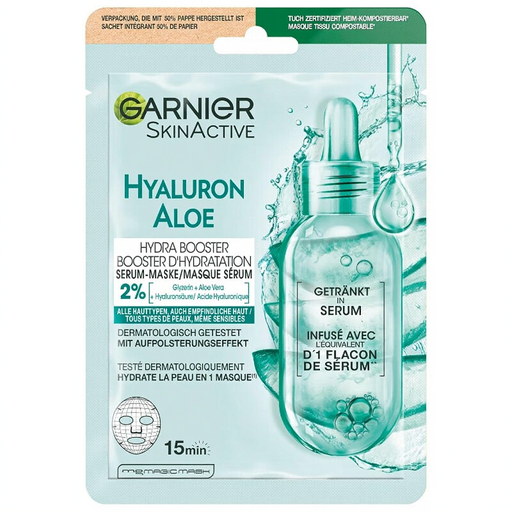
Why this product suits this profile: The individual sachet offers a straightforward introduction to hydrating facial sheet masks. According to the product information, it contains glycerin, aloe vera and hyaluronic acid, among other ingredients, and is designed to be used for 15 minutes.
The clearly stated wear time and single portion reduce the risk of buying a large pack before checking how well the product is tolerated.
Cotton sheet, 28 g contents and a hydration-focused formula containing glycerin and Sodium Hyaluronate.
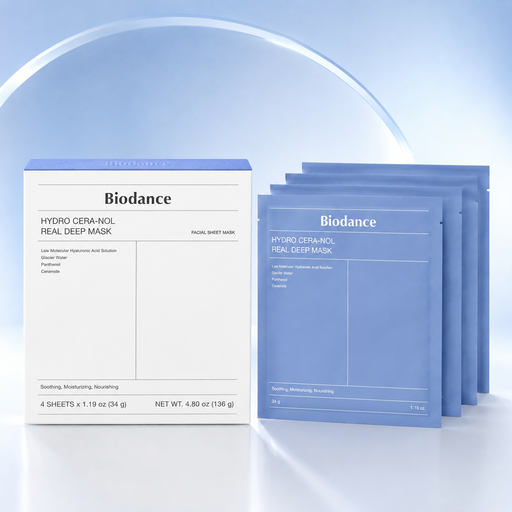
Why this product suits this profile: This hydrogel mask is designed for longer wear. According to the product description, it contains panthenol, ceramides and various forms of hyaluronic acid, among other ingredients.
The mask’s described transparency provides a visible indication of the intended application process and discourages leaving it on for an arbitrary length of time.
Hydrogel format, pack containing four individual masks, plus Ceramide NP, Ceramide NS and several hyaluronic acid derivatives according to the INCI list.
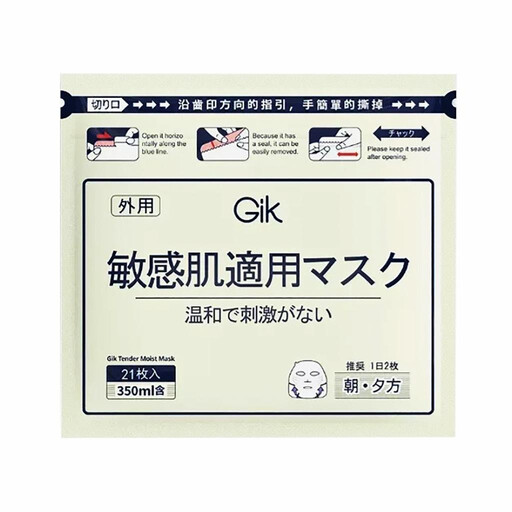
Why this product suits this profile: The pack of 21 sheets is intended for regular use. According to the product information, the recommended wear time is 5 to 10 minutes.
The short application time suits a regular routine and reduces the temptation to leave the sheet on until it has dried out completely.
21 sheets per pack, plus glycerin, Sodium Hyaluronate, panthenol and chamomile extract according to the product information.
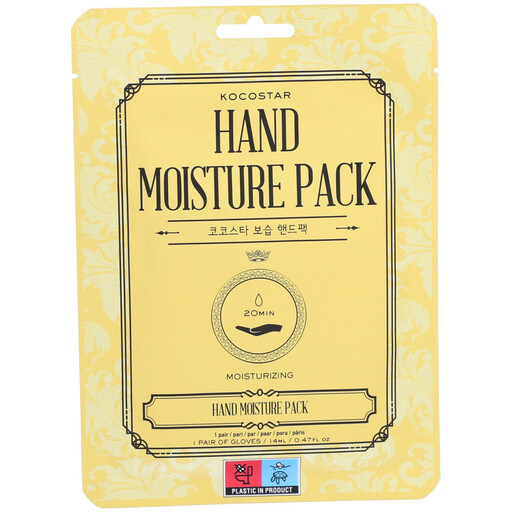
Why this product suits this profile: The glove design is intended for dry hands affected by frequent washing or exposure to the weather. According to the product information, the treatment takes 20 minutes.
The hook-and-loop tabs are designed to limit slipping. This means fit is considered as a practical buying criterion, rather than focusing only on the ingredient name.
14 ml contents, glove design and a formula containing shea butter, argan oil, cocoa butter, panthenol and beta-glucan according to the product description.
We have put together a complete, regularly updated list of products that fully meet these strict selection criteria and the safety regulations applicable in the EU.
Do not use a sheet mask on damaged, severely irritated or eczema-prone skin. If symptoms persist, seek medical advice.
This depends on the product. Wear times of 5 to 20 minutes are common, while certain hydrogel masks may be designed to stay on for longer. Always follow the instructions on the packaging. Once the sheet starts to dry, it should be removed.
For many products, use once to three times a week is typical. Lightweight hydrating masks may be used more frequently, depending on the product instructions. If you have sensitive skin, start gradually and test the product on a small area first to assess tolerance.
There is no universal answer. When choosing a sheet mask for dry skin, look for moisture-binding and skin-barrier-supporting ingredients such as glycerin, panthenol or ceramides. If you have sensitive skin, also check for fragrance, alcohol and potentially irritating plant extracts. Individual tolerance remains the deciding factor.