
Lieferung heute & morgen

Qualitätsgarantie

Willkommens-Angebote freischalten: KOSTENLOSE Lieferung | Bis zu 80 % RABATT | Kostenlose 30-Tage-JoyPlus-Testphase
App herunterladen
A facial sunscreen with SPF 50 should provide reliable protection in everyday situations: on your commute, under make-up, during exercise or on longer walks. However, eye-catching marketing claims do not automatically lead to the right buying decision. What matters is the UV protection labelling, texture, skin compatibility and how you plan to use the product.
The SPF value mainly describes protection against UVB rays. For broad UVA and UVB protection, you should also look for UVA labelling or, in the case of Asian products, indications such as PA++++. A high SPF alone therefore does not answer every question about facial sun protection.
A water-resistant sunscreen may be more resistant when it comes into contact with water or sweat. However, it does not remain effective indefinitely. Swimming, drying yourself, friction from clothing and heavy sweating can reduce the protective film. Sunscreen must be reapplied after these activities.
A lightweight sunscreen without a white cast can feel pleasant on the skin. However, if you have sensitive or blemish-prone skin, you should also consider the full INCI list, fragrances, alcohol and your own skin’s tolerance. A moisturising sunscreen does not necessarily replace your entire skincare routine.
For longer periods outdoors, SPF 50 or SPF 50+ is an obvious choice. Apply the product generously to your face and neck. If too little is used, the protection you receive in practice will not match the value stated on the packaging. During prolonged sun exposure, application should be renewed regularly, often around every two hours and after swimming, heavy sweating or drying yourself.
For dry skin, ingredients such as hyaluronic acid, glycerine, panthenol or plant oils may be worth looking for. If you want sunscreen to wear under make-up, you will usually want a product that absorbs quickly, feels minimally sticky and leaves an even film. Sunscreen without a white cast is often easier to find with transparent or organic filter combinations. A mineral sunscreen containing zinc oxide, on the other hand, may leave visible residue depending on the formulation.
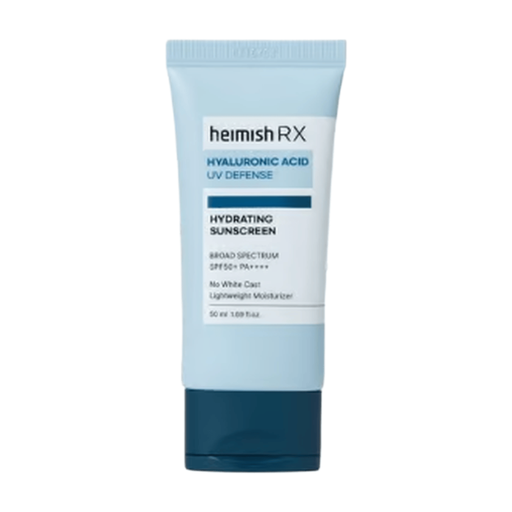
Why this product suits this profile: According to the product description, this 50-ml lotion combines SPF50+ PA++++ with hyaluronic acid and a watery texture. It is therefore suitable for anyone looking for an easy-to-use daily facial sunscreen.
The product information states both SPF50+ and PA++++ and highlights a finish without a visible white cast.
Watery lotion, hyaluronic acid and stated suitability for application under make-up.
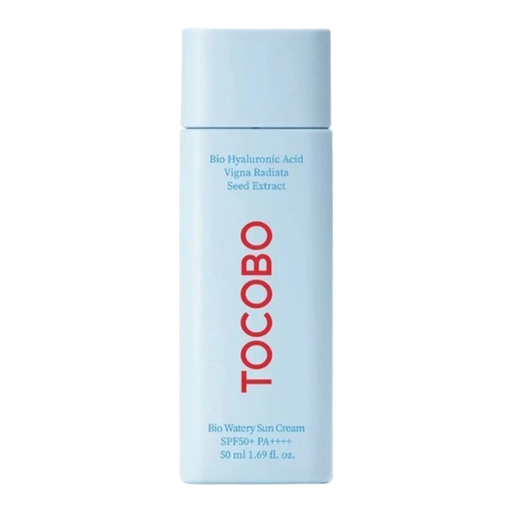
Why this product suits this profile: According to the manufacturer’s information, this Korean sunscreen offers SPF50+ PA++++, a lightweight moisturising texture and a vegan, cruelty-free formulation.
The information clearly distinguishes between the everyday texture, UV labelling and product features such as the vegan formulation.
Watery texture, sodium hyaluronate and information on UVA1, UVA2 and UVB filters.
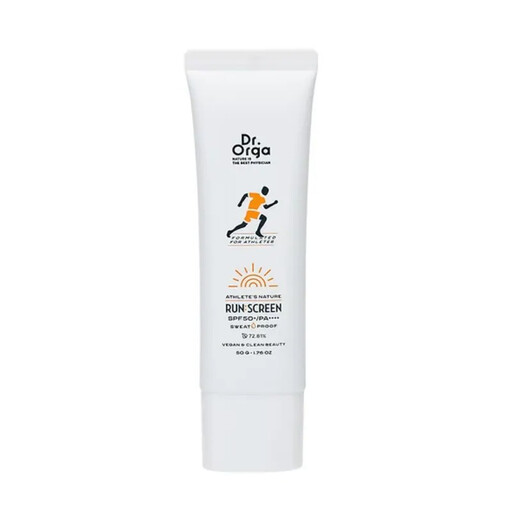
Why this product suits this profile: According to the product description, this formulation is designed for runners and outdoor activities and is described as sweat-resistant and resistant to friction.
Its intended use is clearly stated instead of relying on vague claims such as “water-resistant” or “long-lasting”.
41.31% Centella asiatica extract according to the product information, aloe vera extract and a combination of organic and inorganic UV filters.
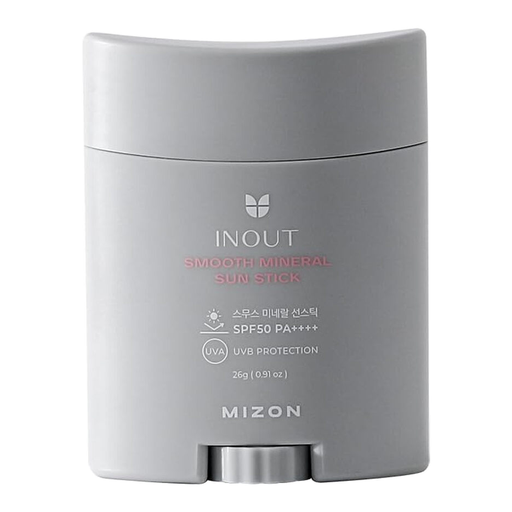
Why this product suits this profile: According to the INCI list, this sun stick uses zinc oxide as a mineral UV filter and is suitable for reapplication without direct hand contact.
The format makes reapplication on the go easier. However, the first layer should still be applied sufficiently and evenly.
26-g stick, SPF 50+ PA++++, vegan formulation according to the product information, plus hyaluronic acid and shea butter.
We have put together a complete, regularly updated list of products that fully meet these strict selection criteria and the safety regulations applicable in the EU.
Apply facial sunscreen SPF 50 to your face, ears and neck as the final step in your morning skincare routine. When trying a new product, a patch test is recommended first. Avoid contact with the eyes and applying the product to broken or irritated skin. If redness, stinging or itching occurs, wash off the product and stop using it.
Sun spray should not be sprayed directly onto the face. For products containing propellant gas, it is also important to use them in well-ventilated areas and away from sources of heat. A sun stick is particularly convenient when you are out and about, but it may be applied unevenly if you do not make enough passes over the skin.
During prolonged sun exposure, reapplying approximately every two hours is advisable. Sunscreen should also be reapplied after swimming, heavy sweating, drying yourself or friction. SPF 50 does not mean that one application will remain unchanged throughout the entire day.
Yes, fast-absorbing lotions or gel creams are usually well suited to this. Wait briefly until an even film has formed, then carefully apply your make-up. For reapplication over make-up, sticks or specially designed sprays may be more practical.
The period-after-opening symbol, the printed best-before date and the instructions on the packaging are the key references. Store the product in a dry place, tightly closed, and do not leave it permanently in direct sunlight or excessive heat. Changes in colour, smell or consistency are reasons to stop using the sunscreen.