
Lieferung heute & morgen

Qualitätsgarantie

Willkommens-Angebote freischalten: KOSTENLOSE Lieferung | Bis zu 80 % RABATT | Kostenlose 30-Tage-JoyPlus-Testphase
App herunterladen
A facial sunscreen SPF 50 is part of the daily skincare routine for many adults and teenagers. Even so, choosing the right product can be challenging: terms such as “invisible,” “glow,” “water-resistant” or “for sensitive skin” often describe only individual features. What matters is whether the level of protection, texture, skin feel and application suit your everyday routine.
The following selection by the Joybuy Product Recommendation Officer evaluates products based on clearly stated details such as SPF 50+, PA++++, texture, ingredients, water resistance and application guidance.
The Sun Protection Factor primarily indicates protection against UVB radiation, which is one of the causes of sunburn. UVA protection is also important for daily facial protection. The European UVA symbol on packaging and ratings such as PA++++ on Korean or Japanese sunscreens can help with product classification. However, PA++++ is a labelling system used in Asian markets and should not automatically be equated with an identical European claim.
A lightweight sunscreen with a watery gel texture can feel comfortable on oily or normal skin. Dry skin, on the other hand, often needs additional moisturising care. Conversely, richer formulas may look shiny under make-up or feel heavy in warm weather. The term moisturising sunscreen is therefore no substitute for checking the full INCI list and considering your own skin’s tolerance.
A water-resistant sunscreen does not remain effective indefinitely after swimming, sweating or towel-drying. Claims such as “80 minutes of water resistance” refer to a specific testing period. Reapply after swimming or drying off with a towel. Products without a corresponding claim are less suitable for the beach, sports and extended time outdoors.
For extended time outdoors, SPF 50+ provides a high level of UVB protection according to the applicable testing standard. However, the level of protection depends heavily on the amount applied. An adequate, even layer is required for the face and neck; applying too little significantly reduces the actual protection.
Also look for:
Those looking for sunscreen with no white cast should distinguish between mineral and organic, or chemical, UV filters. Depending on the formulation, mineral filters may leave visible residue. Transparent lotions and serums often absorb more quickly, but may contain alcohol or fragrance, which not every skin type tolerates comfortably.
Possible finishes:
For sensitive, reddened or blemish-prone skin, a patch test on a small area is advisable. Fragrance, alcohol, certain preservatives or essential ingredients may cause individual reactions. Claims such as “non-comedogenic” or “allergy tested” are not a guarantee of personal compatibility.
For dry skin, formulas containing glycerin, panthenol, hyaluronic acid or nourishing oils may be worth considering. For oily skin, lightweight, non-greasy sunscreens with a drier finish are often more practical.
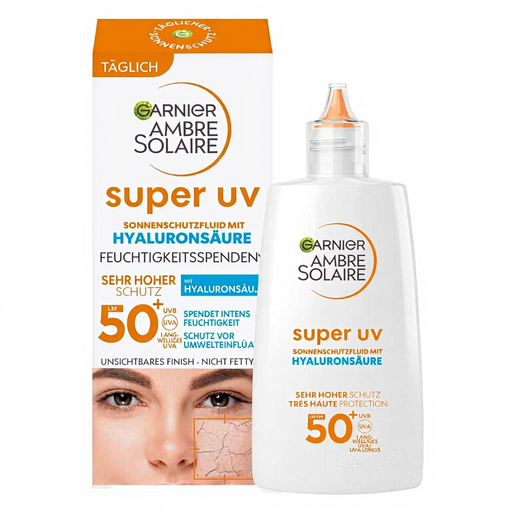
Why does it suit this profile? The 40 ml fluid is designed for daily facial protection and use under make-up. The product description highlights a matte, invisible finish and hyaluronic acid.
The information on SPF 50+, application and finish is easier to assess than broad promises such as “for every situation”.
Fluid texture, 40 ml content, SPF 50+ and, according to the description, a matte finish without greasy residue.
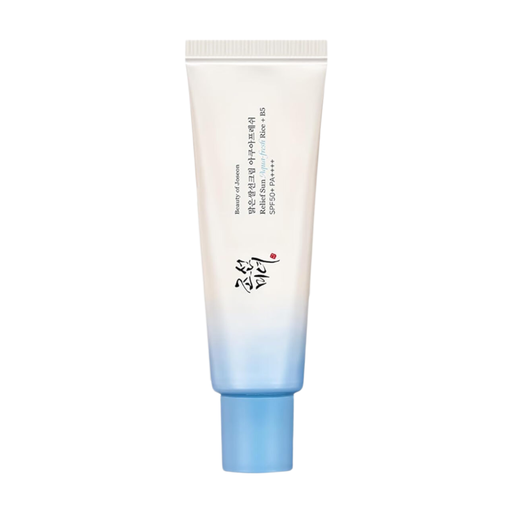
Why does it suit this profile? This Korean sunscreen combines a lightweight lotion texture with rice water and panthenol. It is designed for those who prefer hydration without a heavy feel on the skin.
The watery texture is designed to make daily reapplication easier. Even so, applying the correct amount remains essential.
SPF 50+ PA++++, a fast-absorbing lotion and, according to the product description, no white cast or sticky residue.
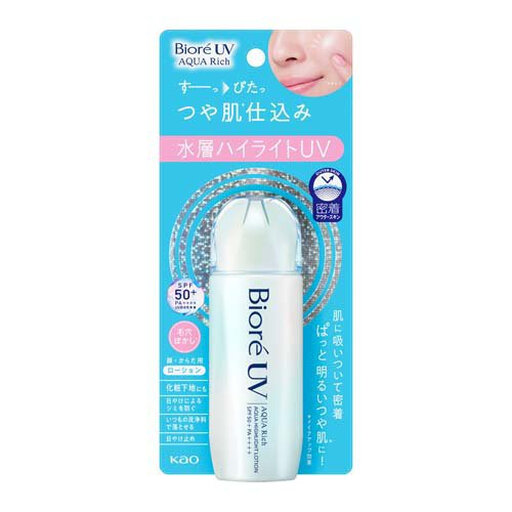
Why does it suit this profile? According to the product information, this Japanese sunscreen is water-resistant for 80 minutes and suitable for the face and body.
The 80-minute claim is not confused with permanent water resistance. Reapplication is required after swimming or towel-drying.
SPF 50+ PA++++ and an explicitly stated water-resistance test lasting 80 minutes.
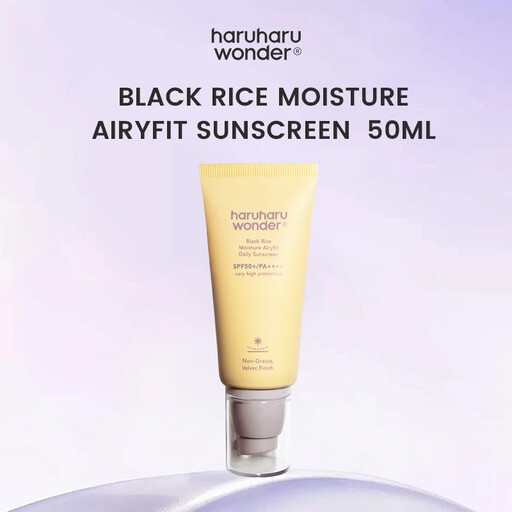
Why does it suit this profile? This Korean facial sunscreen combines SPF 50+ PA++++ with a lightweight, velvety texture and nourishing ingredients such as glycerin and niacinamide.
The product information explicitly describes a non-greasy texture without a white cast. Nevertheless, those with sensitive skin should perform a tolerance test first.
Airy-fit texture, SPF 50+ PA++++, plus black rice and moisturising ingredients according to the product description.
Explore our complete category for an regularly updated selection of facial sunscreens with different textures, protection ratings and finishes.
Apply sunscreen to your face and neck as the final step in your morning skincare routine. When trying a new product, test it first on a small area. Follow the manufacturer’s recommended waiting time before prolonged sun exposure and avoid direct contact with the eyes.
Important for everyday use:
Sunscreen does not protect against unlimited sun exposure. Avoiding direct midday sun, wearing protective clothing and using a hat remain important additional measures.
SPF 50 can be a sensible choice for daily routines if your face is regularly exposed to daylight or your skin is particularly sensitive to the sun. Applying a sufficient amount and reapplying during extended time outdoors are key. If necessary, your individual skin needs can be assessed by a dermatologist.
The relevant information includes the period-after-opening symbol, the printed best-before date and the manufacturer’s instructions. An open-jar symbol often indicates how long the product can be used after opening. If the scent, colour or consistency changes, discontinue use.
Yes. Many lightweight fluids, serums and lotions are designed for use under make-up. Allow the sunscreen to absorb briefly, then apply foundation without excessive rubbing. When reapplying throughout the day, a thin, even layer may be more practical than applying the product only to individual areas.