
Lieferung heute & morgen

Qualitätsgarantie

Willkommens-Angebote freischalten: KOSTENLOSE Lieferung | Bis zu 80 % RABATT | Kostenlose 30-Tage-JoyPlus-Testphase
App herunterladen
Facial sunscreen SPF 50 is part of many people’s daily skincare routine – not just when they are on holiday. However, the German market offers numerous products with similar claims: “invisible”, “lightweight”, “for sensitive skin” or “water-resistant”. These terms are not always directly comparable.
Three common purchasing challenges occur particularly frequently:
SPF 50 or SPF 50+ indicates a high level of UVB protection according to the relevant testing standard. The packaging should also state the level of UVA protection. Korean sunscreen often carries the PA++++ designation. This indicates a high UVA protection category within the PA system.
For German shoppers, a UVA symbol on the packaging is also helpful. The important factor is not just the number “50”, but the combination of UVA and UVB protection, applying the correct amount and reapplying regularly.
A mineral sunscreen uses ingredients such as zinc oxide or titanium dioxide. It may appeal to people who prefer mineral filters. Depending on the formulation, however, it can leave a whitish residue.
Chemical or organic filters are often found in lightweight textures such as facial sun fluid or gel creams. If you are looking for a non-greasy sunscreen or a sunscreen with no white cast, check the specific product description and INCI list. “Lightweight” does not automatically mean gentle, and “natural” is not an objective measure of quality.
For daily use, factors to consider include:
A sun stick SPF 50, sun spray or sun cushion can make reapplication easier. However, these formats do not automatically replace a sufficiently generous base layer in the morning. When using sprays, do not spray the face directly; dispense the product into your hand first and then spread it over the skin.
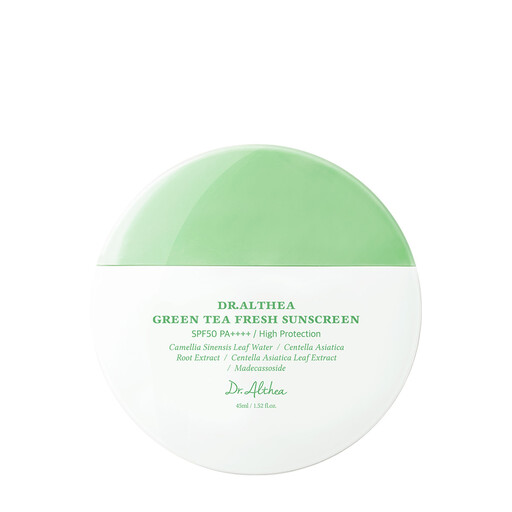
Why this product fits the profile: The lightweight, fast-absorbing formula is designed for daily application beneath make-up and is described in the product information as suitable for normal, combination and sensitive skin.
The product description states that it has a non-sticky texture and leaves no visible white cast. Nevertheless, check the stated INCI list against the packaging before buying.
SPF 50, PA++++, 45 ml contents, green tea water and niacinamide according to the product information.
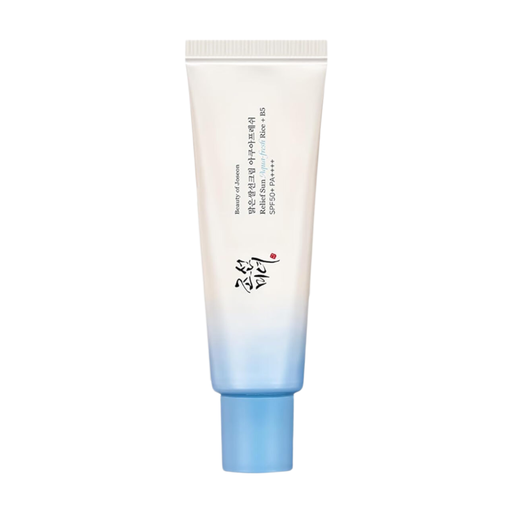
Why this product fits the profile: The watery lotion texture is suited to people who prefer a lightweight sunscreen with a rice-based skincare concept and panthenol.
The product information states that it absorbs quickly without a visible white cast or sticky finish. For sensitive skin, an individual patch test is still advisable.
SPF50+ PA++++, 50 ml, rice seed water, panthenol and ceramides according to the product description.
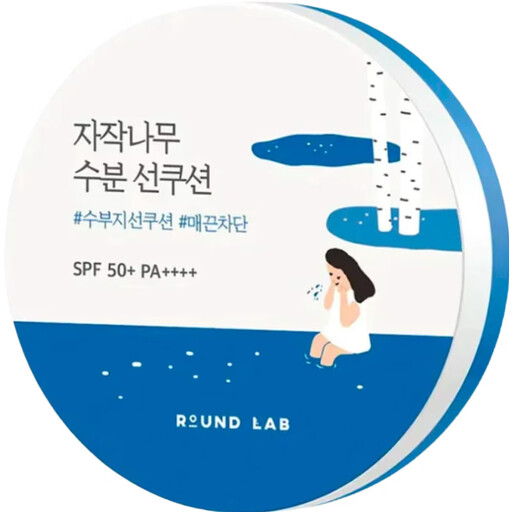
Why this product fits the profile: The compact cushion format is designed for use on the go and for reapplication over make-up. Birch water and hyaluronic acid are listed as moisturising ingredients in the product description.
The format makes reapplication easier. To achieve even protection, however, it still needs to be carefully and repeatedly dabbed onto the skin.
SPF 50+ PA++++, puff applicator, 15 g contents and moisturising ingredients according to the product information.
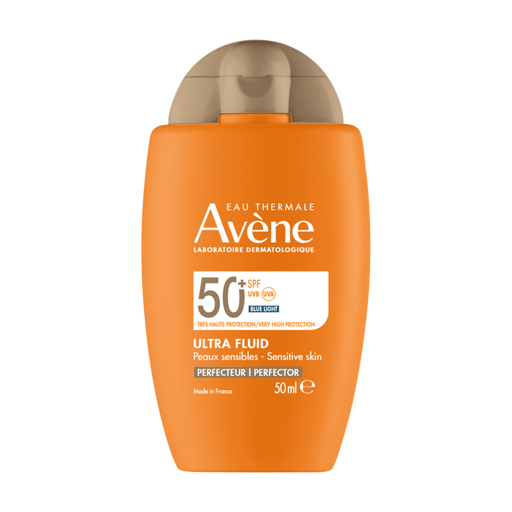
Why this product fits the profile: The water-light, tinted fluid is described as suitable for sensitive skin and can be used as a make-up base. The universal tint offers light colour correction rather than foundation-level coverage.
The product description highlights that the colour may vary depending on your skin tone. Testing it along the jawline and neck can help you avoid an unsuitable tint.
SPF 50+, UVA/UVB protection, water-light texture, tint and water-resistant formulation according to the product description.
The need depends on the season, how long you spend outdoors, the UV index and your individual circumstances. If you regularly spend time outdoors, facial sunscreen SPF 50+ allows you to choose a clearly defined level of protection. Applying enough product and reapplying are important – not just the number on the packaging.
The period-after-opening symbol and the date stated on the packaging are the key points of reference. Heat, direct sunlight and leaving the product open frequently can affect its quality. If the colour, smell or consistency changes, stop using the sunscreen.
An SPF 50 sun stick is particularly useful for use on the go and for reapplication. However, its solid texture can lead to uneven coverage if too little is applied. For the first application in the morning, a traditional cream, fluid or lotion is usually easier to apply in the right amount.