
Lieferung heute & morgen

Qualitätsgarantie

Willkommens-Angebote freischalten: KOSTENLOSE Lieferung | Bis zu 80 % RABATT | Kostenlose 30-Tage-JoyPlus-Testphase
App herunterladen
A facial toner can replenish moisture after cleansing and prepare the skin for further skincare products. However, choosing the right one is not always easy: Korean skincare includes lightweight facial waters, milky toners, essences and products containing AHA, BHA or PHA. Not every formulation is suitable for every skin type or for daily use.
If you want to buy a Korean toner, you should not be guided solely by percentages, eye-catching packaging or terms such as “glow”. The key factors are the ingredients, directions for use and how well the product fits into your individual skincare routine.
An AHA-BHA toner may be appealing if your skin is prone to blemishes, but that does not automatically make it suitable for daily use. Acids can make the skin more sensitive to sunlight. When using products containing AHA or BHA, follow the manufacturer’s instructions and apply sunscreen with an adequate sun protection factor during the day.
Very dry skin generally needs a different texture from oily or blemish-prone skin. A rich, milky moisturising toner may feel heavy on oily skin. An exfoliating facial water may be unsuitable for sensitive or already irritated skin.
Terms such as “soothing”, “brightening” or “pore-refining” should be checked against the complete INCI list and the specific directions for use. Claims such as “fragrance-free” or “alcohol-free” are only meaningful if they match the product information and packaging.
First, identify your most important skincare need:
An AHA BHA toner usually contains chemical exfoliating ingredients such as glycolic acid or salicylic acid, or betaine salicylate. These products should be used according to the packaging. When using one for the first time, a low frequency is recommended, such as every two to three days, unless the manufacturer specifies otherwise.
A soothing toner containing panthenol, allantoin, Centella asiatica or beta-glucan is more suitable for a moisture-focused routine. This does not mean that every skin type will react in the same way. Stop using the product if you experience burning, redness or a rash.
Liquid toners can be applied with your hands or a cotton pad. Milky or gel-like textures may leave the skin feeling more nourished. Also check the fill quantity: a 50-ml product may be suitable for trying a toner for the first time, while 150 to 300 ml can be more practical for a regular routine.
The current INCI list, batch number, expiry information and period after opening should be checked directly on the packaging. The information provided for the individual product is what matters, as formulations may change.
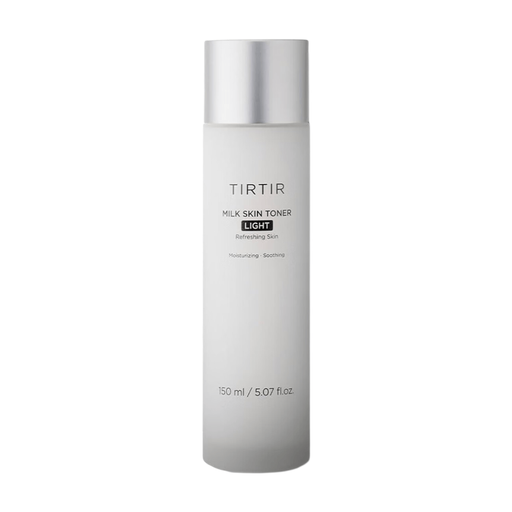
Why this product suits this profile: The liquid texture and 150 ml fill quantity make it suitable for a daily morning and evening routine. According to the product information, the formulation is vegan and free from alcohol, parabens, sulphates and fragrance.
The product description clearly identifies suitable skin types and exclusions, rather than relying solely on a general glow promise.
Panthenol, allantoin, glycerin and niacinamide are included in the stated INCI list; the formulation is fragrance-free.
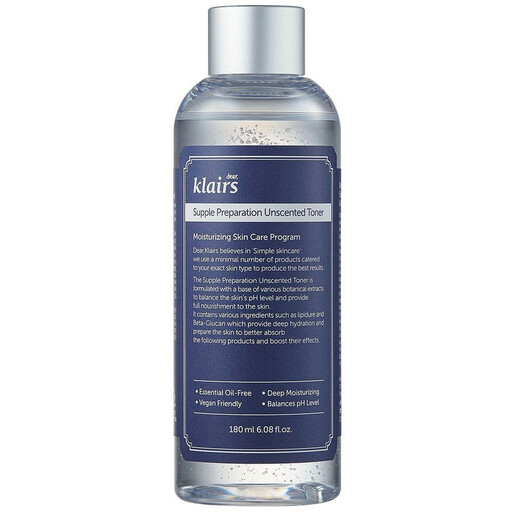
Why this product suits this profile: Anyone looking for clearly described, fragrance-free Korean skincare gets a product with a liquid texture and a pH value of 5, according to the product information.
The “unscented” label is supported by the statement that essential oils are not used and by the published INCI list.
Hyaluronic acid and beta-glucan are listed; at 180 ml, the product is designed for regular use.
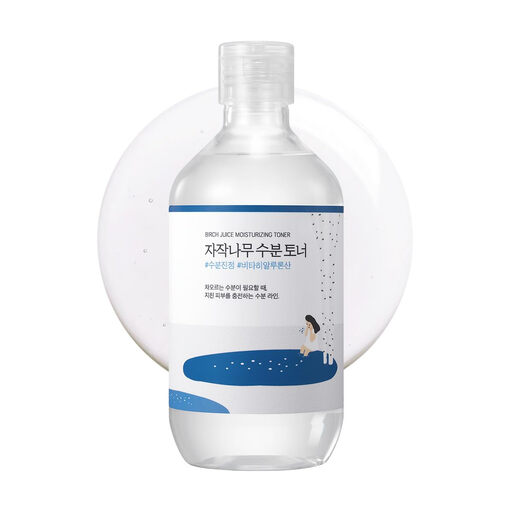
Why this product suits this profile: The 300 ml fill quantity is practical for frequent use or an extensive skincare routine. The water-like texture can be applied with your hands or a cotton pad after cleansing.
The product information specifies how to use it, its texture, ingredients and precautions, including the option of carrying out a patch test.
Birch sap, panthenol, allantoin and several forms of hyaluronic acid are listed in the stated composition.
We have compiled a complete, regularly updated list of products that fully meet these strict selection criteria and the safety regulations applicable in the EU.
Apply facial toner after cleansing with your hands or a cotton pad. With exfoliating products, start with a small amount and use them infrequently at first. Avoid contact with the eyes and mucous membranes. Products containing AHA or BHA should be used according to the manufacturer’s instructions and combined with sunscreen.
Store toners in a dry, cool place away from direct sunlight. Before use, check the packaging for the expiry information, batch number and current ingredients list.
Facial toner is usually applied after cleansing. Depending on the formulation, it can give the skin an additional moisturised feel and prepare it for the subsequent application of serum or cream. Its specific function depends on the ingredients it contains.
This depends on the product information and how your skin reacts. When starting out, using it every two to three days is a cautious approach, provided the packaging does not recommend otherwise. Pause use if irritation occurs.
You will find the best-before date or the symbol indicating the period of use after opening on the packaging. As formulations and batches may vary, always follow the product labelling on the individual bottle.