
Lieferung heute & morgen

Qualitätsgarantie

Willkommens-Angebote freischalten: KOSTENLOSE Lieferung | Bis zu 80 % RABATT | Kostenlose 30-Tage-JoyPlus-Testphase
App herunterladen
A facial cleansing foam can comfortably remove dirt, excess sebum and the day’s build-up. However, a rich lather does not automatically mean it is the right choice for your skincare routine. Your skin type, the ingredients, how you use the product and how often you cleanse are all important.
A large amount of foam says little about how well a product will suit your skin or how effectively it cleanses. Some formulations contain highly degreasing surfactants or leave your skin feeling particularly tight after washing. This can be problematic for dry or sensitive skin.
Look out for mild surfactants, humectants such as glycerin and a clear description of the intended skin type. A fine foam can also reduce friction between your hands and face when applied gently.
A facial cleansing foam with BHA, AHA or PHA may be appealing for oily skin and pores that appear congested. However, this combination is not suitable for every skin type and is not necessarily intended for daily use. Natural particles such as konjac, rice powder, clay or baking soda can also create a mechanical exfoliating effect.
If your skin is sensitive, reddened or damaged, you should avoid these types of products. An acid cleanser is also not a substitute for medical treatment when skin problems persist.
Terms such as ‘Pore Clear’, ‘Detox’, ‘Whip’ or ‘Miracle’ often describe a product’s positioning rather than any clearly defined quality standard. Instead, check:
Ingredients lists can change. The information on the product actually delivered should therefore always be treated as definitive.
For facial cleansing for sensitive skin, short, straightforward formulations without strong fragrance components are generally suitable. Panthenol, allantoin, glycerin and Centella asiatica are often used for their skincare benefits, but they do not guarantee that a product will suit everyone individually.
For dry skin, choose a mild facial cleanser with replenishing or moisturising ingredients. For facial cleansing for oily skin, lightweight foaming textures and ingredients such as salicylic acid or clay may be worth considering. Even if you are prone to blemishes, avoid excessively stripping your skin by washing it too often.
Surfactants dissolve dirt and skin oils. Common milder systems are based, for example, on cocoyl isethionates, cocoyl glycinate, glucosides or amino acid surfactants. However, how well a product is tolerated depends on the formulation as a whole.
A skin-friendly pH may feel more comfortable for some people. The Etude SoonJung Foam Cleanser is stated to have a pH of 5.5. Even so, you should monitor how your skin reacts. Fragrances, essential oils and colourants require particularly careful consideration if you have sensitive skin.
Wet your face and hands, work the product into a lather in your palms first, then massage the foam in without applying pressure. 30 to 60 seconds is usually enough. Lukewarm water is more suitable than very hot water.
With a pore cleanser or a product containing BHA, AHA or PHA, less frequent use may be sufficient, depending on the formulation. Make-up and water-resistant sun protection may also require a separate pre-cleanse. Stop using the product if you experience burning, persistent redness, swelling or itching.
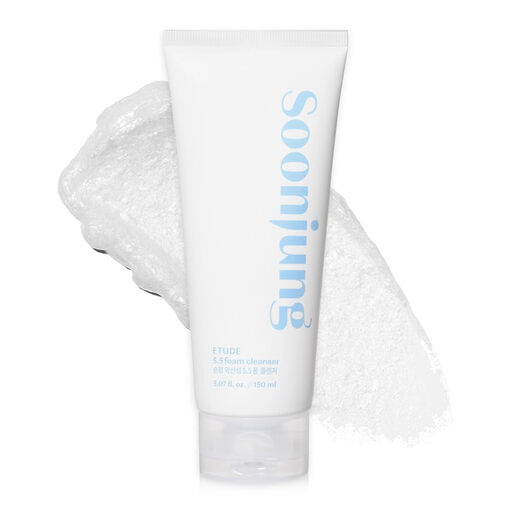
Why this product suits the profile: If you want to compare pH information and a pared-back formulation carefully, this product offers clearly stated features.
The stated pH of 5.5 and the absence of fragrances and synthetic colourants make it easier to assess for sensitive skin.
Panthenol and madecassoside in the ingredients list; 150 ml fill quantity; clear pH information.
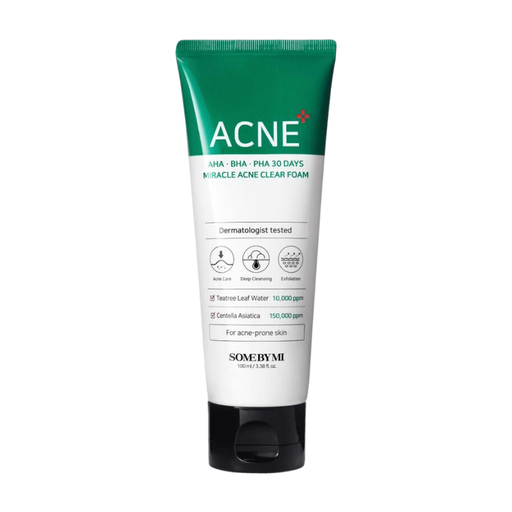
Why this product suits the profile: The combination of AHA, BHA and PHA is aimed at people looking for a cleansing foam for blemish-prone skin and the T-zone.
The acids are clearly stated in the product description. This allows you to plan your routine consciously rather than choosing an unspecified ‘pore cleanser’.
Salicylic acid at 5,000 ppm according to the product information; AHA and PHA ingredients; 100 ml contents.
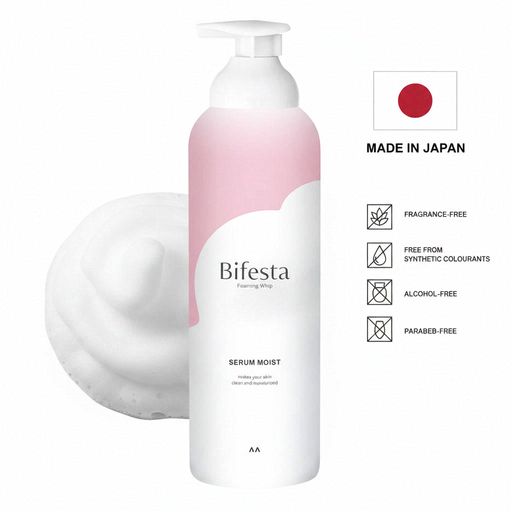
Why this product suits the profile: The pump dispenser releases foam directly, making it practical for people who prefer a quick, even application in the morning and evening.
There is no need to create the foam by rubbing vigorously. However, the pressurised container must be stored carefully away from heat and naked flames.
200 g contents; ready-made foam; hyaluronic acid and soluble collagen according to the ingredients list.
We have put together a complete, regularly updated list of products that fully meet these strict selection criteria and the safety regulations applicable in the EU.
That depends on the formulation. For dry skin, mild surfactants, glycerin and moisture-retaining ingredients are more suitable than a strongly degreasing product. After washing, your skin should not feel persistently tight or sting.
A mild facial foam can be used morning and evening, provided your skin tolerates it well. Products containing BHA, AHA, PHA, clay or exfoliating particles should be used more cautiously. Start by using them less frequently and monitor your skin.
A cleansing foam can loosen surface dirt, excess sebum and certain residues. With products containing salicylic acid or other acids, the formulation is key. However, visible or persistent blackheads and blemishes cannot be reliably eliminated through cleansing alone.