Shoppers for whom Fairtrade is the main priority
You want to know that the Fairtrade claim applies to the chocolate on the pack you’re buying. General statements from a brand about its cocoa sourcing aren’t enough.


If Fairtrade is a priority for your sweet breakfast, choose chocolate based on the label on the specific product rather than general claims a brand makes about its cocoa sourcing. Then compare the ingredients, allergen information, nutritional values and flavour you’re looking for. A Fairtrade claim or a higher cocoa content won’t answer these questions on its own.
You want to know that the Fairtrade claim applies to the chocolate on the pack you’re buying. General statements from a brand about its cocoa sourcing aren’t enough.
You check the ingredients and allergen information for each variety, perhaps because milk, soya or nuts matter to your choice. You can also compare nutritional values across products.
For a sweet breakfast, you might want a cocoa-rich bar or a milky, individually portioned snack bar. The product format can help you choose, but it doesn’t tell you whether the product is Fairtrade certified.
When choosing chocolate for a sweet breakfast, first check the Fairtrade claim on the specific product. Then see how its recipe, nutritional values and portion format match what you’re looking for.
| What to consider | What to check | Who it matters to |
|---|---|---|
| Fairtrade evidence | A current certification mark or clear Fairtrade claim for the specific product; if the claim relates to a raw material, check what it covers. | If Fairtrade comes first, I want to be able to verify the claim on my pack rather than rely on a brand’s programme. Around 42% of shoppers would put this evidence first. |
| Recipe and nutritional values | Ingredients and highlighted allergens, plus nutritional values per 100 g and, where available, per portion. | If I need to avoid certain ingredients or compare products for a regular breakfast, the recipe matters. Around 33% of shoppers would put ingredients, allergens or nutritional values at the top of their list. |
| Taste and portion size | Cocoa content and ingredients; bar segments or individually wrapped snack bars. | For a small sweet breakfast, I want to choose whether I’d prefer a cocoa-rich bar or a portioned snack bar. For around 25% of shoppers, taste and portion format would come first. |
Ritter Sport, Lindt and Kinder each describe their approaches to cocoa sourcing. That doesn’t mean every chocolate made by these brands is Fairtrade certified.
If Fairtrade is essential to you, check the label for the specific variety on the current pack.
A Fairtrade claim doesn’t tell you how much sugar or fat a chocolate contains, or how big a portion is.
For the varieties you’re considering, compare the ingredients list and nutritional values per 100 g.
Ingredients can vary from one variety to another. For example, Kinder Chocolate lists milk ingredients and soya lecithins; you can’t assume other products have the same recipe.
Read the ingredients and allergen information on the specific pack, especially for milky or filled varieties.
REWE lists Fairtrade chocolate as part of its Fairtrade range.
Ritter Sport described its Kakao-Klasse bars as containing 55%, 61% and 74% cocoa.
Lindt shares information about its Farming Program and other standards for responsible cocoa sourcing.
Kinder Chocolate is an example of small, individually wrapped milk chocolate bars.
These two bars might suit a sweet breakfast if you’re looking for milk chocolate or a variety with pretzel and toffee. The product descriptions mention Fairtrade; check the Fairtrade label on each pack before choosing.
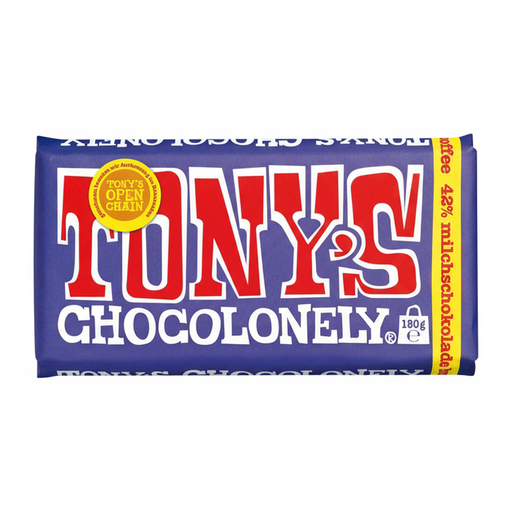 Image unavailable
For shoppers who fancy milk chocolate with pretzel and toffee for a sweet breakfast. The product description mentions Fairtrade; check the claim on the pack, and review the ingredients and allergen information for this variety.
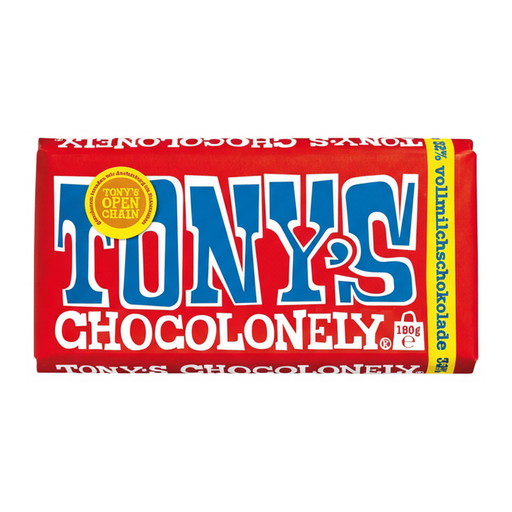 Image unavailable
For shoppers looking for a milk chocolate bar without the pretzel and toffee ingredients mentioned for the other product. Here too, the product description mentions Fairtrade; check the label on the specific pack, as well as the ingredients and allergen information.
No. A cocoa sourcing programme and a Fairtrade label aren’t the same thing. If Fairtrade is one of your buying criteria, look for a claim on the specific chocolate and, where relevant, check which raw material it covers.
Always check the ingredients and allergen information for the specific variety. For example, Kinder Chocolate lists milk ingredients and soya lecithins; check the individual pack for other bars and snack bars.
No. A Fairtrade claim isn’t a substitute for comparing sugar, fat and portion size. Verbraucherzentrale recommends looking at nutritional values and the ingredients list when assessing a food.