People who specifically look for Fairtrade
You want to buy chocolate with clear Fairtrade labelling for your coffee break. The product label and information about fairly traded ingredients tell you more than the word “fair” on its own.


If you’re looking for Fairtrade-certified chocolate for your coffee break, first check the product label or look for a clear Fairtrade statement about the specific product. According to the consumer advice centre, the word “fair” is not legally protected. Then choose a variety to suit your taste and read the ingredients and allergen information on the pack you’re buying.
You want to buy chocolate with clear Fairtrade labelling for your coffee break. The product label and information about fairly traded ingredients tell you more than the word “fair” on its own.
You prefer a dark chocolate bar with your afternoon coffee, so you compare the cocoa content. You check separately whether the bar you choose is Fairtrade-certified.
The variety you choose for your break needs to meet your requirements for ingredients and allergens. That’s why you should check the ingredients list and any may-contain warnings, even on Fairtrade chocolate.
When choosing chocolate for your coffee break, first check the Fairtrade labelling on the specific bar. Taste, ingredients and pack size can then help you choose between suitable varieties.
| Criteria | What to check when buying | Who it matters to |
|---|---|---|
| Fairtrade labelling | Look for the product label or a clear Fairtrade statement about the specific product. For chocolate with multiple ingredients, also check the information about the proportion sourced through fair trade. | If Fairtrade matters most to me, I want to be able to verify the labelling on my bar. Around 50 % of consumers are expected to put this criterion first. |
| Taste and cocoa content | Compare the cocoa content and, if needed, the sugar per 100 g. Neither is a substitute for Fairtrade labelling. | With my coffee, I’m looking for either a mild milk chocolate or a richer dark variety. This taste preference is likely to come first for around 30 % of consumers. |
| Ingredients and portion size | Read the ingredients list and allergen information for the variety you choose. Check that the bar format and net weight are right for your break. | I need the right amount for my short break, and I also need to check the labelling carefully for certain ingredients. These requirements are likely to come first for around 20 % of consumers. |
Ritter Sport and Lindt describe their own programmes or standards for sourcing cocoa. Without a label on the specific bar, this does not mean it carries a Fairtrade product label.
Check the label and product-specific information on the pack rather than relying solely on a statement about the brand.
A high cocoa content describes the recipe, not the trading conditions. So the 80 % cocoa dark chocolate listed by REWE is not a Fairtrade option simply because of its cocoa content.
Use the cocoa content to help choose a variety, and check the Fairtrade labelling separately.
Fairtrade information doesn’t tell you whether a chocolate contains milk or which allergens may be present as traces. This information varies between varieties.
Before buying, read the current ingredients list and allergen labelling on the specific pack.
GEPA sells chocolate in a range of varieties, including milk and dark chocolate bars.
Tony’s Chocolonely offers chocolate in different bar formats and describes tackling exploitation in cocoa farming as a company goal.
The organic dark chocolate bar described by REWE is a Fairtrade-certified option with at least 60 % cocoa.
REWE is an option for people who want to choose Fairtrade chocolate alongside their other groceries.
Ritter Sport is a useful brand for comparison if you want to distinguish information about cocoa sourcing from a Fairtrade product label.
These two Tony’s Chocolonely milk chocolate bars could be a good choice for a coffee break if you’re deciding between a variety with pretzel and toffee and a plain milk chocolate bar. Check the Fairtrade labelling, ingredients and allergen information on the pack you choose.
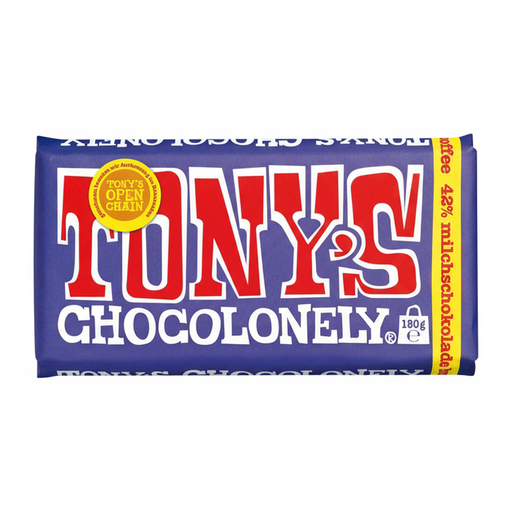 No image available
A good choice for your coffee break if you fancy milk chocolate with pretzel and toffee. If you have allergies, check the current pack for information about milk, wheat and soya, as well as possible traces of egg and nuts. Also check the Fairtrade label and information about fairly traded ingredients.
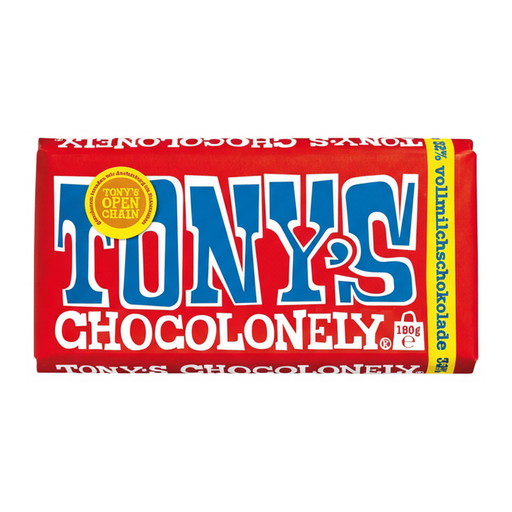 No image available
A milk chocolate bar for anyone who’d prefer a variety without pretzel and toffee with their coffee. If you have allergies, check the current information about milk and soya, as well as possible traces of egg, gluten and nuts. Also check the Fairtrade labelling and information about fairly traded ingredients on the pack.
No. According to the consumer advice centre, the term “fair” is not legally protected. If you specifically want to buy Fairtrade chocolate, check for the product label or a clear Fairtrade statement about the specific product.
Not automatically. Chocolate contains several ingredients, so check the information about the proportion sourced through fair trade for the specific bar. The GEPA Fair Trade Shop states that 100 % of the ingredients in its Vollmilch Pur 33% are fairly traded, but this doesn’t apply to other varieties.
Yes. Fairtrade labelling doesn’t tell you whether a product is suitable for someone with an allergy. Check the current ingredients list and any may-contain warnings for the variety you’re buying. Depending on the product, milk, nuts, soya or gluten may be relevant, for example.
Follow the storage instructions on the relevant pack. For the Plant-for-the-Planet dark chocolate bar described by REWE, the recommended storage conditions are cool, dry and away from strong smells.