Guests who specifically want Fairtrade
You want to serve Fairtrade chocolate specifically. So what matters is the label on the pack you choose, not just a sustainability claim about the brand.


If you want to serve Fairtrade chocolate with coffee and cake, choose a bar or slab with the Fairtrade mark on the specific pack. A general statement about cocoa sourcing does not automatically meet this requirement. Whether dark, milk or filled chocolate works best for your coffee table depends on your guests’ preferences. For your chosen variety, also check the ingredients, allergen information and details about the Fairtrade ingredients.
You want to serve Fairtrade chocolate specifically. So what matters is the label on the pack you choose, not just a sustainability claim about the brand.
You want to match the chocolate to the coffee, cake and your guests’ preferences. A dark variety can provide a more intense contrast, while those who prefer a milder taste may opt for milk chocolate. However, taste is no substitute for checking the Fairtrade mark.
If guests avoid certain ingredients or follow a vegan diet, check the label on each variety. The ingredients list, allergen information and may-contain warnings matter more than the brand name.
First, decide whether Fairtrade is a must-have. Then choose a taste and format for your coffee table, and finally check the details on the exact packs you plan to serve.
| Criteria | What to check | Who it matters to |
|---|---|---|
| Fairtrade proof | Check the Fairtrade mark and details of the Fairtrade ingredients on the specific pack; read any information about mass balance. | If I specifically want to serve Fairtrade chocolate, I want to see the label on the variety I’ve chosen. This is the main consideration for around 40% of consumers. |
| Taste | Match the type of chocolate, cocoa percentage and any filling to your guests’ preferences. | With coffee and cake, I want to be able to choose between a more intense and a milder accompaniment. This taste match takes priority for around 30% of consumers. |
| Ingredients and allergens | Read the ingredients list, highlighted allergens and may-contain warnings; for filled varieties, check the additional ingredients too. | When several guests are sharing, I need to know whether the variety I’ve chosen meets their dietary needs. This is the main consideration for around 20% of consumers. |
| Format and storage | Compare the net weight, whether the chocolate can be broken into portions, the best-before date and storage instructions. | For the coffee table, I want to serve suitable portions and be able to store any leftover chocolate. For around 10% of consumers, this is the most important consideration when it comes to format. |
Rainforest Alliance and brands’ own sourcing programmes are not the same as a Fairtrade mark. If you’re specifically looking for Fairtrade chocolate, don’t treat another label as equivalent proof.
Check the mark and related details on each bar or slab. If Fairtrade isn’t a must-have, you can consider other standards as a separate selection criterion.
With mass balance, certification does not mean that the cocoa in that particular bar has been physically kept separate throughout the entire supply chain.
Read the explanation on the pack if you want to know how the quantity of Fairtrade raw materials is accounted for in the variety you’ve chosen.
A variety may taste just right but still be unsuitable for some guests because of its ingredients or possible traces of allergens. This is particularly important if you’re serving several varieties or filled chocolate.
Check the label before buying and keep the packs to hand when serving, so guests can read the information for themselves.
A high cocoa percentage is a matter of taste, not proof of Fairtrade certification. And a bar with an intense flavour won’t necessarily suit every guest.
If tastes vary, consider offering a milder variety alongside a dark one, and check the Fairtrade label on both.
These brands offer different chocolates and provide information about their cocoa sourcing. Whether a particular variety meets your Fairtrade requirements depends on its own label.
GEPA says it offers chocolate bars and slabs in a range of varieties to enjoy with coffee or tea.
REWE lists chocolate as part of its Fairtrade range.
Tony’s Chocolonely describes Fairtrade as the starting point for its cocoa sourcing and also sets out its own sourcing principles.
Ritter Sport shares information about its cocoa supply chain and sourcing goals.
Lindt offers dark EXCELLENCE bars, among other products, and shares information about its own sourcing standards.
kinder describes several certifications and independently managed sourcing standards for its cocoa.
Schogetten offers chocolate in break-apart pieces.
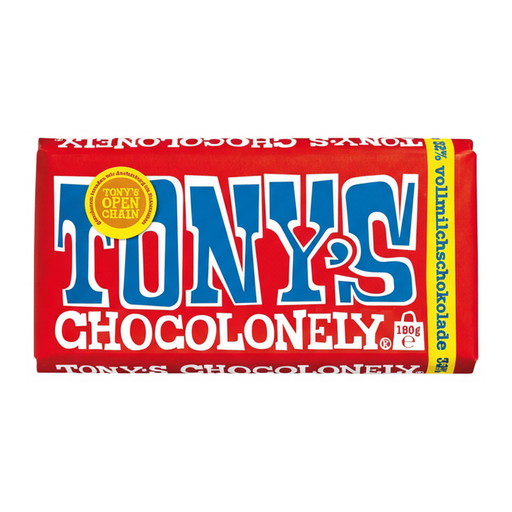
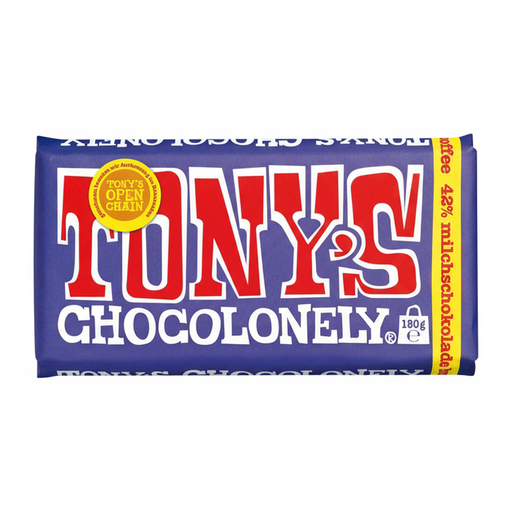
These two milk chocolate bars could suit guests who fancy a classic option with their coffee or a variety with pretzel and toffee. If Fairtrade is a must-have for you, check the mark and related details on the relevant pack before buying.
 No image available
A milk chocolate bar for guests who prefer this variety with their coffee. The pack contains 180 g. Check the Fairtrade mark if this is important to you, and the latest ingredients and allergen information for guests with dietary requirements.
 No image available
A 180 g bar for guests who fancy milk chocolate with pretzel and toffee. Before buying, check the Fairtrade mark and the ingredients and allergen information on the specific pack, especially if you’re choosing for several people.
No. The word alone is not proof that a bar is Fairtrade certified. The Verbraucherzentrale (German consumer advice centre) points out that “fair” can refer to different labels and have different meanings. So check the Fairtrade mark and the information about the relevant ingredients on the specific pack.
Mass balance means that certified quantities of raw materials are accounted for, but the cocoa in an individual bar does not have to be physically kept separate throughout. Read the explanation on the pack if this distinction matters to your choice.
No. According to the Verbraucherzentrale, the labels are based on different standards. So if you’re specifically looking for Fairtrade chocolate to serve with coffee and cake, check for the Fairtrade mark on your chosen variety rather than treating another certification as equivalent.
For each variety, check the ingredients list and the allergen and may-contain information on the current pack. If you’re serving filled chocolate, read the additional ingredients too; a Fairtrade mark doesn’t tell you whether a variety is vegan, for example.
Check the best-before date and storage instructions on the pack. The Verbraucherzentrale explains that the best-before date applies to the qualities the manufacturer guarantees for an unopened product stored correctly, and is not automatically a use-by date.