Label-conscious coffee drinkers
You want Fairtrade chocolate to enjoy with your coffee, and would rather check the label on the particular bar or block you’ve chosen than rely on a brand’s general sustainability claims.


If Fairtrade matters to you when enjoying coffee, first choose chocolate with the relevant label on the specific pack. Then check the cocoa content, ingredients and allergens to see whether the variety suits your coffee and your preferences. A brand’s general statements about its cocoa sourcing are no substitute for a product label.
You want Fairtrade chocolate to enjoy with your coffee, and would rather check the label on the particular bar or block you’ve chosen than rely on a brand’s general sustainability claims.
You’re looking for a pronounced cocoa flavour to go with espresso, mocha or strong filter coffee. Cocoa content can help guide your taste choice, but it says nothing about Fairtrade labelling.
You want to compare milk ingredients, nuts, fillings or sugar content. The ingredients list, allergen information and nutritional details for each variety are what matter here.
When choosing chocolate for a coffee break, first check the label on the specific variety. You can then compare the flavour, ingredients and pack size according to your own priorities.
| What to consider | What to check when buying | Who it matters most to |
|---|---|---|
| Fairtrade labelling | The Fairtrade mark and exact variety name on the pack; if there are several ingredients, check the certification information too. | I want to know whether the chocolate I’ve chosen is specifically labelled as Fairtrade, rather than relying on the brand’s image. For around 36% of consumers, this product-specific proof is the main priority. |
| Cocoa flavour | Cocoa content and variety; for flavoured or filled options, check the other ingredients too. | I’m looking for a pronounced cocoa flavour to go with strong coffee, while a milder combination is less to my taste. Around 29% of consumers give this the greatest priority. |
| Ingredients and allergens | The ingredients list, highlighted allergens and nutritional information per 100 g on the specific pack. | If I need to account for milk, nuts or particular fillings, the recipe determines which variety I choose. Around 21% of consumers make this their top priority. |
| Pack and variety | Pack size and the exact variety name, especially for chocolate bars, individual portions and multipacks. | For an occasional coffee break, I want to find my preferred variety in a suitable pack size. Around 14% of consumers base their choice primarily on this. |
Claims about responsibly sourced or traceable cocoa don’t automatically mean that every variety carries the Fairtrade mark.
If Fairtrade is one of your buying criteria, check the label on the exact pack you’ve chosen.
A higher cocoa content can indicate a more intense cocoa flavour. It doesn’t tell you whether the chocolate is Fairtrade-labelled.
Use the cocoa content to guide your taste choice, and check the mark separately.
Milk ingredients, nuts and fillings can vary from one variety to another. According to the German Food Federation, the relevant allergens are highlighted in the ingredients list.
For each variety you choose, read the ingredients list and allergen information rather than deciding by the front of the pack alone.
For shoppers who also want to consider a brand’s information about fair trade and organic chocolate.
For shoppers who factor information about certified and traceable cocoa sourcing into their choice.
For shoppers who want to compare different chocolates to enjoy with coffee, as well as information about cocoa sourcing.
This milk chocolate could be a good choice for a coffee break if you’re after something milder than dark chocolate. If Fairtrade matters to you, check the label on the specific pack.
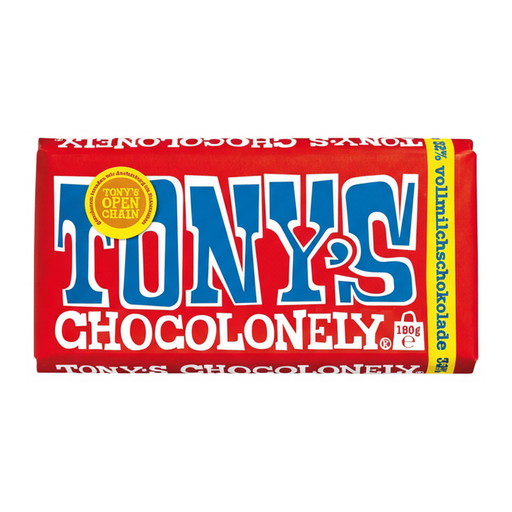 Image unavailable
For a coffee break when you’d prefer milk chocolate to a dark variety.
Pack size: 180 g.
Check the Fairtrade mark and the ingredients and allergen information on the specific pack.
Look for the Fairtrade mark on the specific variety. According to GEPA’s explanation of the label, it indicates certification to Fairtrade International standards. A brand’s general sustainability claim doesn’t meet this check.
It depends on the flavour you’re after: dark chocolate can complement strong coffee with pronounced cocoa notes, while milk chocolate makes for a milder combination. The German Consumer Advice Centre describes chocolate with around 50% cocoa as semi-dark and chocolate with around 60% or more as dark; cocoa content is a guide to flavour, not a Fairtrade rating.
Read the ingredients list and nutritional information for the variety you’ve chosen. According to the German Food Federation, the relevant allergens are highlighted in the ingredients list; the nutrition table also shows sugar per 100 g.
No. A brand programme doesn’t automatically mean that an individual chocolate product is Fairtrade-certified. Lindt and Ritter Sport publish information about their cocoa sourcing; for a Fairtrade choice, check the label on the variety you want.