A portable portion of chocolate could be a good choice for a break on a bike ride, provided the Fairtrade mark you’re looking for is clearly shown on the specific pack and the ingredients and allergen information meet your needs. A certification mark alone won’t tell you how the chocolate fits into your fuelling plan for a longer ride: in its 2010 sports nutrition guidelines, the International Olympic Committee highlights the importance of how much you eat, what you eat and when you eat it.
Who is this choice relevant to?
Everyday cyclists who care about Fairtrade
You’re looking for chocolate for a shorter ride or a break, and want to be able to check the Fairtrade claim on the product you buy. It’s also worth considering whether the pack is easy to stow and open on the go.
Cyclists going on longer rides
You want to factor a chocolate snack into your fuelling plan rather than choosing one on taste alone. In its 2010 guidelines, the International Olympic Committee highlights how much you eat, what you eat and when you eat it as important considerations in sports nutrition.
Shoppers with specific ingredient requirements
You check the ingredients list, allergen information and, where relevant, precautionary ‘may contain’ statements for every variety before taking it with you. A different flavour from the same brand may contain different ingredients.
What should you look for when buying?
Fairtrade product mark
A good fit if: You want the specific chocolate you choose to be certified and check the product mark on its pack.
What it doesn’t tell you: The mark doesn’t answer questions about allergens or the right portion for your ride.
Fairtrade ingredient mark
A good fit if: You care about the Fairtrade ingredient identified and want to understand the scope of the claim on the pack.
What it doesn’t tell you: According to Fairtrade Germany, the ingredient mark applies to a corresponding quantity of an ingredient purchased on Fairtrade terms, not necessarily to every ingredient. Where mass balance is used, the ingredient in question may not be physically traceable.
Other sourcing programmes
A good fit if: You’re happy with a different sourcing programme and don’t require a Fairtrade mark on the bar you choose.
What it doesn’t tell you: A brand’s claims about sustainable cocoa or its own programmes do not, on their own, prove that an individual product carries a Fairtrade mark.
Once you’ve checked the certification, take a look at the portion itself. For a short break, different factors may matter than for a longer ride with planned fuelling.
| Criterion |
What to check when buying |
Who it matters most to |
| Fairtrade mark |
Check the specific pack to distinguish between a product mark, an ingredient mark and information about mass balance. |
If I specifically want to take Fairtrade chocolate with me, the mark needs to meet my requirements. This is the top priority for around 36% of consumers. |
| Portion and ingredients |
Check the weight of each piece, the packaging format, the ingredients list and the allergen information for the variety you’ve chosen. |
For a short break, I want a manageable portion with ingredients I can check before setting off. Around 29% of consumers prioritise this. |
| Fuelling on longer rides |
Compare the portion size and nutrition information with your planned fuelling; try a new snack during training first. |
On a longer ride, I also need to think about the rest of my food and drinks. Getting the snack into perspective is a priority for around 21% of consumers. |
| Flavour and variety |
Compare the cocoa content, filling and ingredients separately from the Fairtrade claim. |
For a break, I mainly want to choose a variety I enjoy without assuming the cocoa content tells me anything about certification. Variety is the top priority for around 14% of consumers. |
Common selection mistakes
-
Mistaking a sourcing programme for a Fairtrade mark
A general claim from a brand about sustainable cocoa doesn’t confirm how the specific chocolate is labelled.
If Fairtrade is a condition of your purchase, check whether the pack you’ve chosen carries a product or ingredient mark, and whether mass balance is explained.
-
Relying on chocolate as your only ride fuel
For longer or more intense rides, choosing a snack is only one part of planning your fuelling. In its 2010 guidelines, the International Olympic Committee highlights how much you eat, what you eat and when you eat it.
Compare the portion size and nutrition information with your planned fuelling, and try a new snack during training first.
-
Assuming every variety in a brand has the same ingredients
Fillings and recipes can vary. This is particularly important if you need to avoid certain ingredients or allergens.
Check the ingredients list, highlighted allergen information and any precautionary ‘may contain’ statements on the specific pack.
-
Taking a large bar without planning your portion
With a bar, you’ll need to decide for yourself how much to pack for your break or snap off while you’re out.
Compare the weight of the whole pack with smaller bar formats, and decide before setting off how much you want to take.
Brands to consider
Brand claims can help you narrow down your options. Whether a particular chocolate meets your Fairtrade requirements depends on the mark on that product.
GEPA
GEPA sells chocolate bars and describes its range as fairly traded.
- If you’re looking for a bar format, you can browse the GEPA range for individually sold chocolate bars.
- Check the ingredients, allergens and certification for the variety you choose.
Tony’s Chocolonely
Tony’s Chocolonely sells chocolate bars and describes traceable cocoa as part of its sourcing approach.
- As well as larger bars, there are smaller formats for shoppers who prefer a more compact pack.
- The format and brand messaging don’t replace checking the mark, ingredients and allergens for the specific variety.
REWE Beste Wahl
REWE lists Fairtrade chocolate in its range, and Fairtrade-certified chocolates have been introduced under the REWE Beste Wahl brand.
- This brand may suit shoppers who want to pick up chocolate as part of their usual supermarket shop.
- A Fairtrade claim on individual varieties doesn’t mean every REWE Beste Wahl bar is certified. Check the pack you’re buying.
Ritter Sport
In 2020, Ritter Sport described its use of certified sustainable cocoa across its range.
- The brand’s claim gives you a way to compare different sourcing approaches.
- Certified sustainable cocoa is not proof that a particular Ritter Sport bar carries a Fairtrade mark.
Lindt
Lindt describes its own Farming Program and other standards for responsible cocoa sourcing.
- Shoppers can compare this approach with a Fairtrade mark on a specific product.
- The sourcing programme doesn’t prove that a particular Lindt bar carries a Fairtrade mark.
Chocolate for a cycling break at Joybuy
This selection includes two chocolate bars and a pack of smaller bars. Before taking them with you, compare the pack weight and check the Fairtrade mark, ingredients and allergens for each variety.
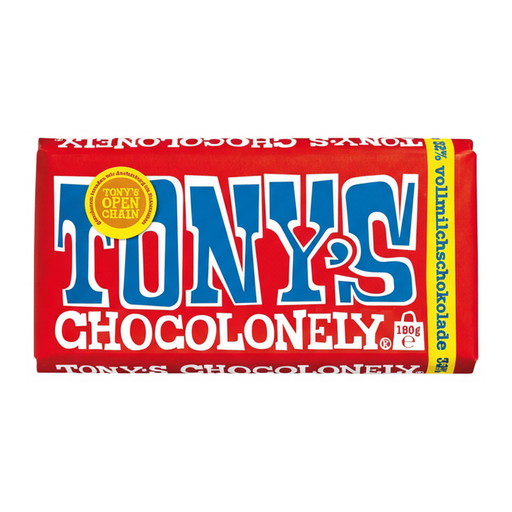 Image unavailable
Tony’s Chocolonely milk chocolate, 180 g
This 180 g bar could be a good choice for a break if you want to decide on your own portion size.
Before buying, check the Fairtrade mark, ingredients and allergens on the specific pack. Remember to factor in the weight of the whole bar when taking it with you.
View at Joybuy
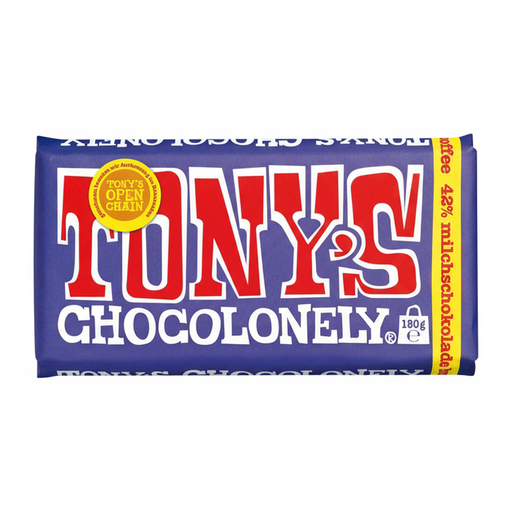 Image unavailable
Tony’s Chocolonely milk chocolate Pretzel Toffee, 180 g
This 180 g bar could make a handy break-time snack if you’re looking for the Pretzel Toffee variety and want to portion it yourself.
Take extra care to check the ingredients and allergens for this variety. Check the specific pack to see whether it carries a Fairtrade mark and what the mark applies to.
View at Joybuy
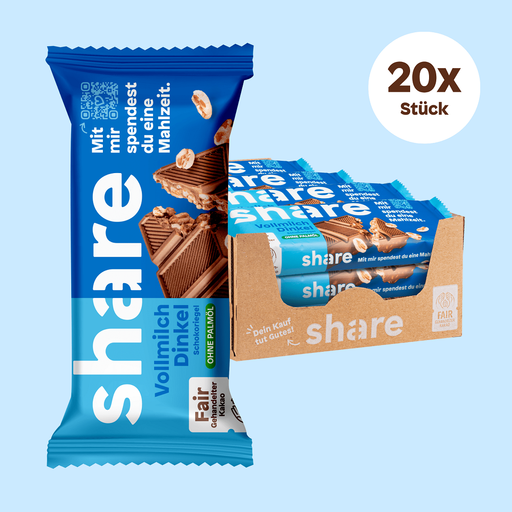 Image unavailable
Share Organic milk chocolate with puffed spelt, 20 × 45 g
This pack of 20 bars, each weighing 45 g, is an option if you want to plan smaller portions for your rides.
Check whether the bars are individually wrapped, and read the Fairtrade mark, ingredients and allergen information on the specific pack.
View at Joybuy
Frequently asked questions
Is chocolate made with sustainably sourced cocoa automatically Fairtrade-certified?
No. Claims about sustainable cocoa or a brand’s own programme don’t prove that the specific chocolate carries a Fairtrade mark. Check the pack for a Fairtrade product or ingredient mark, and see what it applies to.
Is chocolate enough to fuel a long bike ride on its own?
You can’t tell from the type of chocolate alone. In its 2010 sports nutrition guidelines, the International Olympic Committee highlights how much you eat, what you eat and when you eat it. So factor the portion and its nutrition information into your overall fuelling plan.
What should I check on a chocolate pack if I have allergies?
Read the ingredients list, highlighted allergen information and any precautionary ‘may contain’ statements for the variety you’ve chosen. Under EU food labelling rules, as explained by the European Commission, allergenic ingredients used in pre-packed foods must be clearly identified.
Is cocoa covered by Fairtrade mass balance physically traceable to an individual bar?
Not necessarily. Fairtrade Germany explains that ingredients covered by mass balance are allocated using records and don’t have to be physically traceable at every stage. Read the explanation on the specific pack to understand the Fairtrade claim correctly.


