Who is this important for?

Festival shoppers looking for the Fairtrade label

You want to bring Fairtrade-certified chocolate and distinguish the label on your chosen variety from general claims about cocoa sourcing. If the label has an arrow, check the explanation on the packaging too.

Groups sharing chocolate

You’re looking for a portion format that’s easy to hand out, and want to keep the original packaging with its ingredients list and storage instructions to hand.

People with dietary requirements

Before choosing, you check the ingredients, allergens and possible traces listed for the specific variety, rather than assuming you know its recipe from the brand alone.

What should you look for when buying?

First, check the Fairtrade label on the variety and its ingredients to make sure they suit your group. Then decide which portion format will be easiest to hand out at the festival and store according to the packaging instructions.

CriteriaWhat to check when buyingWho it matters to
Fairtrade label Check the label on the pack you’ve chosen; if it has an arrow, read the explanation about mass balance. Fairtrade Germany explains this labelling for products including cocoa and sugar. If I specifically want to bring Fairtrade chocolate, a general sustainability claim isn’t enough. Around 42% of consumers would make proof on the packaging their main buying criterion.
Ingredients and allergens Read the ingredients list, highlighted allergens and any precautionary ‘may contain’ statements for the specific variety; keep the packaging to hand when sharing. When sharing with a group, I want to be able to check what’s in each piece. For around 33% of consumers, the recipe and allergen information would therefore come first.
Portions and storage Choose between a bar to share and individually wrapped portions; follow the storage instructions during transport. If the chocolate is going to be handed out outdoors, I need a practical portion format and a suitable place to store it. This would be the most important consideration for around 25% of consumers.

Common buying mistakes

  • Mistaking a cocoa programme for a Fairtrade product label

    A brand’s claims about responsible sourcing don’t automatically prove that the chocolate you’ve chosen is Fairtrade-certified.

    If Fairtrade certification is important to your choice, check the label on the individual variety’s packaging.

  • Overlooking the arrow on the Fairtrade label

    Fairtrade Germany explains that a label with an arrow on cocoa or sugar may indicate mass balance. This doesn’t mean the Fairtrade ingredient in an individual bar can be physically traced back to its source.

    If this distinction matters to you, read the related information on the back of the pack.

  • Sharing chocolate without checking the ingredients

    Different varieties from the same brand can have different ingredients and allergen information. Without the packaging, it’s harder to check which information applies to the pieces you’re handing out.

    Check each variety individually and keep its original packaging when sharing.

  • Not planning for outdoor storage

    The Die Gute Schokolade listed by REWE should be stored in a cool, dry place away from strong odours. Keep this in mind when transporting and handing it out.

    Plan your transport and storage around the instructions on the pack you’re actually bringing.

Brands to consider

REWE

A retailer to consider if you want to pick up Fairtrade chocolate as part of the rest of your festival shop.

  • REWE stocks Die Gute Schokolade as a Fairtrade-certified 100 g bar.
  • Check the label and ingredients for each variety you choose.

Ritter Sport

Worth considering if you want to look at cocoa-sourcing information as well as the product label.

  • According to Ritter Sport’s 2023 Cocoa Report, the company sourced certified cocoa for its range, in some cases through the Fairtrade Cocoa Programme.
  • This doesn’t prove that every Ritter Sport bar carries a Fairtrade product label.

Lindt

A brand to compare when looking at information about its own sourcing programmes alongside details of the variety you’ve chosen.

  • Lindt says it sources its cocoa products through the Lindt & Sprüngli Farming Program or other responsible sourcing standards.
  • If you’re specifically looking for Fairtrade chocolate, check that the individual bar carries the relevant label.

kinder

A point of comparison if you’re interested in small, individually wrapped portions to hand out.

  • kinder describes its small, individually wrapped portions as being for younger children.
  • The cocoa standards cited by kinder don’t prove that a specific portion is Fairtrade-certified.

Schogetten

A brand for people who prefer chocolate that’s already divided into pieces.

  • Schogetten provides information about how it sources its raw materials, including the palm oil it uses.
  • If you’re looking for Fairtrade chocolate, this information isn’t a substitute for checking the label on the specific product.

Chocolate bars for your festival shop

These two 180 g bars are worth considering if you’re looking for chocolate to share. If you specifically want Fairtrade-certified chocolate, check the label and explanations on the packaging for each variety.
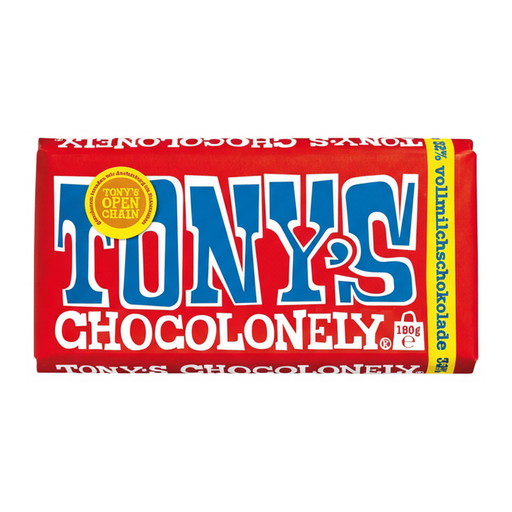
Tony's Chocolonely Milk Chocolate, 180 g bar

Tony's Chocolonely Milk Chocolate, 180 g

A milk chocolate bar to share. Before handing it out, check the ingredients, allergen information and storage instructions on the 180 g pack, as well as the Fairtrade label.

View at Joybuy
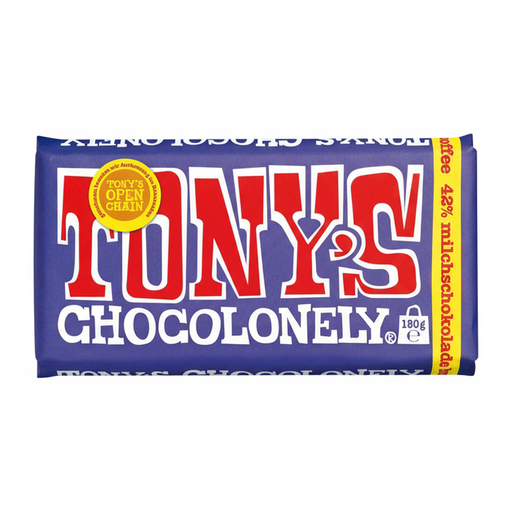
Tony's Chocolonely Milk Pretzel Toffee Chocolate, 180 g bar

Tony's Chocolonely Milk Pretzel Toffee Chocolate, 180 g

A 180 g milk chocolate bar with pretzel and toffee, if you’d prefer this variety to share. Check the ingredients and allergen information in particular, as well as the Fairtrade label on the pack.

View at Joybuy

Frequently asked questions

What does the arrow on the Fairtrade label on chocolate mean?

It may indicate mass balance. Fairtrade Germany explains this for products including cocoa and sugar: Fairtrade ingredients are accounted for in the supply chain, but the ingredient in an individual bar may not be physically traceable. Read the explanation on the packaging.

Is sustainably sourced cocoa automatically Fairtrade-certified?

No. A brand’s sourcing programme doesn’t mean every variety carries a Fairtrade product label. If certification is one of your buying criteria, check the label on the chocolate you’re actually planning to bring.

What should I check before sharing chocolate?

Check the ingredients list, highlighted allergens and any precautionary ‘may contain’ statements for each variety. Keep the relevant original packaging with you when handing it out, so you can refer to the information.

How should I store chocolate during a festival?

Follow the storage instructions on the specific pack. Die Gute Schokolade, as listed by REWE, should be stored in a cool, dry place away from strong odours. Plan a suitable spot for it during transport and at the place where you’ll be handing it out.