What should you look for when buying?
If you’re looking for chocolate with a Fairtrade connection for your morning coffee break, first check whether the specific variety meets your Fairtrade requirements. Then compare the flavour and ingredients, as well as the format that suits your break.
| What matters when buying |
What to check |
Who it matters most to |
| Fairtrade labelling |
The Fairtrade label on the specific variety; for chocolate with several ingredients, check which ingredients are Fairtrade and their proportions. |
I don’t want to confuse Fairtrade with a general cocoa programme. For around 42% of consumers, a verifiable label on the variety they choose comes first. |
| Flavour with coffee |
Compare the cocoa content and variety. According to the Verbraucherzentrale, the cocoa flavour becomes more intense as the cocoa content increases. |
I want to choose either a more intense cocoa flavour or a milder, sweeter contrast to my coffee. Around 33% of consumers put this flavour match first. |
| Ingredients and format |
Check the ingredients, allergen labelling and net weight on the pack; choose between a bar, a chocolate stick or a smaller format. |
I need a variety with ingredients that suit me, in a pack size that works for my break. For around 25% of consumers, this practical choice takes priority. |
Which brands are worth considering?
A brand can help you narrow down your search, but you’ll need to check the label on the specific variety to see whether it meets your Fairtrade requirements.
GEPA
GEPA offers Fairtrade chocolate in a range of formats. For a short coffee break, you could choose from bars, chocolate sticks or mini bars.
- The GEPA shop explicitly describes its chocolate range as Fair Trade and lists mini bars and chocolate sticks.
- Check the ingredients, allergens and other labelling for each variety individually.
Tony's Chocolonely
Tony's Chocolonely offers bars in a range of varieties and highlights Fairtrade and traceable cocoa in its product descriptions.
- The brand’s German shop describes its chocolate as Fairtrade.
- For each individual variety, the recipe, allergen information and pack labelling still matter.
REWE Beste Wahl / REWE
REWE is a convenient option if you want to choose Fairtrade chocolate alongside other items for your coffee break.
- REWE lists Fairtrade chocolate in its range; REWE product tests explicitly described certain REWE Beste Wahl chocolates as Fairtrade-certified.
- Don’t assume this applies to every REWE chocolate. Check the variety, label and ingredients on the product being offered.
Ritter Sport
With Ritter Sport, the stated cocoa programme may be another factor to consider alongside the variety and flavour.
- In 2023, Ritter Sport said that since 2018 the cocoa in its range had been certified under either the Rainforest Alliance cocoa programme or the Fairtrade cocoa programme.
- This doesn’t mean that every individual bar carries a Fairtrade product label.
Lindt
Lindt is an option for comparing different chocolate bars and cocoa sourcing claims, but the brand name alone doesn’t make it a Fairtrade choice.
- Lindt describes its cocoa sourcing through the Lindt & Sprüngli Farming Program or other standards. For EXCELLENCE, the brand includes a variety with 78% cocoa, among others.
- Neither a cocoa programme nor a particular cocoa content confirms that the bar you choose carries a Fairtrade label.
Chocolate for your coffee break at Joybuy
This selection includes milk chocolate and portion-sized chocolate sticks with Fairtrade-related claims. If you’re specifically looking for a Fairtrade-certified pack, check the label on each variety before buying; a claim about fairly traded cocoa doesn’t answer that question on its own.
 No image available
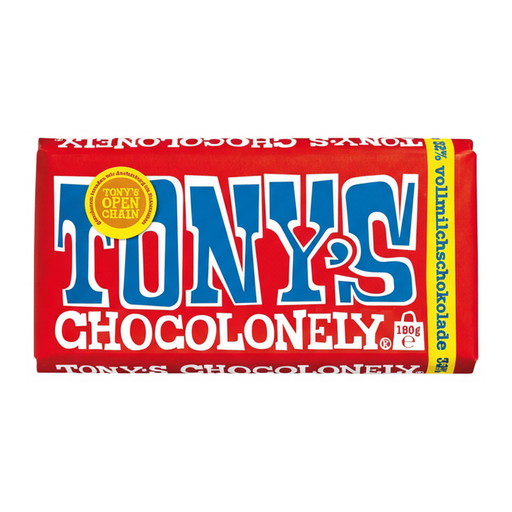
Tony's Chocolonely milk chocolate, 180 g
A good choice if you’re looking for milk chocolate with your coffee without the extra ingredients mentioned in the names of other varieties. The product information describes this variety as Fairtrade-certified; check the label on the pack.
If you have allergies, check the information on milk and soya, as well as warnings about possible traces of egg, gluten and nuts.
View at Joybuy
 No image available
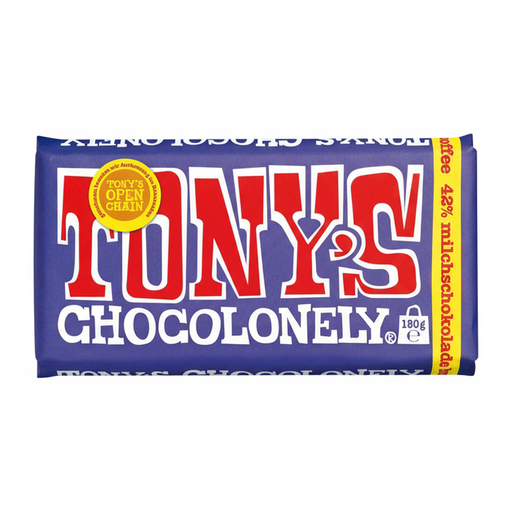
Tony's Chocolonely Milk Pretzel Toffee, 180 g
For a coffee break with pretzel and toffee instead of a plain milk chocolate bar. The product information states that it is Fairtrade-certified; as always, check the pack itself.
The listed allergens include milk, gluten and soya. If you have allergies, also check for warnings about possible traces of egg and nuts.
View at Joybuy
 No image available
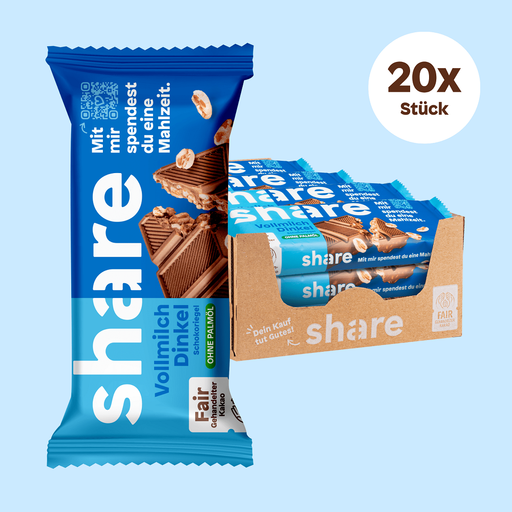
Share Organic milk chocolate sticks with puffed spelt, 20 × 45 g
The pack of 20 sticks, each weighing 45 g, is handy if you’d prefer individual portions for your coffee breaks rather than a bar. The product information mentions Fairtrade cocoa; check the pack to see how the Fairtrade ingredients are labelled.
If you have allergies, check the information on milk, soya and gluten on the specific pack.
View at Joybuy
 No image available
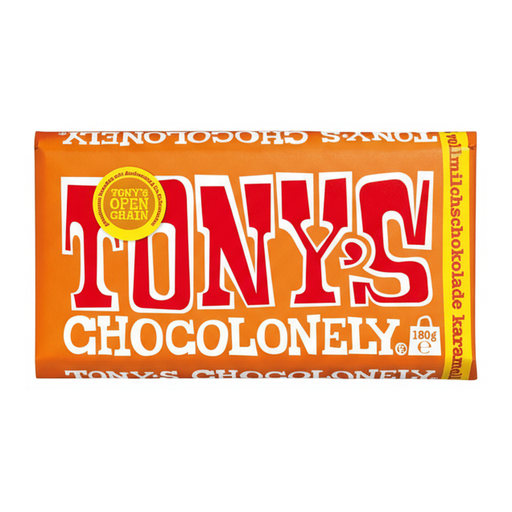
Tony's Chocolonely Milk Caramel Sea Salt, 180 g
A milk chocolate bar with caramel and sea salt if you fancy a sweet-and-salty flavour with your coffee. The product information refers to fairly traded cocoa; if you’re looking for a specifically Fairtrade-certified bar, check the label on the pack.
If you have allergies, check the information on milk ingredients and soya, as well as possible traces of gluten, egg, nuts and peanuts.
View at Joybuy
Frequently asked questions
How can I tell if chocolate is Fairtrade-certified?
Look for the Fairtrade label on the specific pack. For varieties with several ingredients, also check which ingredients are Fairtrade and their proportions. Fairtrade Germany’s product finder can help you search, but a general sustainability claim from the brand doesn’t replace checking the variety you’ve chosen.
Does dark chocolate go better with coffee than milk chocolate?
It depends on the flavour you want with your coffee. According to the Verbraucherzentrale, the cocoa flavour becomes more intense as the cocoa content increases; it describes chocolate with around 60% cocoa or more as dark chocolate. If you prefer a milder, sweeter accompaniment, you could choose milk chocolate instead.
Is dark Fairtrade chocolate automatically vegan or allergen-free?
No. Neither “dark” nor “Fairtrade” tells you whether every recipe is suitable. Check the ingredients list, allergen labelling and, where relevant, trace warnings on the specific pack, rather than judging suitability by colour or cocoa content.
Does a Fairtrade label guarantee a living income?
No, you can’t infer such a guarantee from the label. The Verbraucherzentrale points out that sustainability labels on chocolate don’t guarantee a living income. If Fairtrade is one of your buying criteria, use the label as a specific indication on the chocolate you’ve chosen, not as a promise about every outcome in cocoa farming.


