Parents with clear rules about treats
You don’t want to rule out chocolate altogether, but you do want to decide how much your child has and when. kindergesundheit-info.de recommends taking a mindful approach to sweets.


For a family with a toddler, Fairtrade chocolate is best treated as an occasional sweet, portioned out by an adult, rather than a regular snack. Check the Fairtrade mark on the specific product, along with its nutritional information, ingredients and allergens: the Fairtrade label does not tell you how much sugar it contains.
You don’t want to rule out chocolate altogether, but you do want to decide how much your child has and when. kindergesundheit-info.de recommends taking a mindful approach to sweets.
For them, what matters is a clear Fairtrade claim on the specific product they buy, not just a general statement about the brand or range.
Before choosing, you need to check the ingredients, highlighted allergens and, where applicable, precautionary ‘may contain’ statements on the current packaging. The Verbraucherzentrale explains which labelling details can help guide you.
First decide whether you want to offer a small treat, and when. Then compare only products whose Fairtrade claims and packaging information meet your requirements.
| Criterion | What to check when buying | Who it matters to |
|---|---|---|
| Portion and treat time | Decide on a small amount in advance; compare the sugar per 100 g in similar chocolates on the same basis. | When my child has chocolate, I want to decide how much they have rather than giving in to requests throughout the day. Around 50% of consumers prioritise this kind of portion and treat-time routine. |
| Fairtrade status of the product | Check for the Fairtrade mark on the packaging or a clear claim about the specific product in the current product listing. | It matters to me that the chocolate I actually buy carries a Fairtrade label, not just that the retailer has a Fairtrade range. For around 30% of consumers, this proof comes first. |
| Ingredients and allergens | Read the ingredients list, highlighted allergens and, where applicable, precautionary ‘may contain’ statements on the current packaging. | If an allergy has been diagnosed, I can’t rely on the product name; the packaging label is what matters. Around 20% of consumers make this their first check when buying. |
Fairtrade does not describe a product’s sugar content, and it doesn’t make chocolate a suitable regular snack between meals.
Check the sugar content in the nutritional information and plan sweets as a small, occasional treat. kindergesundheit-info.de recommends taking a mindful approach to sweets.
A retailer stocking Fairtrade chocolate does not prove that an individual bar carries a Fairtrade label.
Check for the mark on the specific packaging or look for a clear claim in the current product listing.
Fairtrade chocolate can still contain ingredients or carry precautionary ‘may contain’ statements that are relevant if you have an allergy. For example, the REWE listing for Plant-for-the-Planet Die Gute Schokolade dark chocolate mentions possible traces of milk, soya, almonds and hazelnuts.
Check the label on every new pack you buy. If you have a diagnosed allergy, follow the advice given specifically for your circumstances by your medical professional.
The information below can help you find a specific Fairtrade product, but it doesn’t replace checking the packaging.
GEPA describes its chocolate range as Fairtrade and organic, with bars and snack bars.
REWE includes Fairtrade chocolate and sweets in its Fairtrade range.
REWE describes the listed organic dark chocolate ‘Die Gute Schokolade’ as Fairtrade-certified.
These bars and snack bars could be considered as occasional treats, portioned out by an adult. Check any Fairtrade claims in the product descriptions against the label on the pack you buy.
 No image available
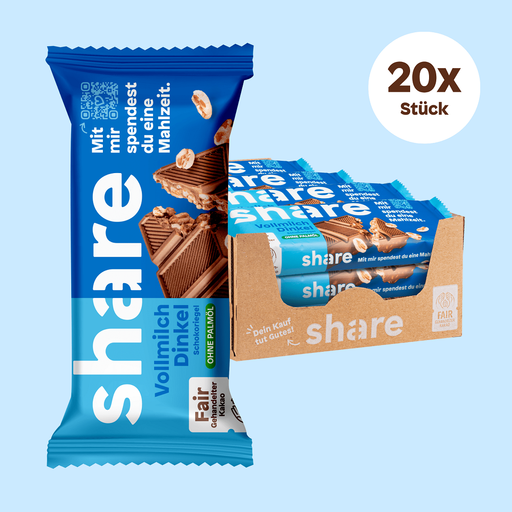
These individually named snack bars should only be considered as occasional treats, portioned out by an adult. The pack contains 20 × 45 g bars; a whole bar is not necessarily an appropriate portion for a toddler. Check the Fairtrade label, ingredients and allergens on the specific pack.
 No image available
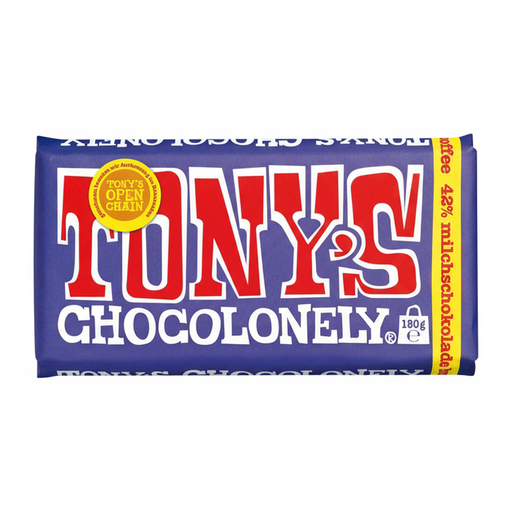
With this 180 g chocolate containing pretzel and toffee, it’s particularly important to check the ingredients on the specific pack. If you’re keeping it as an occasional treat, an adult should decide on the portion. Also check the Fairtrade label and current allergen information.
 No image available
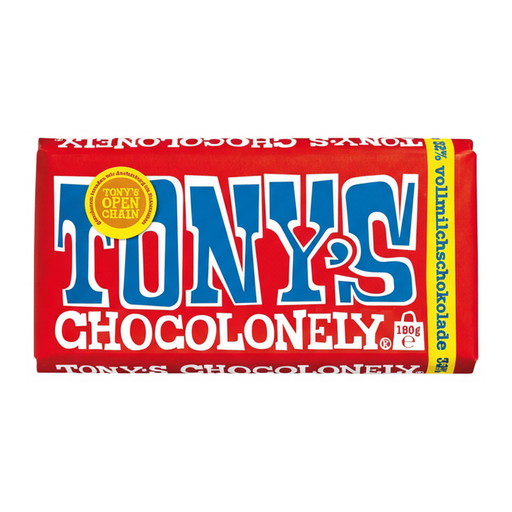
This 180 g milk chocolate should only be considered as an occasional treat, portioned out by an adult. Before choosing, compare the sugar per 100 g and check the Fairtrade label, ingredients and allergen information on the current packaging.
Fairtrade chocolate shouldn’t replace a regular snack between meals. kindergesundheit-info.de recommends taking a mindful approach to sweets. If you do offer chocolate, treat it as a small, planned treat.
Check for the Fairtrade mark on the pack you buy or look for a clear, up-to-date claim about the specific product. A retailer’s Fairtrade range doesn’t mean that every chocolate it sells carries the same label.
The sugar content is listed in the nutritional information. When comparing similar chocolates, use the same measure, such as per 100 g. The Verbraucherzentrale points out that the ingredients list may include different types of sugar.
Read the ingredients list, highlighted allergens and, where applicable, precautionary ‘may contain’ statements on the current packaging. If you have a diagnosed allergy, a general product choice is no substitute for advice tailored to your medical needs.