Shoppers who check the label
You want to be able to identify Fairtrade on the chocolate you’re actually buying, rather than relying on the brand name or a general sustainability claim. Fairtrade Germany recommends looking for the Fairtrade mark.


If Fairtrade matters to you when choosing a chocolate bar or block for a late-night snack, start by checking the Fairtrade mark on the specific product. A brand’s cocoa programme doesn’t automatically replace product-level certification. Then consider the flavour, pack size, ingredients and allergens to see whether the snack suits you.
You want to be able to identify Fairtrade on the chocolate you’re actually buying, rather than relying on the brand name or a general sustainability claim. Fairtrade Germany recommends looking for the Fairtrade mark.
You’re looking for something to enjoy late in the evening and want to balance your Fairtrade preference with the flavour, cocoa content and pack format.
You need to check whether the specific recipe meets your requirements. The consumer advice centre lists ingredients and allergens as important information on food packaging.
When choosing chocolate with Fairtrade in mind, first check the labelling on the specific product. Then compare flavours and formats, and read the ingredients and allergen information on the current packaging before you buy.
| Criterion | What to check | Who it matters to |
|---|---|---|
| Fairtrade labelling | Check for the mark on the specific product’s packaging; assess any brand programme separately. | I want to check Fairtrade credentials on the snack itself, rather than infer them from the brand name. This is the top priority for around 36% of shoppers. |
| Flavour and format | Compare flavours and cocoa content; check the pack size and whether it can be portioned easily. | For a late-night snack, I want to choose a flavour and amount that suit what I have in mind. This is the main consideration for around 29% of shoppers. |
| Ingredients and allergens | Read the ingredients list, highlighted allergens and any may-contain warnings for the specific product. | If I need to avoid certain ingredients or follow a particular diet, finding a suitable recipe comes first. This check takes priority for around 21% of shoppers. |
| Local availability | Check whether the product you want is stocked at your local shop or in your regional range. | For an impromptu snack, I need to be able to find the product where I am and check its packaging. This is the top consideration for around 14% of shoppers. |
A brand’s statements about cocoa or sustainability don’t automatically mean that every one of its bars or blocks carries the Fairtrade mark.
If Fairtrade is your deciding factor, check the mark on the packaging of the product you’ve chosen. Consider information about the brand’s programme separately.
Cocoa content describes the recipe, not its Fairtrade labelling. It also doesn’t tell you on its own whether the chocolate contains allergens or is suitable for a particular diet.
Check the mark, ingredients, allergens and nutritional information separately, rather than treating any one of them as a substitute for the others.
If you have relevant allergies, warnings about possible traces can affect your choice. For example, REWE lists possible traces of milk, hazelnuts, almonds and soya for one dark chocolate product; this doesn’t apply to other varieties.
Read the information on the current packaging of the product you’re planning to buy.
A retailer stocking Fairtrade chocolate doesn’t mean it’s available at every local shop or in every regional delivery area.
Check whether the product you want is available where you are. If you choose an alternative, check the labelling on that specific pack again.
Retailer with Fairtrade chocolate listed in its range.
Brand with its own information about cocoa certification and traceability.
Brand associated with Mondelēz International’s Cocoa Life programme.
Brand with information about the Lindt & Sprüngli Farming Program and other sourcing standards.
Brand with manufacturer information about several cocoa sourcing standards.
Chocolate block brand with a manufacturer statement about Rainforest Alliance-certified cocoa sourced under a mass balance system.
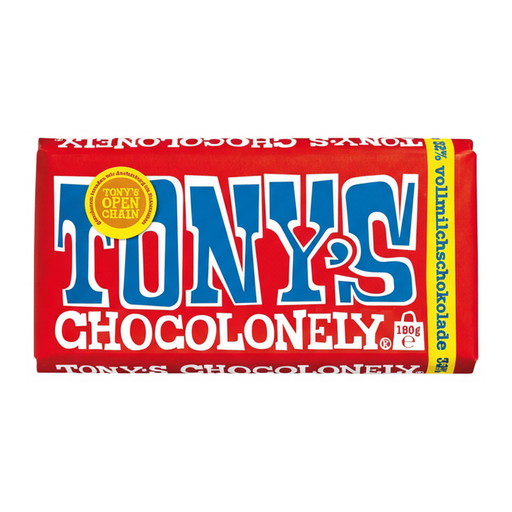
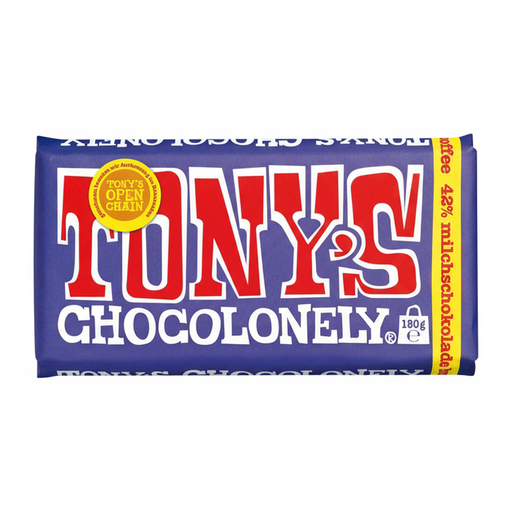
These two 180-g blocks from Tony's Chocolonely offer different flavours for a late-night snack. If Fairtrade is important to you, check the labelling on the specific pack variant available.
 No image available
An option if you’re after milk chocolate for a late-night snack. Check whether the 180-g block’s size and quantity suit your planned portion, and read the Fairtrade labelling, ingredients and allergens on the pack variant available.
 No image available
An option if you fancy a variety with pretzel and toffee rather than plain milk chocolate. Check whether the portion you have in mind suits the 180-g block, and read the Fairtrade labelling, ingredients and allergen information on the pack variant available.
No, a brand programme doesn’t automatically mean that an individual chocolate product carries the Fairtrade mark. If Fairtrade is one of your buying criteria, look for the mark on the specific product; Fairtrade Germany explicitly recommends checking for the Fairtrade mark.
No, cocoa content describes the recipe and doesn’t prove Fairtrade certification. Check for the mark separately from the percentage shown on the pack you’ve chosen.
Read the ingredients, highlighted allergens and any may-contain warnings on the current packaging. A Fairtrade mark on its own doesn’t tell you whether the chocolate is vegan or suitable for your allergy requirements.
No, the Rainforest Alliance statement isn’t the same as Fairtrade labelling on the product. Schogetten describes its cocoa sourcing as certified under a mass balance system. If you’re specifically looking for Fairtrade chocolate, check the mark on the individual pack.