Hosts for whom Fairtrade is a must
You want to be able to see the certification on the chocolate that’s actually being served. Claims about a brand’s other cocoa programmes aren’t enough to help you make this decision.


If Fairtrade is essential for your New Year’s Eve celebration, choose chocolate that is clearly labelled as Fairtrade-certified for that specific product; a brand’s general cocoa programme is no substitute. If you’re catering for several guests, also consider the flavours and pack sizes available, and check the ingredients and allergen information for each type of chocolate.
You want to be able to see the certification on the chocolate that’s actually being served. Claims about a brand’s other cocoa programmes aren’t enough to help you make this decision.
You’re looking for a choice of flavours or formats, and need to take the ingredients and allergens in each one into account. You should also check the packaging details of any option labelled vegan.
You’re interested in chocolate from an organic-focused range and want to check which fair trade claim applies to the product you choose.
Start by checking the Fairtrade label on the specific chocolate. Then narrow down your options by flavour, ingredients and the amount you’ll need for your celebration.
| What to consider | What to check | Who it matters to |
|---|---|---|
| Fairtrade label | Check the Fairtrade claim for the specific product on both the product page and packaging; don’t treat other cocoa programmes as equivalent. | If Fairtrade is essential for my celebration, I don’t want to rely solely on a general claim made by the brand. Around 40% of consumers prioritise proof on the specific product. |
| Variety and portioning | Compare flavours, bars or smaller bars, and the weight shown on each pack. | For a group with different tastes, I want to offer more than one option and be able to divide up the quantity sensibly. For around 30% of consumers, this choice is the main consideration for the group. |
| Ingredients and allergens | Check the ingredients list, highlighted allergens and possible traces for each product; check separately whether it’s suitable for vegans. | If guests avoid certain ingredients, I need information about the product I’m actually buying, rather than making assumptions based on its name. This check is a priority for around 20% of consumers. |
| Quantity and local availability | Plan the number of packs and the total weight; for online orders, check the delivery area and the product you’ve selected. | I want to choose enough chocolate for the number of guests and know which options I can order. Around 10% of consumers base their decision primarily on this. |
Ritter Sport describes its cocoa as Rainforest Alliance-certified, while Lindt refers to its Farming Program and other sourcing standards. These manufacturers’ claims don’t confirm that a particular bar is Fairtrade-certified.
If Fairtrade is your buying criterion, check the label on the individual product rather than relying solely on the brand’s sustainability information.
Flavour and ingredients vary from one product to another. A Fairtrade label doesn’t tell you whether the chocolate contains milk, nuts or soya.
Read the ingredients and allergen information on every pack, and choose additional options based on their own labelling.
Brand information can help you narrow down your options, but it’s the specific product that determines whether a chocolate meets your Fairtrade requirements.
GEPA offers chocolate bars and smaller bars in a range of varieties, including options it describes as vegan.
REWE describes Plant-for-the-Planet’s 100-g bar, “Die Gute Schokolade”, as Fairtrade-certified.
REWE is a retailer to consider when looking for chocolate with a Fairtrade label.
Ritter Sport is worth considering when comparing different claims about cocoa sourcing.
Lindt describes its own Farming Program and other standards for sourcing cocoa products.
This selection includes chocolate bars and smaller bars to suit different tastes and quantities. If you specifically want the finished chocolate to be Fairtrade-certified, check the claim for the individual pack; a claim about Fairtrade cocoa alone doesn’t confirm this.
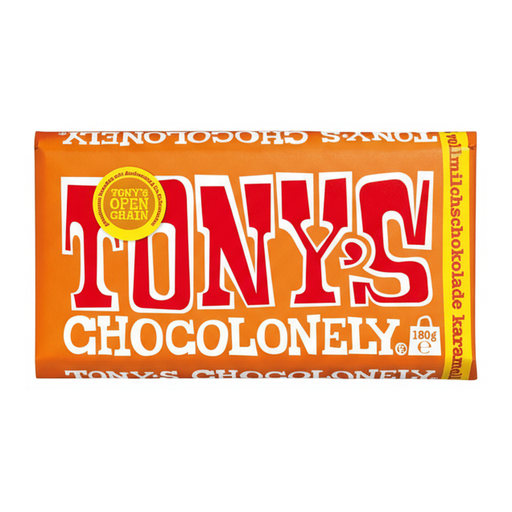 Image unavailable
A bar for guests who enjoy milk chocolate with caramel and sea salt.
The product name gives the weight as 180 g. Check the Fairtrade label, ingredients and allergens on the specific pack.
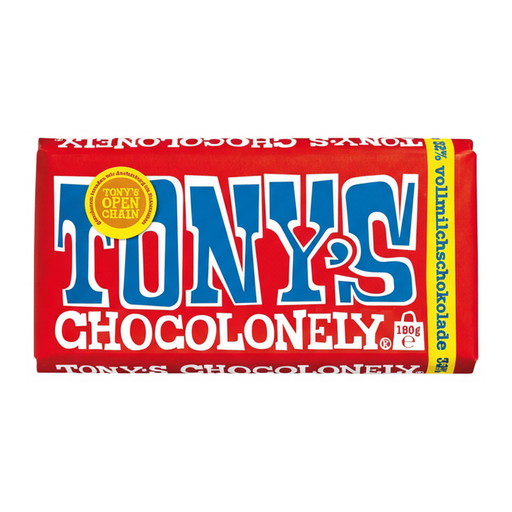 Image unavailable
This 180-g bar is worth considering if you’re looking for a milk chocolate option for your celebration.
The product description says it is Fairtrade-certified. Check the label and ingredients against the pack you choose.
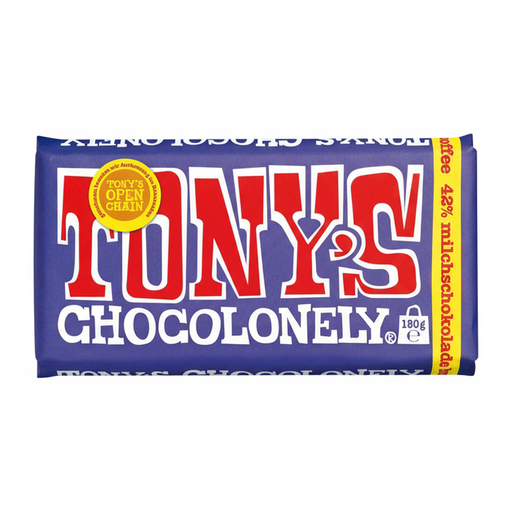 Image unavailable
This 180-g bar, described as milk chocolate with pretzel and toffee, offers another flavour option.
Before choosing, compare the variety named on the pack with the ingredients, allergen and Fairtrade information.
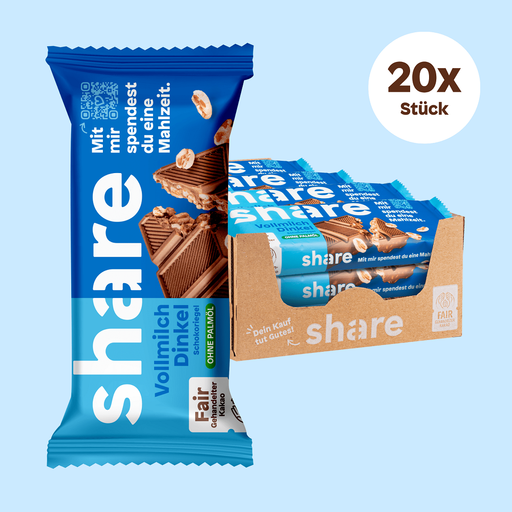 Image unavailable
The pack contains 20 bars of 45 g each, which you can factor into your plans when catering for several guests.
The information refers to Fairtrade cocoa, but doesn’t clearly confirm that the finished bars are Fairtrade-certified. Check the label on the pack to confirm this; if needed, also check whether the bars are individually wrapped.
Look for a Fairtrade label for the specific product on the packaging or product page. A brand’s claims about other cocoa programmes don’t prove that the chocolate you’ve chosen is Fairtrade-certified.
Yes. Ingredients and allergen information can vary between products. For packaged chocolate, read the ingredients list and any warnings about possible traces on each pack. The German Food Federation explains that relevant allergens must be identified in the ingredients list.
No. The Fairtrade label doesn’t describe the recipe. For example, according to the product information, “Die Gute Schokolade”, which REWE describes as Fairtrade-certified, contains whole milk powder, hazelnuts and soya. Always check the specific product you choose for your guests.
Compare the weights and plan the total amount you’ll need for your guests before deciding between bars and smaller bars. If you need a specific certification or combination of ingredients, check each product you plan to serve separately.