Parents looking specifically for Fairtrade
The variety you buy for a holiday snack should itself be labelled as Fairtrade. A general statement from a brand about sustainable sourcing isn’t enough.


For an occasional treat during the school holidays, you could choose a chocolate bar or a bar of chocolate that is explicitly labelled as Fairtrade. Then consider the portion you have planned, the nutritional information and the ingredients. Fairtrade tells you nothing about the sugar content or whether a product is suitable for someone with allergies.
The variety you buy for a holiday snack should itself be labelled as Fairtrade. A general statement from a brand about sustainable sourcing isn’t enough.
A small amount for an outing or an afternoon snack is easier to plan than a bar left out for everyone to help themselves to. The Verbraucherzentrale recommends no more than one portion of sweets or snacks a day, roughly the amount that fits in a child’s hand.
If you’re buying snacks for several children, the ingredients in the specific variety need to meet their needs. Fairtrade doesn’t mean a product is free from allergens; Lebensmittelklarheit explains how allergens must be labelled on packaged foods.
A Fairtrade claim on the specific product helps narrow down your options. Then you can check the portion size, nutritional information and ingredients of the varieties you’re considering.
| Criteria | What to check | Who it matters to |
|---|---|---|
| Fairtrade certification | The Fairtrade claim should apply to the specific variety shown on the packaging or product page, not just to a general brand programme. | If Fairtrade is a must, I want to be able to identify the bar I’ve chosen clearly, rather than relying on a statement about the brand. For around 42% of shoppers, this specific certification is the top priority. |
| Portion size and sugar | Check how much you can portion out, and compare the sugar content per 100 g in the nutritional information. | For a holiday outing, I want to portion out treats in advance and compare the sugar content of different varieties. A portion that’s easy to plan is the main concern for around 33% of shoppers. |
| Ingredients and allergens | Check the ingredients list, any highlighted allergens and, where relevant, precautionary statements about possible traces for each variety. | If you’re sharing chocolate, the recipe needs to be suitable for everyone who’ll be eating it. For around 25% of shoppers, this check is the top priority. |
A general cocoa-sourcing programme doesn’t prove that a particular variety of chocolate is Fairtrade-certified.
If Fairtrade is a buying requirement, check the claim on the specific variety you’ve chosen.
Fairtrade doesn’t change the fact that chocolate is a sweet treat. According to REWE, its listed “Die Gute Schokolade” contains 52 g of sugar per 100 g.
Decide on the amount in advance and compare the sugar information per 100 g when choosing a variety. The Verbraucherzentrale recommends no more than one portion of sweets or snacks a day for children.
The Fairtrade claim doesn’t tell you what’s in the ingredients. Milk, nuts or soya could be important for some children.
Before sharing, check the ingredients, any highlighted allergens and, where relevant, precautionary statements about possible traces on the specific pack.
REWE announced its Fairtrade-certified “Very Fair” chocolate in May 2021. That doesn’t mean the variety is available at your chosen store today.
Before you shop, check the latest product description or the range at your local store.
These brands and retailers show some of the different ways to choose Fairtrade chocolate. Whatever you buy, check the claim on the specific product.
GEPA offers chocolate bars and individually wrapped chocolate bars, and describes its chocolate range as organic and fairly traded.
REWE explicitly describes the 100 g “Die Gute Schokolade” milk chocolate bar listed on its website as Fairtrade-certified.
REWE says its range includes more than 300 Fairtrade products, including chocolate and other sweets.
This milk chocolate bar could work for a planned holiday snack if Fairtrade certification on the specific variety is a must. Check the amount you plan to give children and the ingredients before sharing.
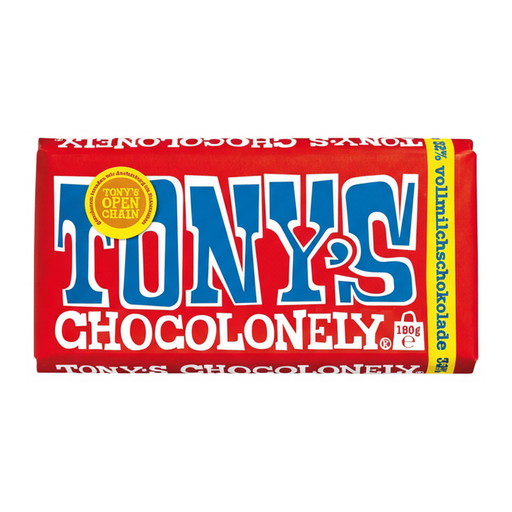 Image unavailable
This variety is worth considering if you’re looking for milk chocolate that’s specifically labelled as Fairtrade for a holiday snack.
The bar weighs 180 g. Portion out an amount for children in advance, and check the nutritional information, ingredients and allergen details on the specific pack before buying.
No. If you’re specifically looking for Fairtrade chocolate, check the claim on the particular variety. For example, Lindt describes its own cocoa-sourcing programme, but that doesn’t mean every bar is Fairtrade-certified.
The Verbraucherzentrale recommends no more than one portion of sweets or snacks a day, roughly the amount that fits in a child’s hand. If you have a larger bar, you can portion out the amount you plan to serve before eating.
Yes. The Fairtrade claim doesn’t tell you how much sugar a product contains. The nutritional information per 100 g lets you compare specific varieties. REWE says its listed “Die Gute Schokolade” contains 52 g of sugar per 100 g.
As Lebensmittelklarheit explains, allergens must be labelled on packaged foods. Before sharing chocolate, read the ingredients list and check the specific pack for any additional precautionary statements about possible traces.
No. Organic and Fairtrade are separate claims. GEPA describes its own chocolate range as organic and fairly traded; for any other variety, you’ll need to check for a Fairtrade claim separately.