What should you look for when buying?
Start by checking the Fairtrade certification for the exact variety. Then consider the rest of the packed lunch, the chocolate’s ingredients and a portion that suits the planned snack.
| Criterion |
What to check when buying |
Who it matters most to |
| Fairtrade certification |
Look for the Fairtrade mark or an explicit certification statement for the exact variety on the current packaging or product page. |
If Fairtrade is a deciding factor for me, I don’t want to rely on a brand promise alone. Around 36% of consumers would put clear proof first. |
| Its place in the lunchbox |
Plan the rest of the packed lunch and include chocolate only as an occasional little extra. |
If the lunchbox is meant to provide a proper snack, I don’t want chocolate to take its place. Around 29% of consumers would consider the overall contents first. |
| Ingredients and allergens |
Read the ingredients list, highlighted allergens and any precautionary allergen information on the current packaging for the variety you’ve chosen. |
If I have a known intolerance, I want to check the exact recipe before packing it. Around 21% of consumers would prioritise checking the ingredients. |
| Taste and portion size |
Choose a variety your child likes and portion it out yourself; use the per 100 g information to compare nutritional values. |
The chocolate should taste good to your child, without needing to put a whole bar in the lunchbox. Around 14% of consumers would prioritise taste and ease of portioning. |
Brands and retailers to help you choose
When buying Fairtrade chocolate, the information for an individual product is more useful than the brand name. These examples show what to look out for when comparing labels.
Plant for the Planet
REWE explicitly describes the Die Gute Schokolade milk and dark varieties featured on its site as Fairtrade certified.
- The Fairtrade information applies to specific varieties.
- You should still check the ingredients and any precautionary allergen information for the variety you choose.
Tony’s Chocolonely
REWE describes the milk chocolate nougat variety as Fairtrade milk chocolate.
- The Fairtrade status is explicitly stated for this variety.
- The nougat filling makes it especially important to check the ingredients and allergen information.
REWE
REWE identifies the Fairtrade mark as a way to recognise certified products and features product pages for chocolate that is explicitly certified.
- Product information can help when comparing specific varieties.
- Not every chocolate sold by REWE is Fairtrade certified simply because it’s available there.
Lindt
Lindt describes its Farming Program and other standards for responsible cocoa sourcing.
- The brand explains its approach to cocoa sourcing.
- This brand-level information isn’t proof that a particular bar is Fairtrade certified.
kinder
kinder names several standards for sourcing its cocoa.
- The information helps you understand the sourcing approach described by the brand.
- Check the product itself to see whether a specific variety is Fairtrade certified and which allergens it contains.
Fairtrade chocolate at Joybuy
These two Tony’s Chocolonely bars could work as an occasional little extra if you’re looking for chocolate explicitly described as Fairtrade certified. Compare the varieties using the current packaging information and portion out the amount you want before packing.
 No image available
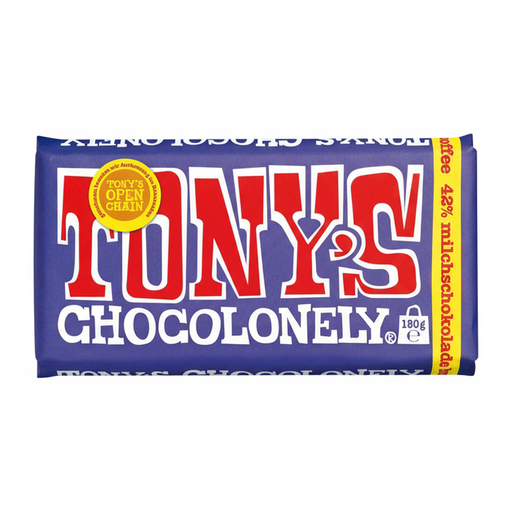
Tony's Chocolonely Milk Pretzel Toffee Chocolate, 180 g
The product description states that this chocolate is Fairtrade certified; check the current packaging to confirm. The 180 g bar with pretzel and toffee can be portioned as you like for the lunchbox. Before packing, pay particular attention to the information about milk, wheat and soya, as well as possible traces of egg and nuts.
View at Joybuy
 No image available
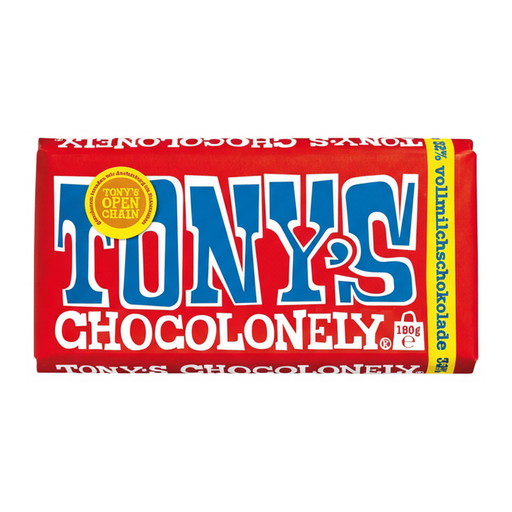
Tony's Chocolonely Milk Chocolate, 180 g
The product description states that this milk chocolate bar is Fairtrade certified; check the current packaging before packing it. Portion out a little from the 180 g bar and check the information about milk and soya, as well as possible traces of egg, cereals containing gluten and nuts.
View at Joybuy
Frequently asked questions
Can Fairtrade chocolate replace a packed lunch?
No. A Fairtrade label doesn’t change the fact that chocolate is a sweet treat. The German Nutrition Society recommends that children and teenagers get an appropriate balance of nutrients through their meals, and describes confectionery as often high in energy and low in nutrients. Chocolate is therefore best as an occasional little extra alongside the rest of the lunchbox.
How can I tell if a variety is Fairtrade certified?
Look for the Fairtrade mark or an explicit certification statement for the specific chocolate. REWE identifies the mark as a way to recognise certified products and explicitly describes certain Plant for the Planet bars as Fairtrade certified. A brand-wide cocoa programme isn’t the same as proof for an individual product.
Which allergen information should I check before packing?
Check the ingredients list, highlighted allergens and any precautionary allergen information on the current packaging for the variety you’ve chosen. If you have a known allergy or intolerance, don’t rely on information for another variety or on a pack you bought previously.
Is dark chocolate automatically the better choice?
No. The term ‘dark’ alone doesn’t tell you what the chocolate contains or what role it should play in a packed lunch. For the Plant for the Planet varieties described by REWE, the dark chocolate contains 39 g of sugar per 100 g, compared with 52 g per 100 g for the milk chocolate; this comparison applies only to these two products. Also check the allergens, taste and the amount you’ll actually pack.


