What should you look for when buying?
When choosing Fairtrade chocolate for an afternoon snack, first check the label on the specific variety and its ingredients. Then compare the flavour, nutritional information and format.
| Criteria |
What to check when buying |
Who it matters to |
| Fairtrade certification |
Check the Fairtrade mark or an explicit certification statement for the specific variety on the packaging and product page. Other sustainability labels are not automatically equivalent proof. |
I specifically want to buy Fairtrade-certified chocolate and don’t want to rely on a brand claim alone. Around 42% of shoppers put this product-specific proof first. |
| Ingredients and allergens |
Read the ingredients list, highlighted allergens and any ‘may contain’ information on the specific product packaging. |
If I need to avoid certain ingredients, the recipe determines which variety is suitable for me. For around 33% of shoppers, checking this comes first. |
| Flavour and snack format |
Compare cocoa content and sugar on the same basis, such as per 100 g, and consider bar and snack bar formats. |
For my afternoon break, I’m looking for a variety whose flavour and format suit what I feel like eating. This is the main consideration for around 25% of shoppers. |
Brands and retailers to help you choose
Brand claims and product labels answer different questions. A claim about a brand’s cocoa doesn’t automatically prove that each of its chocolate bars is Fairtrade certified.
Plant-for-the-Planet / Die Gute Schokolade
REWE describes both the 100 g milk chocolate bar and the 100 g organic dark chocolate bar as Fairtrade certified.
- Both varieties have product-specific certification information. REWE states that the organic dark chocolate variety contains at least 60% cocoa.
- Ingredients and allergen information vary between the varieties, so check the bar you choose.
Tony's Chocolonely
Fairtrade Germany’s product finder lists a 180 g dark chocolate bar from Tony's Chocolonely.
- The listing names a specific bar, rather than just the brand.
- Check the Fairtrade label, recipe and allergen information separately for other varieties.
GEPA
GEPA describes chocolate bars and snack bars in a range of varieties, including milk chocolate and vegan options.
- Bars and snack bars offer different formats to choose from for an afternoon snack.
- If you’re specifically looking for a Fairtrade-certified product, check the label on the GEPA item you’ve chosen. Describing it as ‘fair’ isn’t a substitute.
REWE
REWE is relevant here as a retailer: the company lists Fairtrade chocolate as part of its Fairtrade range.
- Product pages may explicitly state that a specific chocolate is certified.
- A claim about the range isn’t proof that every own-brand or other-brand bar is Fairtrade certified.
Ritter Sport
Ritter Sport says that, since 2018, the cocoa in its range has been certified under either the Rainforest Alliance or Fairtrade cocoa programme.
- The brand names the programmes covered by its cocoa claim.
- Mentioning both programmes doesn’t provide blanket proof that a particular Ritter Sport bar is a Fairtrade product.
Milka
Milka refers to the Cocoa Life programme for its cocoa.
- You can consider the named programme as a claim made by the brand itself.
- Cocoa Life on its own doesn’t confirm that a specific Milka variety is Fairtrade certified.
Schogetten
Schogetten may appeal if you want to compare individually portioned pieces with a traditional chocolate bar.
- The format makes the size and shape of each portion clear.
- Schogetten’s claim about Rainforest Alliance-certified cocoa isn’t proof that a specific variety is a Fairtrade product.
Chocolate bars at Joybuy
These two Tony's Chocolonely bars may suit an afternoon break if you’re looking for a product description that explicitly mentions Fairtrade. Choose between milk chocolate and the variety with pretzels and toffee. Before buying, check the label and ingredients on the specific product packaging.
 No image available
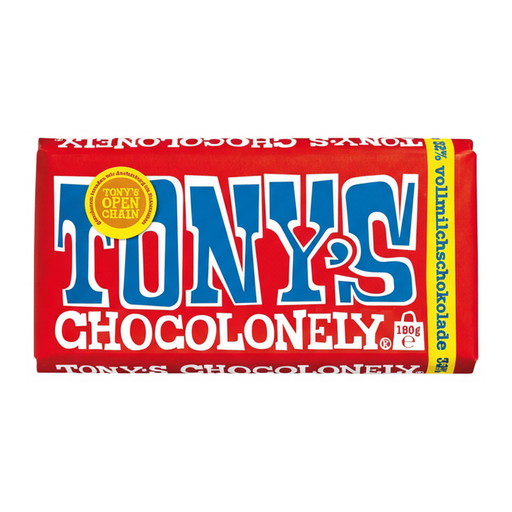
Tony's Chocolonely Milk Chocolate, 180 g
A milk chocolate bar for a break if you prefer this variety without any additional flavour ingredients. The product description says it is Fairtrade certified; check the mark on the specific packaging. When choosing, pay particular attention to the information about milk and soya, as well as any ‘may contain’ warnings.
View at Joybuy
 No image available
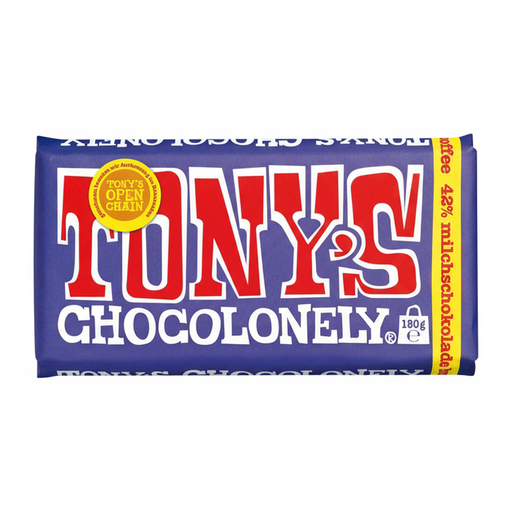
Tony's Chocolonely Milk Pretzel Toffee Chocolate, 180 g
This milk chocolate bar with pretzels and toffee is an option if you fancy a sweet-and-salty flavour. The product description says it is Fairtrade certified; check the label on the packaging. When checking the ingredients, pay particular attention to milk, wheat and soya, as well as any ‘may contain’ warnings.
View at Joybuy
Frequently asked questions
Is the word ‘fair’ enough to show that chocolate is Fairtrade certified?
No, the word on its own doesn’t confirm that the chocolate is Fairtrade certified. The Verbraucherzentrale notes that ‘fair’ is not a legally protected term in Germany. So check the Fairtrade label on the specific bar or snack bar.
Is chocolate covered by a cocoa sustainability programme automatically Fairtrade certified?
No, a brand programme or another cocoa certification doesn’t automatically prove that the finished product is Fairtrade certified. For example, Milka names Cocoa Life, while Ritter Sport says it uses cocoa from Rainforest Alliance or Fairtrade cocoa programmes. If you specifically want a Fairtrade bar, the label on that variety is what matters.
How do I check allergens in a chocolate bar?
Read the ingredients list and ‘may contain’ information for the specific variety. The Lebensmittelverband Deutschland explains that allergens which must be declared are highlighted in the ingredients list. A voluntary ‘may contain’ warning, on the other hand, describes the possibility of accidental presence and doesn’t mean the allergen is definitely present.
How do I compare milk and dark chocolate for an afternoon snack?
Compare the specific varieties by looking at their ingredients, cocoa content and nutritional information on the same basis. For the ‘Die Gute Schokolade’ bars stocked by REWE, the organic dark chocolate variety contains at least 60% cocoa and 39 g of sugar per 100 g, while the milk chocolate variety contains 52 g of sugar per 100 g. These figures apply to the products mentioned, not to each type of chocolate as a whole.


