If Fairtrade is a must for your late-night snack, choose a chocolate bar based on the label on the specific pack, not on a general sustainability claim from the brand. If you see an ingredient label or an arrow on the FAIRTRADE mark, check the explanation on the back too. Then choose your preferred flavour and format, and make sure the ingredients and allergen information work for everyone sharing.
Who should take care when choosing?
Shoppers with a firm Fairtrade requirement
You want to see a clear Fairtrade label on the bar you buy. Fairtrade International recommends checking the information about ingredients and, where relevant, mass balance on the back of the pack if you see different types of label.
People sharing a snack
If you’re sharing with several people, you could choose bars in different sizes or separate, individually portioned treats. Tony’s Chocolonely, for example, offers 90 g and 180 g bars as well as individually wrapped mini versions; the right choice still depends on everyone’s preferences.
People with ingredient or allergen requirements
If anyone needs to avoid certain ingredients, check the information for the specific variety. REWE’s product information shows that ingredients and possible traces of milk, soya or nuts, for example, can vary between chocolate bars.
What should you look for when buying?
First, decide whether a Fairtrade label is essential. Then choose your preferred flavour and portion size, and check the ingredients against the needs of everyone sharing before you buy.
| Criteria |
What to check when buying |
Who it matters most to |
| Fairtrade label |
Look for the FAIRTRADE mark on the specific pack. If there’s an arrow or an ingredient label, check the explanation on the back. |
If Fairtrade is a must for me, a general claim about sustainable cocoa isn’t enough. Around 40% of consumers would make this their top buying priority. |
| Flavour and cocoa content |
Compare the stated cocoa content and ingredients for your chosen variety; check the sugar per 100 g if you need to. |
For my late-night snack, I want to be able to choose between a milder and a darker variety. This flavour preference would come first for around 30% of consumers. |
| Format for sharing |
Check the net weight and portion format; consider choosing separate varieties if people have different preferences. |
If several people are sharing, I want to divide the chocolate up without making everyone have the same variety. This would be the top priority for around 20% of consumers. |
| Ingredients and allergens |
Read the ingredients list, highlighted allergens and possible traces on the specific pack. |
If anyone in our group needs to avoid certain ingredients, the specific recipe will determine what we choose. Around 10% of consumers would put this check first. |
Which common mistakes can you avoid?
-
Assuming ‘sustainable’ means Fairtrade-certified
A sourcing programme or traceable cocoa does not, by itself, prove that a specific bar carries the FAIRTRADE mark. Ritter Sport and Lindt describe these approaches for their products, but that does not mean every variety carries the mark.
If Fairtrade is essential, check the mark on the pack you’ve chosen and read the back if there’s any additional labelling information.
-
Overlooking allergens when sharing a bar
Depending on the variety, ingredients may include milk or soya, for example; warnings about possible traces may cover other allergens too. The Fairtrade mark does not tell you anything about this.
Before sharing, compare the ingredients list and trace warnings with everyone’s requirements.
-
Choosing based on bar size alone
A large bar is easy to share, but it means everyone has to have the same recipe. If people have different preferences, several smaller bars in separate varieties may be more practical.
Choose the format once you know which varieties will suit everyone.
-
Treating cocoa content as a Fairtrade or dietary claim
A figure such as 70% cocoa describes the proportion in the recipe, but it does not confirm a FAIRTRADE mark or mean the chocolate is suitable for a particular diet.
Use the cocoa content to help you choose a flavour, and check the label, ingredients and nutritional information separately.
Brands and retailers to consider
REWE
A food retailer with Fairtrade chocolate in its range.
- On its product page, REWE explicitly describes the Plant-for-the-Planet Bio Die Gute Schokolade Zartbitter 100 g as Fairtrade-certified.
- The label on the specific bar is what matters when you’re choosing; availability may vary by location.
Tony’s Chocolonely
A chocolate brand offering bars in different sizes and individually wrapped mini versions.
- The brand’s German website lists 90 g and 180 g bars as well as Tiny Tony’s. REWE describes one specific white raspberry bar as Fairtrade chocolate.
- Check Fairtrade information and allergens for each variety; the raspberry bar described by REWE contains milk and soya.
GEPA
A chocolate supplier with a range of recipes, including dark bars.
- GEPA says its cocoa supply chain can be transparently traced. For its Bio Schokolade Zarte Bitter 70%, REWE lists ingredients from fair trade.
- If you specifically require a certification mark, a claim about fair trade is no substitute for checking the FAIRTRADE mark on the specific pack.
Ritter Sport
A chocolate brand with a range of bars, including DUO varieties.
- Ritter Sport says its range and DUO series use certified sustainable cocoa that can be traced back to the producer organisation.
- This statement from the manufacturer does not confirm that a particular bar is Fairtrade-certified.
Lindt
A chocolate brand with its own cocoa sourcing programme.
- Lindt says its cocoa products are covered by the Lindt & Sprüngli Farming Program or other responsible sourcing standards.
- If you specifically want to buy Fairtrade-certified chocolate, check the mark on the individual bar.
Chocolate bars at Joybuy
These two 180 g bars could work well for a snack to share. If Fairtrade matters to you, check the label for the specific variety and the information on the pack before buying.
 No image available
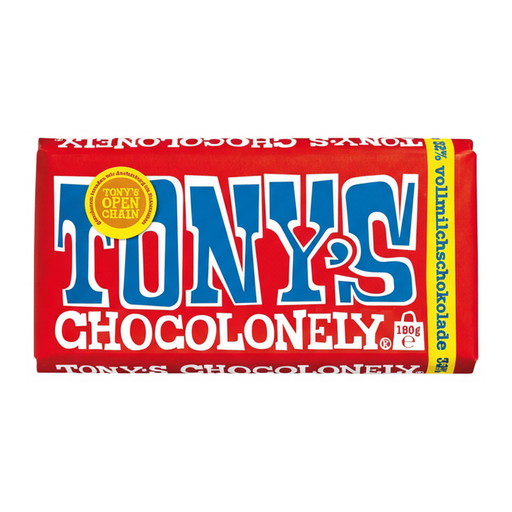
Tony's Chocolonely milk chocolate, 180 g
A 180 g bar to share if you’re in the mood for milk chocolate. Check the FAIRTRADE label, ingredients and allergen information on the specific pack.
View at Joybuy
 No image available
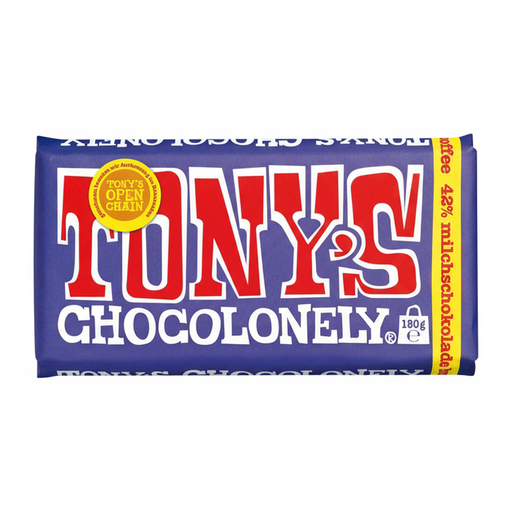
Tony's Chocolonely Milk Pretzel Toffee Chocolate, 180 g
A 180 g bar to share if you fancy a variety with pretzel and toffee. Before sharing, check the ingredients and allergen information, and if Fairtrade certification is a must, check the mark on the pack.
View at Joybuy
Frequently asked questions
How can I recognise Fairtrade labels on chocolate?
Look for the FAIRTRADE mark on the specific pack. If there’s an arrow or an ingredient label, check the explanation on the back too. Fairtrade International says this information explains which ingredients are Fairtrade and whether mass balance is used.
Does sustainably sourced cocoa automatically mean it’s Fairtrade-certified?
No. A claim about cocoa sourcing does not automatically confirm that an individual bar carries the FAIRTRADE mark. This also applies when manufacturers such as Ritter Sport or Lindt describe their sourcing approaches; if Fairtrade is a firm requirement, the product label is what matters.
Do I need to check for allergens as well when buying Fairtrade chocolate?
Yes. A Fairtrade label is no substitute for checking the ingredients. The German Food Federation explains that ingredients that can cause allergies are identified in the ingredients list; a ‘may contain’ warning means that accidental traces cannot be ruled out with certainty.
How should I store chocolate until my late-night snack?
Follow the storage instructions on the pack. For example, REWE recommends storing Plant-for-the-Planet Bio Die Gute Schokolade Zartbitter in a cool, dry place away from strong smells. According to the German Food Federation, a best-before date is not an automatic ‘use by’ date, provided the food has been stored properly.


