What should you look for when buying?
First, check that the specific chocolate meets your Fairtrade requirements. Then use the nutritional information, ingredients and pack format to help you choose something for your study break.
| What to consider |
What to check when buying |
Who it matters most to |
| Fairtrade labelling |
A Fairtrade mark or clear certification information on the product; if there’s an arrow, check the additional explanation too. |
I want to understand what the Fairtrade claim on my chocolate refers to, rather than relying on the word ‘fair’. For around 36 % of shoppers, this label is the main consideration when buying. |
| Sugar and portion size |
‘Of which sugars’ per 100 g and the amount you plan to have during a study break. |
If I reach for chocolate more often while studying, I want to be able to gauge the sugar in my portion. Around 29 % of shoppers say this matters most to them. |
| Ingredients and allergens |
The ingredients list, vegan labelling, and allergen and precautionary allergen information for the specific variety. |
The variety needs to suit my diet, and I can’t tell whether it contains potential allergens from the Fairtrade mark. For around 21 % of shoppers, this is their main concern. |
| Where to buy and pack format |
Where it’s available and the pack size; with bars, consider how easy it is to take out the portion you want. |
I want to get some suitable chocolate before my next study break and set aside only the amount I’ve planned. Around 14 % of shoppers put this practical consideration first. |
Chocolate on Joybuy
These two 180 g bars may suit you if you’re looking for milk chocolate and want to check the Fairtrade claim on the specific product. For study breaks, it’s also important to consider your planned portion and check the ingredients and allergen information.
 No image available
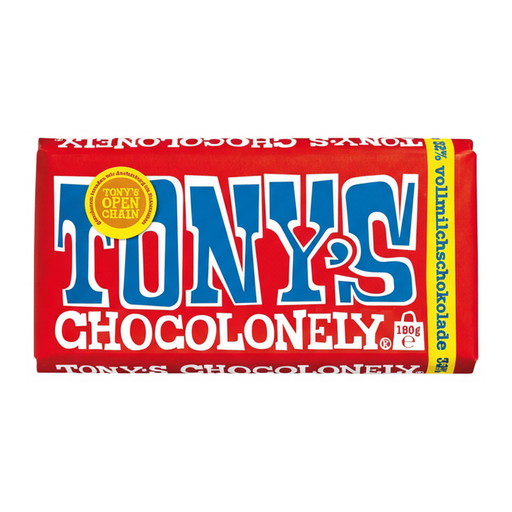
Tony's Chocolonely Milk Chocolate, 180 g
A milk chocolate bar for a study break, ideal if you want to portion out the amount yourself. The product description says it’s Fairtrade-certified; check the label and the sugar, ingredients and allergen information before buying.
View on Joybuy
 No image available
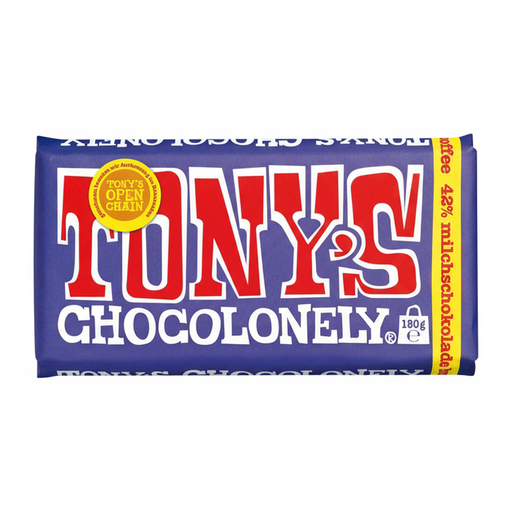
Tony's Chocolonely Milk Pretzel Toffee Chocolate, 180 g
A variety with salted pretzels and toffee, if you fancy sweet-and-salty chocolate for your study break. The product description states that it’s Fairtrade-certified; bear the portion size in mind and check the ingredients and allergen information carefully.
View on Joybuy
Frequently asked questions
Is ‘fair’ on the packaging enough to identify Fairtrade chocolate?
No. The word alone doesn’t prove that a product is Fairtrade-certified. According to the Verbraucherzentrale, ‘fair’ is not legally protected, so look for the Fairtrade mark or clear certification information for the specific product.
What does the arrow next to the Fairtrade mark mean?
The arrow points to additional information about the labelling, for example for composite products or mass balance. The Verbraucherzentrale recommends reading the information on the packaging too. Mass balance doesn’t mean that Fairtrade raw materials have been kept physically separate throughout the production of an individual product.
Does dark chocolate always contain less sugar than milk chocolate?
You can’t tell from the description alone. Compare ‘of which sugars’ per 100 g on the specific packs: dm lists 8,1 g of sugar per 100 g for dmBio Edelbitter 90 % and 49,4 g per 100 g for Plant-for-the-Planet Die Gute Schokolade milk chocolate.
Is Fairtrade chocolate automatically vegan?
No. Fairtrade labelling doesn’t tell you whether chocolate is vegan. The Plant-for-the-Planet Die Gute Schokolade milk chocolate described here contains milk; dmBio Edelbitter 90 % is labelled vegan but carries warnings about possible traces, including milk and nuts.
How should I store chocolate during exam season?
Follow the storage instructions on the individual pack. For the dm bars described here, the recommended storage conditions are cool, dry and odour-free.


