What should you look for when buying?
A Fairtrade claim should relate to the chocolate you’ve chosen. Taste, ingredients and portion size are separate considerations when you buy.
| Criterion |
What to check when buying |
Who is it important for? |
| Fairtrade label |
Check the label and the information on the pack about which ingredients are fairly traded and what proportion they make up. According to Verbraucherzentrale, these details can vary between varieties. |
I specifically want Fairtrade chocolate with my tea and don’t want to rely on a general statement from a brand. Around 36% of consumers put this first. |
| Taste and cocoa content |
Compare the type of chocolate, the stated cocoa content and the filling. Cocoa content alone doesn’t tell you about every flavour note or the Fairtrade status. |
I’m looking for a recipe and flavour I’ll enjoy with my tea; for around 29% of consumers, this is the most important decision. |
| Ingredients and allergens |
Read the ingredients list, highlighted allergens and any ‘may contain’ warnings for the variety. If you’re comparing nutritional values, use the same basis, such as the figures per 100 g. |
I need to avoid certain ingredients or want to choose a particular recipe. Around 21% of consumers pay closest attention to this. |
| Format and retailer |
Compare a bar, stick or mini format, and check whether the variety with the specific label you want is available from your preferred shop or online retailer. |
I need a suitable pack for a single break, sharing or trying something new. For around 14% of consumers, this practical consideration comes first. |
Brands to consider
These ranges offer different starting points for your search. Whether a particular chocolate carries the Fairtrade label depends on the individual product.
GEPA
GEPA offers chocolate bars and sticks, and describes its chocolate range as Fair Trade and organic.
- According to GEPA, its range includes classic and vegan varieties.
- Check the individual variety for its ingredients, allergens and type of chocolate.
Tony's Chocolonely
In Germany, the brand offers bars, smaller formats and sticks, and describes its cocoa as traceable.
- Choose a format to suit your tea break, whether you want an individual portion or something to share.
- Traceability alone is no substitute for checking the Fairtrade information and ingredients for your chosen variety.
REWE Beste Wahl / REWE
REWE lists Fairtrade chocolate in its range. A 2022 REWE product testing page describes certain REWE Beste Wahl chocolates as Fairtrade-certified.
- The products mentioned include dark chocolate varieties.
- This doesn’t apply to every variety. Check the label and ingredients, and see what’s available at your chosen store.
Ritter Sport
In 2023, Ritter Sport said that since 2018 the cocoa in its range had been certified under either the Rainforest Alliance cocoa programme or the Fairtrade cocoa programme.
- The manufacturer’s statement names the programmes behind its cocoa sourcing claim.
- That statement doesn’t mean every bar currently carries a product-specific Fairtrade label.
Lindt
Lindt says its cocoa products are covered by the Lindt & Sprüngli Farming Program or other responsible sourcing standards.
- The manufacturer’s statement explains the basis for Lindt’s cocoa sourcing claim.
- It isn’t a blanket Fairtrade certification. If Fairtrade is your priority, check the label on the individual variety.
kinder
kinder names several independently managed standards for its cocoa, including Rainforest Alliance, AtSource, Beyond Beans and Guangala.
- The brand sets out the different standards it uses for cocoa sourcing.
- This list doesn’t amount to a single Fairtrade claim. If you’re considering a particular stick, check its ingredients and allergens, too.
Schogetten
Schogetten says that since 1 July 2026 it has used only Rainforest Alliance-certified cocoa through a mass balance system.
- The individual pieces are easy to share with tea, without having to break up a bar first.
- Mass balance allows certified and non-certified raw materials to be mixed in the supply chain. This claim doesn’t prove that the specific pack is Fairtrade-certified.
Milka
Milka offers a range of chocolate varieties if you’re looking for a familiar flavour to enjoy with your tea.
- The range lets you compare recipes and formats.
- If Fairtrade is one of your buying criteria, look for the relevant label on the variety you’re actually choosing.
Chocolate at Joybuy
These two Tony's Chocolonely bars are a starting point if you’re looking for Fairtrade chocolate to enjoy with tea. Compare the recipes, and check the Fairtrade and ingredient information on the specific pack before buying.
 No image available
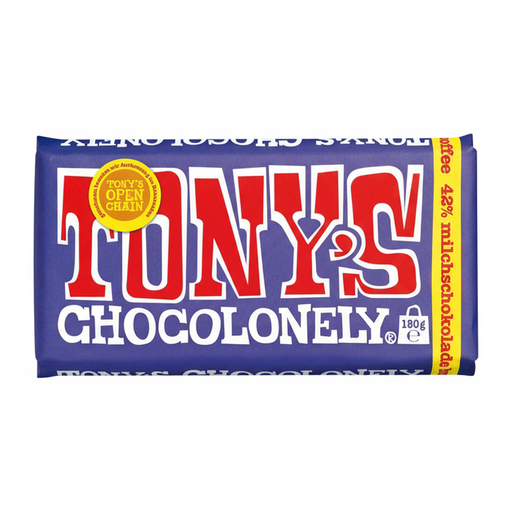
Tony's Chocolonely Milk Pretzel Toffee Chocolate, 180 g
If you’re after milk chocolate with pretzel and toffee pieces to enjoy with tea, compare this 180 g bar with a plain milk chocolate. Check the Fairtrade information, ingredients and allergens on the pack.
View at Joybuy
 No image available
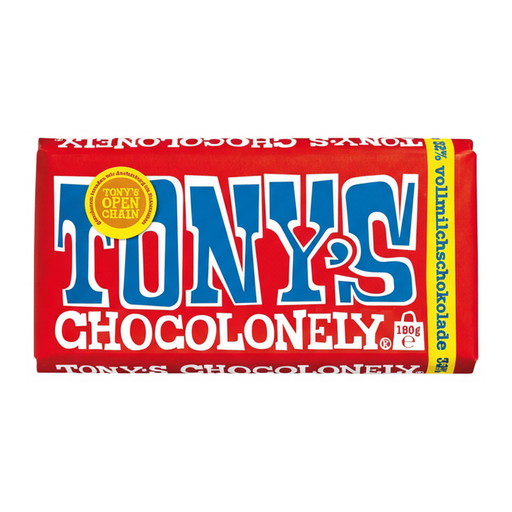
Tony's Chocolonely Milk Chocolate, 180 g
If you’d like to compare milk chocolate without the pretzel and toffee pieces mentioned for the other option, this 180 g bar is another choice for your tea break. Check the Fairtrade information on the pack, and read the ingredients and allergen labelling.
View at Joybuy
Frequently asked questions
Does a cocoa programme automatically mean a product is Fairtrade-certified?
No. A different cocoa programme, on its own, doesn’t prove that your chosen chocolate is Fairtrade-certified. Lindt, kinder and Schogetten name different programmes or standards. If Fairtrade matters to you, check the label on the specific bar or stick.
Where can I find out which ingredients in a chocolate are fairly traded?
Check the Fairtrade information on the pack, especially on the back. According to Verbraucherzentrale, the fair-traded ingredients and their proportion can vary between chocolate varieties.
Do I still need to check the allergens in Fairtrade chocolate?
Yes. A Fairtrade label doesn’t tell you about ingredients or allergens. Read the information for each variety, including any ‘may contain’ warnings. For example, a dark chocolate described by REWE may contain traces of milk, hazelnuts, almonds and soya.
Should I choose a bar or a stick for my tea break?
Choose a format to suit the occasion: whether you want to share your chocolate, try different varieties or have a single portion. A bar, stick or mini format doesn’t tell you anything about Fairtrade status, ingredients or allergens, so check those details separately for the variety you choose.


