Shoppers interested in Fairtrade gingerbread
You want to buy chocolate-coated gingerbread with a clear Fairtrade claim, so you check the labelling on the specific variety.


When choosing gingerbread or chocolate for marathon training, check the Fairtrade details on the current packaging rather than relying on the word “fair” alone. Portion size, nutritional information, ingredients and how well you tolerate it also matter when planning your fuel: a Fairtrade claim doesn’t tell you whether a product will suit you during a run.
You want to buy chocolate-coated gingerbread with a clear Fairtrade claim, so you check the labelling on the specific variety.
You’re looking for a carbohydrate source that’s easy to portion for your training. Fairtrade is an additional buying consideration, not an indication of how well a product will suit you while running.
You may need to check for milk, soya, cereals containing gluten or possible traces, so you read the information on every pack.
First decide whether you want gingerbread or whether chocolate would work too. Then check the Fairtrade labelling and information on the pack separately from the question of which portion you can tolerate during training.
A good choice if: you specifically want gingerbread and the pack you choose makes a clear Fairtrade claim about the cocoa.
Keep in mind: the cocoa claim doesn’t answer questions about portion size or how well you’ll tolerate it while running.
A good choice if: you’re happy with chocolate instead of gingerbread and want to compare the nutritional information for a particular bar or slab.
Keep in mind: chocolate isn’t gingerbread. You’ll still need to check the portion, ingredients and how well you tolerate it.
| Criterion | What to check when buying | Who it matters most to |
|---|---|---|
| Fairtrade status of the cocoa | The Fairtrade mark and details of the fairly traded ingredients on the current pack; for mixed products, also check for information about mass balance. | I want to know exactly what the Fairtrade claim on the cocoa covers. Around 29% of shoppers put this clear link first. |
| Portion size and suitability for training | Carbohydrate and fat per 100 g and in the portion you plan to eat; the portion format and how well you tolerate it during training. | Before a longer session, I want to assess the portion size and avoid eating something for the first time on race day. This planning comes first for around 29% of shoppers. |
| Ingredients and allergens | The ingredients list, highlighted allergens and trace warnings on the specific pack. | If I need to avoid certain ingredients, the labelling determines whether a particular variety is suitable for me. Around 24% of shoppers put this need first. |
| Where to buy and availability | The specific variety and its packaging in the shop or online store you choose. | I want to find a suitably labelled variety as part of my usual shop, rather than relying on a general statement about the range. This is the main priority for around 18% of shoppers. |
The Rhineland-Palatinate Consumer Advice Centre and the Saxony-Anhalt Consumer Advice Centre point out that “fair” is not a legally protected term. For a mixed product, the word alone doesn’t tell you which ingredients were fairly traded.
Read the label and the back of the pack. A black arrow on the Fairtrade mark may point to additional information.
Cocoa content alone doesn’t tell you how many carbohydrates are in your planned portion or how well you’ll tolerate it. The German Nutrition Society highlights the importance of carbohydrates in sports nutrition, but that doesn’t mean you can make a blanket recommendation about a specific sweet treat.
Compare the nutritional information per portion and, if appropriate, try a variety during a training session rather than for the first time on race day.
Retailers’ claims about Fairtrade chocolate don’t automatically apply to seasonal gingerbread. Lebkuchen-Schmidt’s statement about using fairly traded cocoa also dates back to 2019.
Check the Fairtrade claim on the gingerbread pack you’re currently considering.
A Fairtrade claim doesn’t replace a check of the ingredients and allergen information. Details can vary between varieties of chocolate and gingerbread.
If you have allergies or intolerances, read the highlighted allergens and any trace warnings on the specific pack.
Gingerbread maker whose 2019 statement says it uses chocolate made with fairly traded cocoa beans in its gingerbread and other baked goods.
A product range that includes documented Fairtrade dark chocolate with 70% and 85% cocoa – a chocolate alternative, not gingerbread.
A retailer that lists Fairtrade chocolate and sweets as part of its range.
A retailer whose 2026 statement refers to a Fairtrade Living Income programme for its own-brand chocolate slabs.
ALDI SÜD describes Choceur CHOCO CHANGER as Fairtrade-certified chocolate.
This chocolate bar with puffed spelt is an option if you’re not specifically looking for gingerbread. Check the Fairtrade claim on the current pack separately from whether you can tolerate the bar during training.
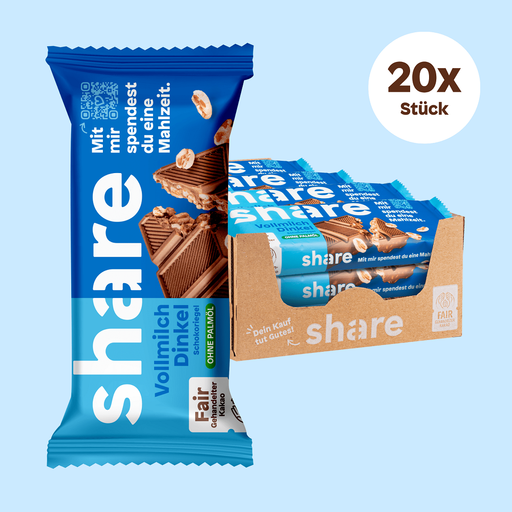 No image available
A chocolate bar alternative for shoppers who want to compare individual 45 g portions rather than gingerbread.
According to the product name, the pack contains 20 bars made with milk chocolate and puffed spelt. Before buying, check the current Fairtrade, ingredient and allergen information; portion size alone doesn’t tell you how well you’ll tolerate it while running.
No. The word alone isn’t proof of Fairtrade status. The Rhineland-Palatinate Consumer Advice Centre and the Saxony-Anhalt Consumer Advice Centre point out that “fair” isn’t legally protected, so look for a clear mark and information about the specific pack.
Not necessarily. For a mixed product, the claim may apply to specific ingredients. Check the pack to see which ingredients are covered and whether it includes information about mass balance.
Fairtrade status alone doesn’t make gingerbread suitable running fuel. The German Nutrition Society describes carbohydrates as important for providing energy during sport. Whether a particular variety and portion is right for you also depends on its nutritional information and how well you’ve tested it during training.
Check the ingredients, highlighted allergens and any trace warnings for the specific variety. For planning your portions, also look at the nutritional information per 100 g and for the amount you actually intend to eat.
Check the information on the current pack before eating the product. EDEKA specifically notes that its online product information may differ from the packaging.