Shoppers who prioritise Fairtrade
You want to see a Fairtrade claim on the chocolate-flavoured training snack you choose. Buying Fairtrade chocolate separately doesn’t make the waffle you eat with it a Fairtrade waffle.


If you’re looking for a Fairtrade chocolate waffle for marathon training, check the Fairtrade claim on the waffle itself: the GUT&GÜNSTIG waffles described by EDEKA instead state that their cocoa is Rainforest Alliance certified. Choosing Fairtrade chocolate separately doesn’t automatically make the waffle you eat with it a Fairtrade waffle. For long runs, you’ll also need to consider the carbohydrates in your planned portion and whether you’ve tested how well it agrees with you during training.
You want to see a Fairtrade claim on the chocolate-flavoured training snack you choose. Buying Fairtrade chocolate separately doesn’t make the waffle you eat with it a Fairtrade waffle.
For long or intense sessions, you want to know how many carbohydrates are in the portion of snack you’ll actually eat, rather than making your choice based only on the nutritional values per 100 g.
You check the ingredients, allergens and fat content of your chosen waffle, and try solid snacks with the amount of fluid you plan to drink during training before using them in a race.
When choosing a waffle for a long training session, consider three separate things: what certification the waffle itself carries, how many carbohydrates are in your planned portion, and how easy the snack is to eat while running.
| Criterion | What to check when buying | Who it matters to |
|---|---|---|
| Fairtrade claim | Look for the Fairtrade mark or an explicit Fairtrade claim on the waffle itself. Don’t treat a Rainforest Alliance claim as the same thing. | If Fairtrade matters more to me than another sustainability claim, I want to see the certification on the waffle itself. Around 42% of consumers put this proof first. |
| Carbohydrates per portion | Check the portion weight against the carbohydrate information on the nutrition label; don’t mistake the value per 100 g for the amount you’ll eat. | For long sessions, I want to be able to plan my carbohydrates per hour rather than assume I’ll eat a whole pack. For around 33% of consumers, this ability to plan is the priority. |
| Ingredients and how well it agrees with you | Check the ingredients list, allergens and fat content of your chosen variety; try the planned portion during training. | If I find solid snacks hard to tolerate while running or need to avoid certain ingredients, the exact recipe matters particularly to me. Around 25% of consumers focus on this first. |
EDEKA says the cocoa in the GUT&GÜNSTIG waffles described is Rainforest Alliance certified. For a separate EDEKA Bio chocolate, however, EDEKA states that the cocoa and sugar are Fairtrade traded. These claims refer to different products.
If you’re looking for a Fairtrade waffle, check the certification on the waffle’s own packaging.
The nutritional value per 100 g doesn’t tell you how many carbohydrates are in the portion you’ll actually eat. When you eat it and how much you choose are also part of planning for a long run.
Weigh your portion, calculate its carbohydrate content and try the planned amount during a comparable training session.
Verbraucherzentrale notes that solid bars may cause gastrointestinal problems more often than gels or sports drinks. This doesn’t predict how a particular waffle will affect an individual, and ingredients and allergens also vary by product.
Check the current packaging and try the snack with the amount of fluid you plan to drink during training.
The following information relates to the specific chocolates or waffles mentioned. It shouldn’t be taken as a claim about the entire brand or its other products.
EDEKA describes the cocoa and sugar in its Fairtrade milk chocolate as Fairtrade traded.
EDEKA says the cocoa in the chocolate rolls and Neapolitan waffles described is Rainforest Alliance certified.
Lidl Germany says that, from 2026, its standard range of solid own-label chocolate bars from Fin Carré, J.D. Gross and Vemondo will be covered by a Living Income programme developed by Fairtrade.
This Joybuy selection features a chocolate bar for shoppers who want to choose their chocolate separately from a waffle. If you’re specifically looking for a Fairtrade waffle, you’ll still need to check the waffle’s certification separately.
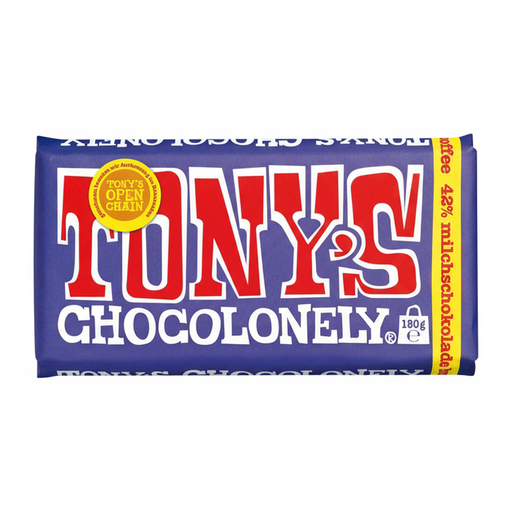 No image available
This bar could be chosen as a separate chocolate to eat with a waffle; it isn’t a waffle itself.
If Fairtrade matters to you, check the certification of the bar and the waffle separately. For running, compare your planned portion with the nutrition information and ingredients on the packaging, and try the combination during training first.
No. The two claims aren’t interchangeable: EDEKA says the cocoa in the GUT&GÜNSTIG waffles described is Rainforest Alliance certified, while the Fairtrade claim for cocoa and sugar applies to a separate EDEKA Bio chocolate. What matters is the certification on the waffle you want to buy.
Yes, if you can tolerate the planned portion while running and factor its carbohydrates into your fuelling. A review published in 2015 and available via PubMed gives a range of 30–60 g of carbohydrates per hour for intense exercise lasting 1 to 2.5 hours; this isn’t a general portion recommendation for any particular waffle.
Trying it during training will show you whether you can eat the planned portion alongside the amount of fluid you intend to drink. Verbraucherzentrale notes that solid bars may cause gastrointestinal problems; you should also check the ingredients and allergens in the specific waffle.