Coffee guests who prioritise Fairtrade
You want to know exactly what the Fairtrade label on an individual bar or product applies to, rather than relying on a general statement from the brand.


If Fairtrade is essential for your afternoon coffee, choose a specific bar or product based on its packaging – not just the brand name or information about how its cocoa is sourced. For older guests, also consider the level of bitterness you prefer, the nutritional information and a suitable portion size. If anyone has allergies or specific dietary requirements, the information on the individual pack is what matters.
You want to know exactly what the Fairtrade label on an individual bar or product applies to, rather than relying on a general statement from the brand.
You’re looking for something to enjoy with your afternoon coffee that suits your preferences in terms of flavour, ingredients and portion size. Sugar content is a separate point to compare.
You check the “of which sugars” figure per 100 g, cocoa content, ingredients and allergen information. None of these figures on its own proves Fairtrade certification.
If Fairtrade is essential, start by checking the label on the specific chocolate. Then compare the flavour and nutritional information; the ingredients and allergen information must also be suitable for the people you’re buying for.
| Criteria | What to check when buying | Who it matters most to |
|---|---|---|
| Fairtrade labelling | A seal or clear product labelling on the specific pack; if it’s a seal for a raw material, check what it covers. | If Fairtrade is a must for me, I want to be able to verify the claim on the exact chocolate I’m buying. Around 33% of consumers put this proof first. |
| Flavour and bitterness | Type of chocolate and cocoa content; if you haven’t tried it before, you may want to choose a smaller size. | When I’m having coffee, I mainly want a flavour that isn’t too bitter for my guests. This preference comes first for around 27% of consumers. |
| Sugar and cocoa content | The “of which sugars” figure per 100 g and the portion size you actually intend to eat. | I want to compare the sweetness of different bars using the same measure, without assuming that cocoa content alone tells me how much sugar they contain. Around 20% of consumers give this comparison priority. |
| Ingredients and allergens | The current ingredients list, plus information about allergens and possible traces for the specific variety. | If I’m buying for someone with an allergy, the labelling on that pack must meet their requirements. This check comes first for around 20% of consumers. |
Information about certified or traceable cocoa doesn’t necessarily mean that the individual product is Fairtrade-certified.
If Fairtrade is essential, read the label on the specific bar or product and check exactly what the claim applies to.
Product information can vary considerably: Lindt lists 0.4 g of sugar per 100 g for EXCELLENCE 99% and describes the bar as bitter. REWE lists 48 g of sugar per 100 g for its Beste Wahl dark chocolate with 50% cocoa. These figures apply to those two varieties, not to every dark chocolate.
Compare the “of which sugars” figure per 100 g, and choose the cocoa content based on how bitter you want the chocolate to taste.
Ingredients and possible traces can vary between varieties. A bar you’ve bought before is therefore no guarantee when choosing a different one.
Check the current ingredients list and allergen information on the pack every time you buy.
The following brands can help guide your choice. A brand’s statements about sourcing are no substitute for checking the Fairtrade label on the variety you’re planning to buy.
A chocolate supplier with a focus on fair trade and organic products.
A supermarket own-brand range with several chocolate bars, including darker varieties.
A brand offering milk chocolate, darker varieties and bars in different sizes.
A chocolate bar brand that provides information about the certification of its cocoa sourcing.
A brand with dark chocolate bars for people who enjoy very bitter chocolate.
These two Tony’s Chocolonely bars are options to enjoy with afternoon coffee. If Fairtrade is a condition of your purchase, check the label on the specific pack on offer; the same applies to allergen and nutritional information.
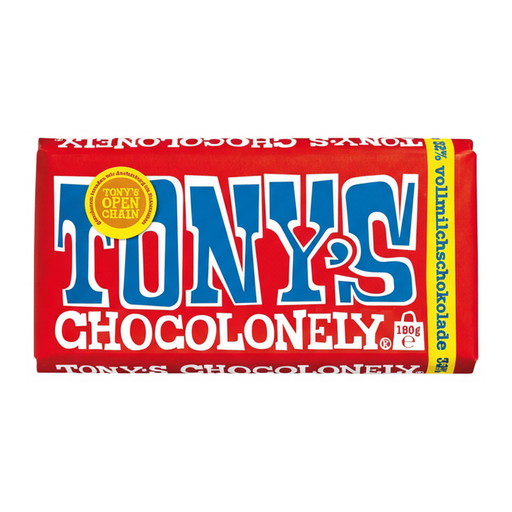 No image available
A milk chocolate bar for coffee guests who prefer this type of chocolate. Before choosing it, check the Fairtrade label, ingredients and allergen information on the specific pack.
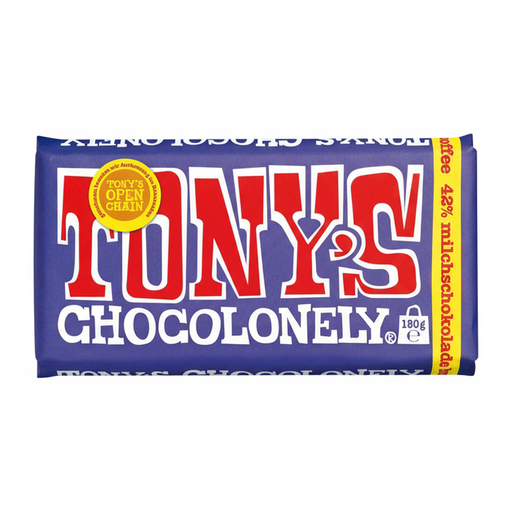 No image available
A chocolate bar with pretzel and toffee for guests who’d prefer this combination to a plain bar. Pay particular attention to the ingredients and allergen information, as well as the Fairtrade label on the specific pack.
Check for a seal or clear Fairtrade product labelling on the specific pack. If it has a Fairtrade seal for a raw material, also check which raw material the claim applies to; a brand’s general statements about cocoa sourcing aren’t enough.
Only if your coffee guests enjoy a suitably bitter flavour. Lindt describes EXCELLENCE 99% as bitter and lists 0.4 g of sugar per 100 g; other recipes have different nutritional values and flavour profiles. So compare the specific variety rather than relying on the word “dark”.
Yes, if any of your coffee guests have relevant allergies. Ingredients and information about possible traces can vary by variety, so read the details on the current pack, even if you know another bar from the same brand.
No. The German Nutrition Society recommends that free sugars make up less than 10% of total energy intake; this isn’t a nutritional limit for an individual chocolate bar. When comparing products, you can look at the “of which sugars” figure per 100 g and the intended portion size. If you have specific dietary requirements, discuss your choice with your healthcare team.