Organisers with a Fairtrade requirement
You need to be able to verify which Fairtrade claim applies to the chocolate you buy. The label on the actual pack matters more than a brand’s general sustainability programme.


If Fairtrade is a requirement for meeting refreshments, choose chocolate based on the label on the actual pack – not just a sustainability claim made by the brand. Then decide whether bars, bite-sized pieces or a sharing bar are the right format, and check the ingredients and allergen information for every variety you plan to serve.
You need to be able to verify which Fairtrade claim applies to the chocolate you buy. The label on the actual pack matters more than a brand’s general sustainability programme.
You want to put out chocolate without any preparation. GEPA lists bars and bite-sized pieces for the food service sector, but you’ll need to check whether each specific bar is individually wrapped.
Compare the ingredients and allergen information for each variety with the participants’ known requirements. As the Verbraucherzentrale explains in its guidance on food labelling, ingredients and allergens are among the details to check when buying food.
When choosing chocolate for business meetings in Germany, start with the required Fairtrade label. The serving format, ingredients and number of portions you need will then help you decide which specific pack is right for your meeting.
| Criteria | What to check | Who it matters most to |
|---|---|---|
| Fairtrade label | Check the label and any wording alongside it on the actual pack. According to Fairtrade Deutschland, the black product label applies to all ingredients available as Fairtrade raw materials; a raw material label stating “cocoa”, on the other hand, refers to that raw material. | If I need to demonstrate that the meeting meets its Fairtrade requirement, I need a clear label on the variety I choose; around 36% of consumers put this first. |
| Serving format | Compare the number of portions with the number of attendees, and check whether bars are individually wrapped or a sharing bar needs to be broken up. | I want to put the chocolate on the table without having to break it up, so guests can help themselves easily. For around 29% of consumers, this is their top priority. |
| Ingredients and allergens | Read the ingredients list and allergen information for every variety you plan to serve, and keep the original packaging accessible. | When the group has different dietary requirements, I want to know before serving which varieties may be suitable for whom; around 21% of consumers make this their top priority. |
| Sourcing and quantity | Check that the variety you want is available in the quantity you need through your chosen supplier. | If I’m arranging refreshments at short notice, I need to be able to source enough of the specific variety. Around 14% of consumers prioritise this. |
Milka’s Cocoa Life, the certifications and standards mentioned by Kinder, and the Lindt & Sprüngli Farming Program do not automatically prove that every chocolate from these brands is Fairtrade.
If Fairtrade is a firm requirement, check for the relevant label on the pack of the specific variety you’ve chosen.
Mass balance may be permitted for Fairtrade cocoa. Lebensmittelklarheit notes that the relevant information may also appear on the back of the pack.
Check the front and back of the pack, including any wording alongside the label, before deciding whether it meets your sourcing requirement.
A Fairtrade label doesn’t tell you about the ingredients or allergens in a particular variety. Chocolate that looks similar should also be easy for attendees to tell apart.
Serve the varieties separately and keep their original packaging with the ingredient and allergen information accessible.
A sharing bar needs to be handled differently from bars or bite-sized pieces that can be picked up and eaten straight away. The quantity in the pack alone doesn’t tell you how the chocolate will be served.
Before buying, decide how many people will be helping themselves and whether someone will need to break up the bar.
Breaking it up takes preparation, and an opened bar may leave you with leftovers.
A brand can help you find a suitable format. But if Fairtrade is a firm requirement, the label, ingredients and serving format on the individual pack are what matter.
GEPA says it offers chocolate bars, sharing bars and bite-sized pieces for the food service sector.
REWE lists Fairtrade chocolate as part of its range. A previous REWE promotion described certain REWE Beste Wahl chocolates as Fairtrade-certified.
Milka says it sources its cocoa through its own Cocoa Life programme.
Kinder says its cocoa is sourced through certifications and independently managed standards, including Rainforest Alliance and Cocoa Horizons.
Lindt says its cocoa products are covered by the Lindt & Sprüngli Farming Program or other responsible sourcing standards.
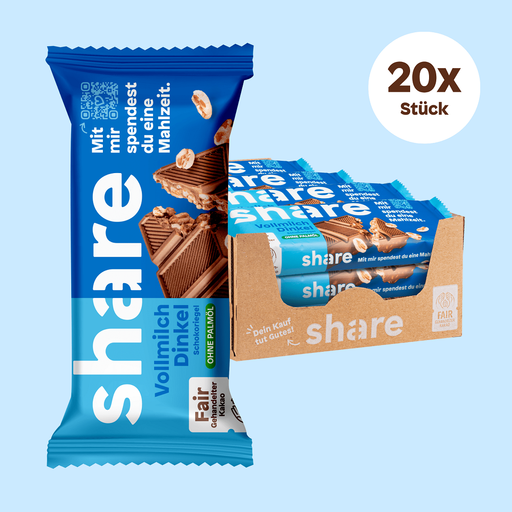
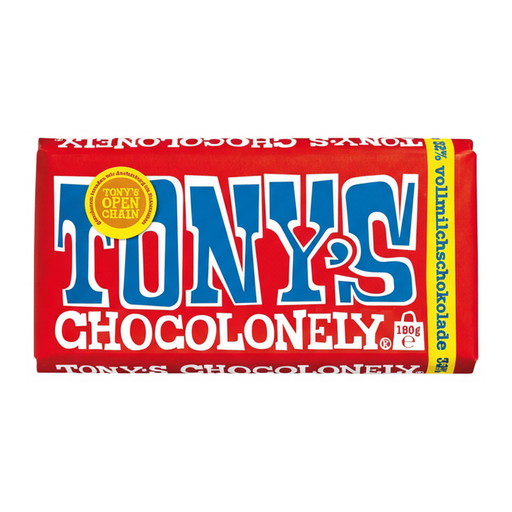
Here, we compare a multipack of bars for planning portions with a sharing bar to break up. If Fairtrade is a requirement for your meeting, check the label on the specific pack before buying either option.
 No image available
The pack of 20 bars makes it easy to plan a set number of portions for a meeting. If you’re serving them for guests to help themselves, check before buying whether the bars are individually wrapped.
Also check the Fairtrade label, ingredients and allergens on the specific pack.
 No image available
The 180 g bar may suit your meeting if you’re planning to break up the chocolate for sharing. It isn’t designed as an individual-portion format.
Check the Fairtrade label, ingredients and allergens on the specific pack against your requirements.
According to Fairtrade Deutschland, the black product label means that all ingredients available as Fairtrade raw materials have been traded according to Fairtrade standards. A raw material label stating “cocoa”, on the other hand, applies to cocoa. So check the exact wording on the label of the pack you’ve chosen.
Yes, mass balance may be permitted for Fairtrade cocoa. Lebensmittelklarheit explains that Fairtrade and conventional raw materials can be mixed in this way. Check the mass balance notice and any wording alongside the label, including on the back of the pack.
Yes, compare the information for each variety with the attendees’ known requirements. The Verbraucherzentrale lists ingredients and allergens as important information on packaged food; keep the original packaging in case anyone has questions.
No. The programmes and standards described by these brands don’t mean that all their chocolate carries a Fairtrade label. If your meeting refreshments must be Fairtrade-certified, check the label on the specific variety you’re buying.