
Lieferung heute & morgen

Qualitätsgarantie

Willkommens-Angebote freischalten: KOSTENLOSE Lieferung | Bis zu 80 % RABATT | Kostenlose 30-Tage-JoyPlus-Testphase
App herunterladen
A successful games evening depends on more than a familiar brand name. Board games for the whole family need to suit the players’ ages, group size, playing time and interests. A game that works well with two people can feel completely different with six players. Similarly, a recommended age of 8 may appear suitable on paper, while the rules may still be too demanding for younger children.
The age recommendation on the packaging is an important guide, but it is no guarantee of an equally enjoyable experience for everyone. Board games for children aged 8 and over can vary in accessibility depending on reading ability, concentration and experience. A strategy game with lots of special rules may be less suitable for a family with little gaming experience than a simple tile-laying game.
Also pay attention to warnings about small parts. Even with games for ages 8 and over, all playing pieces should be collected after playing and stored safely.
The description “for 2 to 6 people” sounds flexible, but says little about how the game plays with different numbers of players. Some board games are particularly focused with two players, while party games only develop their intended dynamics with four or more people.
Before buying, check:
A title such as Game of the Year can provide useful guidance, but it does not replace looking at the specific game details. Statements such as “promotes strategic thinking” should also be considered objectively. They usually describe the game mechanics, but are not a medical or educational efficacy claim.
What matters are clear, verifiable details such as the scope of the rules, components, number of players, age rating and language. For German board games, you should also check that the game cards and instructions are actually available in German.
For families with children aged 8 and over, clear rules and easy-to-read cards are particularly important. With quiz games such as the family edition of Trivial Pursuit, the mix of questions should be suitable for the group. An adult edition with an age rating of 16+ is not automatically suitable for children.
Look out for:
The family games category covers a wide range of mechanics. Co-operative board games have everyone working together against a common challenge. Strategy games focus more strongly on planning and competition. Party games, quiz games and word games are often suitable for larger groups, while tile-laying games or tactical two-player games can also work well with fewer players.
Beforehand, consider whether your family would rather:
A large game board requires a sturdy, level surface. Games with cards, counters or tiles need to be stored neatly so that no pieces go missing. Fabric game boards should be stored somewhere dry, while cardboard components should not be cleaned with liquid.
Compact boxes and shorter games are ideal for small homes or travelling. Games with a large playing area offer better visibility, but require a correspondingly large table.
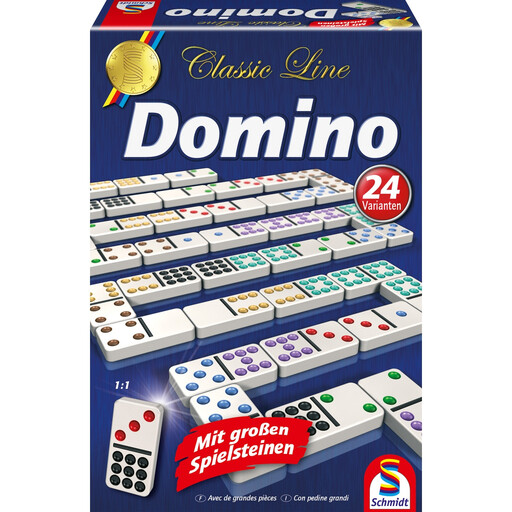
Why this product suits this profile: The classic domino format offers a relatively easy introduction and, according to the product details, is suitable for players aged 6 and over.
The extra-large playing pieces are easy to handle. With 55 dominoes and 24 rule variations, you can choose from different levels of difficulty.
No batteries required; large playing pieces and several rule variations.
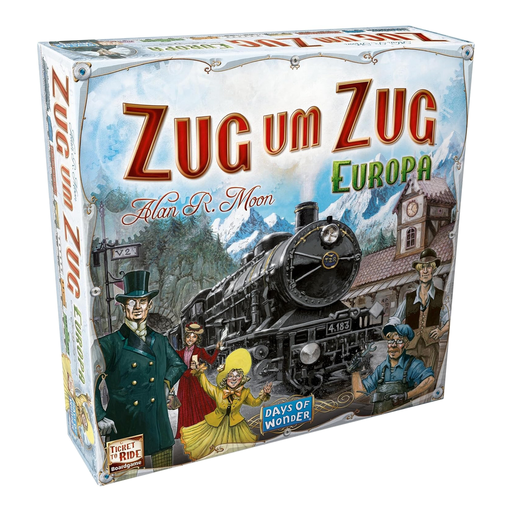
Why this product suits this profile: This German strategy game is designed for 2 to 5 players aged 8 and over. It combines easy-to-understand basic rules with tactical route planning.
The number of players and approximate playing time of 45 minutes or more are clearly stated. This makes it easier to assess the space and time required in advance.
250 components included; German edition; no batteries required.

Why this product suits this profile: This co-operative board game is designed specifically for two players aged 10 and over, and offers 21 different airport scenarios.
Its focus on two players avoids creating false expectations of a large family game. Variable scenarios provide a range of different challenges.
Co-operative dice placement; no batteries required; scenarios with variable difficulty.
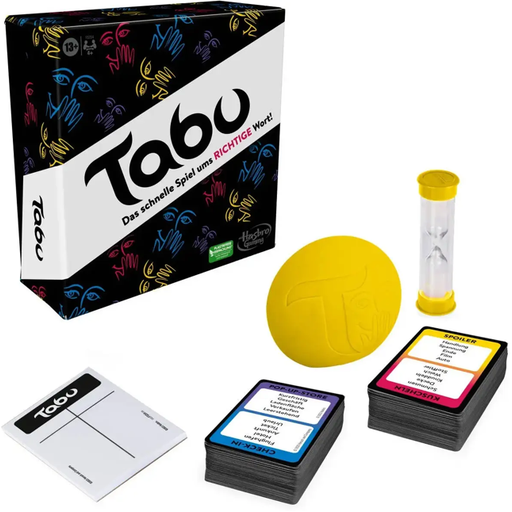
Why this product suits this profile: This party game is designed for at least four players aged 13 and over, making it a good choice for larger family gatherings, youth groups and parties.
The minimum number of players is clearly stated. This prevents you from planning a team game for a small two-player session.
We have put together a complete, regularly updated list of products that fully meet these strict selection criteria and the safety regulations applicable in the EU.
Games with clear instructions, manageable rules and an age rating of 8 and over are suitable choices. Ticket to Ride: Europe, Rummikub, Ubongo and the family edition of Trivial Pursuit offer different types of gameplay. The key question is whether the children can already read confidently and follow several rules at the same time.
For a typical games evening, one or two games are usually enough. A shorter family game can serve as an introduction before moving on to a longer session. For large groups, team-based party games are often more practical than games where each person has to wait individually for their turn.
Their lifespan depends mainly on the quality of the components, how often they are used and how they are stored. Cardboard, cards and game boards should be stored in a dry place and cleaned only with a soft, dry cloth. Using an organiser in the box reduces the risk of small pieces getting lost.