
Lieferung heute & morgen

Qualitätsgarantie

Willkommens-Angebote freischalten: KOSTENLOSE Lieferung | Bis zu 80 % RABATT | Kostenlose 30-Tage-JoyPlus-Testphase
App herunterladen
A family game night can bring generations together, create laughter, and build lasting memories. But finding the right board games for the whole family can often be a challenge. The market is flooded with tempting offers that don't always deliver on their promises. As your Joybuy Product Recommendation Officer, I'm here to help you navigate the common pitfalls and make a choice that's a perfect fit for your family.
Before you invest, it's wise to understand the common marketing traps that often lead to disappointment and games gathering dust on the shelf.
To avoid buyer's remorse, you should check three objective parameters before making a decision. These will help you separate the wheat from the chaff.
The age rating on the box is just a starting point. The crucial factor is how the game balances the different abilities of children and adults. Look for family games for ages 8 and up that integrate specific mechanisms for fairness. These include:
A successful game night with kids and adults thrives on a dynamic and entertaining atmosphere. Therefore, check the playtime specified by the manufacturer. For families with children aged 8 to 14, games lasting 30 to 60 minutes are often ideal. A look at the instructions (if available online) or the number of components can also provide insight into the complexity. A good family game can be explained in under 10 minutes.
Consider the group size you'll most often be playing with. Do you need a game for four people, or a party game for families that also works for larger gatherings of up to 12? The type of interaction is also important:
Here are some recommendations tailored to different needs and preferences, all of which meet the criteria mentioned above.
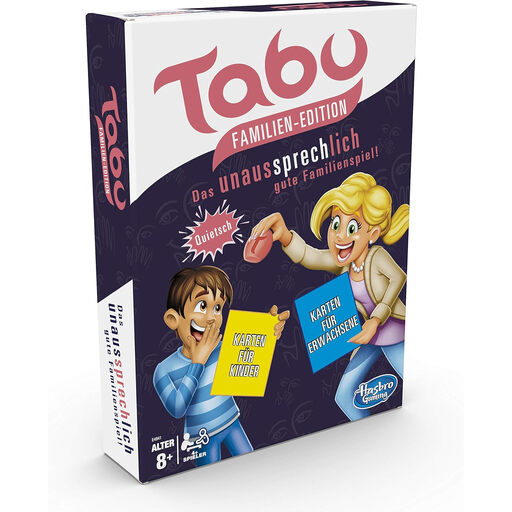
Why it's a great fit: Ideal for families looking for an energetic and communicative party game. The "kids vs. adults" competition creates a dynamic atmosphere and plenty of laughter, making it a perfect gift for a family or a great addition to your own game collection.
Solves the "one-size-fits-all" trap with 130 separate cards for kids and 130 for adults. The rules are simple and familiar, which also avoids the complexity trap.
Promotes creativity and quick thinking under pressure. The adapted terms for children (with only two taboo words) create a fair and motivating gameplay experience.

Why it's a great fit: For families who enjoy solving puzzles and using logical deduction together. The gameplay is a classic that hones logical thinking, and its redesigned look makes it appealing to today's generation of kids aged 8 and up.
Avoids the "one-and-done" trap because the solution (suspect, weapon, location) is new and random in every round. This ensures very high replay value.
Encourages deductive reasoning and attention to detail. The high-quality game pieces, made of gold-plated zinc according to the manufacturer, and the detailed game board create an immersive atmosphere.
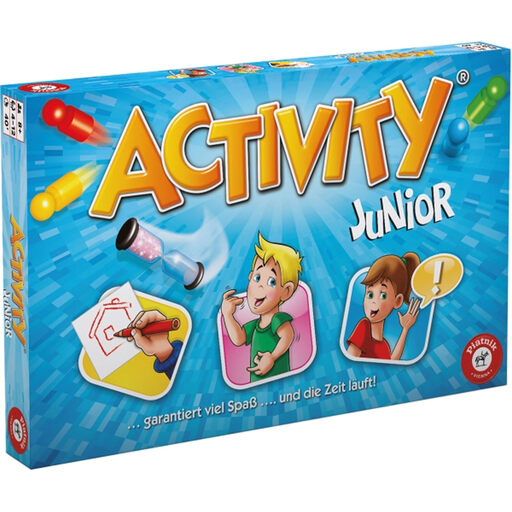
Why it's a great fit: A great choice for larger groups and family gatherings. It combines drawing, describing, and charades, allowing children with different strengths to shine. The Junior version is specifically tailored to a child's vocabulary.
The variety of tasks (drawing, describing, acting) and the large number of concept cards (990 words, according to the manufacturer) provide enormous variety and high replay value.
Promotes diverse communication skills, creativity, and teamwork. Its suitability for 4 to 12 players makes it a flexible party game for families of any size.
Card games are an excellent choice, especially for travel or as a small gift. We've put together a selection that meets the same criteria for fun and quality.
1. How do you find a game that is fair for different age groups? Look for games with specific balancing mechanisms. These include separate cards or rules for kids and adults (asymmetrical design), cooperative games where everyone wins or loses as a team, or games where creativity and luck play a bigger role than deep strategy.
2. What makes a good family game that you can play over and over again? High replay value comes from variability. Games where the starting conditions or the solution change with every playthrough (e.g., through randomly drawn cards in Cluedo) are often more durable. A large number of task cards, as in Activity or Taboo, also ensures the game doesn't become repetitive.
3. How much should you spend on a good family board game? Prices can vary widely. Simple card games are often available for under $20, while larger board games with many components can cost between $30 and $50. The price is often an indicator of the material quality and the quantity of game components, but not necessarily of the fun factor. It's more important that the game's concept fits your family's preferences.