
Lieferung heute & morgen

Qualitätsgarantie

Willkommens-Angebote freischalten: KOSTENLOSE Lieferung | Bis zu 80 % RABATT | Kostenlose 30-Tage-JoyPlus-Testphase
App herunterladen
Family board games are designed to bring together different age groups, interests and levels of experience. In practice, however, one game will not automatically suit every group. Complicated rules can overwhelm younger children, while a very simple card game may quickly lose its appeal for adults. Before buying, it is therefore worth taking a closer look at the recommended age, number of players, playing time and intended use.
“From 6 years” is a manufacturer’s recommendation, but it does not necessarily indicate how easy a game will be for every child to understand. Some board games for children aged 6 and over require patience when counting or recognising colours and symbols. With strategic board games for children and adults, the actual level of complexity may be considerably higher.
So check the following:
A game for 2 to 6 players works differently from a game designed for exactly two people. With fewer participants, competitive or tactical elements may carry more weight. In larger groups, short turns and easy-to-follow rules are more important. Party games are not always suitable for quiet family game nights either.
A compact game is not automatically suitable for travelling. Loose cards, delicate cardboard components or a game board without any means of securing it can be impractical on a train, in a holiday cottage or at a campsite. For travel games, a small package, secure storage and, where possible, non-slip or magnetic components are important criteria.
Start by considering the age of the youngest player. For families with children aged 6 and over, clear sequences of play and short rounds are a good choice. From the age of 8 or 10, strategic board games, cooperative games and quiz formats may require more planning, communication or concentration.
The recommended age should be considered alongside the playing time. A game lasting 30 to 45 minutes is more suitable for a planned game night than a format with long sessions that are difficult to interrupt.
Pay attention to the number shown on the packaging:
A co-operative game can reduce disagreements about winners and losers. However, tasks, information and decisions then need to be discussed and agreed on together.
For board and card games, material information, packaging dimensions and warnings should be clear and easy to understand. Cardboard, paper, plastic and stone components differ in terms of weight and storage. For frequent use, sturdy components and organised storage are helpful.
You should also check:
An app may provide additional explanations, but it is not essential for every game. If you want to play independently of a smartphone or Wi-Fi, check this information before buying.
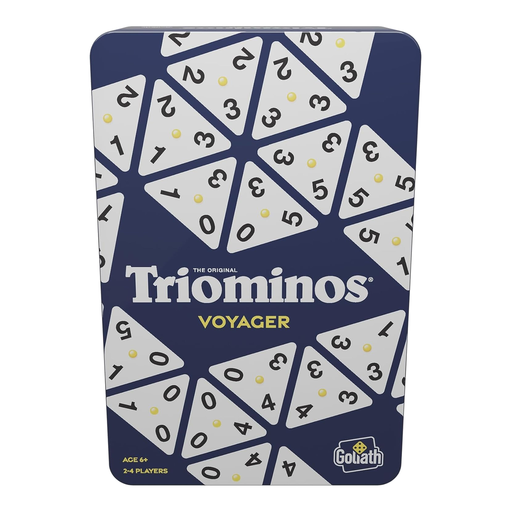
Why this product suits this profile: The rules are based on a familiar tile-laying format and are designed for 2 to 4 players aged 6 and over. Its compact format is suitable for family game nights and travelling.
The recommended age, number of players and compact storage are clearly stated. The triangular tiles offer more than a purely luck-based game.
56 triangular tiles, four tile racks, no batteries and multilingual instructions including German.
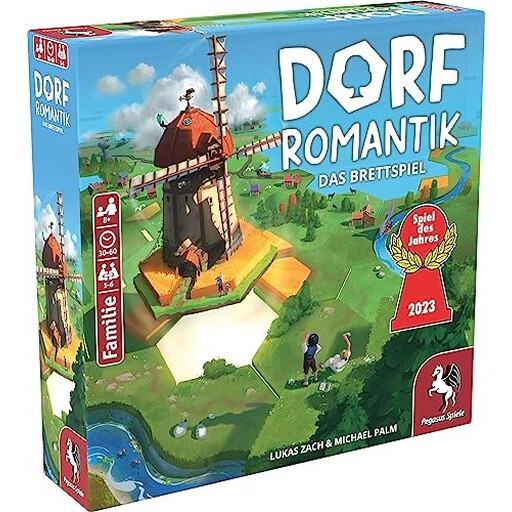
Why this product suits this profile: This co-operative tile-laying game is designed for 1 to 6 people aged 8 and over. It combines shared tasks with materials that are unlocked as you play.
The product details specify the number of players, recommended age and materials, as well as confirming that no batteries or assembly are required. This makes it easier to assess the practical requirements before buying.
Co-operative game mode, 1 to 6 players, cardboard components and challenges that can be unlocked.
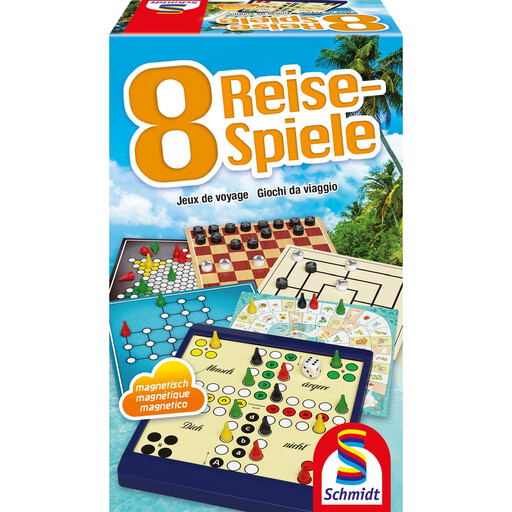
Why this product suits this profile: The collection contains eight classic games in a magnetic, folding box and is designed for children aged 6 and over.
The magnetic fastening helps prevent the components from sliding around during travel. All the game materials are stored in the foldable box.
Eight games, magnetic game board, dimensions of 18,5 × 11,5 × 7 cm and no batteries required.
We have put together a complete, regularly updated list of products that fully meet these strict selection criteria and the safety regulations applicable in the EU.
Before buying, decide how many people will usually be playing and how much time you have available. For a short evening, travel games, card games or dice games are ideal. For regular sessions with two to six players, strategic board games are also worth considering.
For children aged 6 and over, read through the rules together first and play a practice round without keeping score. This quickly shows whether the pace and tasks suit the group. When looking for gift ideas for children, age, number of players and storage are more important than an eye-catching theme on its own.
If you often take games with you, look for compact dimensions, sturdy components and a fully enclosed package. Adults, couples and groups of friends can find more suitable formats in the Board Games for Travelling category.
Games with a clear recommended age of 6 and over, straightforward rules and short decision-making processes are suitable. Magnetic travel games, simple tile-laying games and dice games can make it easier to get started. Small parts should be kept out of the reach of younger children.
A small selection of three to five different types of game is usually enough: a quick card game, a tile-laying game, a co-operative format and a travel game. This allows the family to switch according to the time available, number of players and mood, without buying lots of similar products.
It depends on the group. Co-operative games are a good choice when everyone is expected to plan and make decisions together. Competitive games, on the other hand, offer clear individual objectives and direct comparisons of points. Age, understanding of the rules and the group’s preferred style of play are the key factors.