
Lieferung heute & morgen

Qualitätsgarantie

Willkommens-Angebote freischalten: KOSTENLOSE Lieferung | Bis zu 80 % RABATT | Kostenlose 30-Tage-JoyPlus-Testphase
App herunterladen
There is a huge selection of board games for children and families: family games, card games, puzzles, brain games and strategy games can vary considerably in terms of recommended age, number of players and playing time. An attractive cover or detailed description does not necessarily tell you whether a game is genuinely suitable for your household.
As a Joybuy Product Recommendation Officer, I therefore focus primarily on clear, practical criteria. Three common mistakes are particularly easy to make when buying:
The manufacturer’s recommended age is an important starting point. With children’s games for ages 6 and over, the rules should ideally be easy to follow and turns should not take too long. For younger children, framed puzzles or puzzles with clear outlines are often more accessible than loose pieces with very similar shapes.
Also pay attention to the safety information. If a game contains small cards, playing pieces, marbles or counters, it must not be given to children under three years of age. This labelling does not replace adult supervision, particularly if younger siblings live in the household.
Games with a flexible player count are ideal for a regular games night. Family card games such as UNO or SKYJO can be played with several people and generally require very little space to set up. A cooperative board game for two players, on the other hand, may be the right choice if parents or grandparents regularly play with just one child.
Also check the expected playing time. Compact games are a good choice for a quick round after dinner. Strategy games with several phases or escape-room elements require more time and uninterrupted attention.
If a game will be used frequently, its cards should be made from sturdy card and its boards from durable materials. For electronic games, information about the battery type and what is included should also form part of your purchasing decision. Check whether batteries are included and whether all the pieces can be stored safely in the box after playing.
For travelling, travel games with a compact format and just a few separate pieces are practical. A large board game with lots of tiles may work well at home, but can be awkward to handle on a train, in a holiday home or in a restaurant.
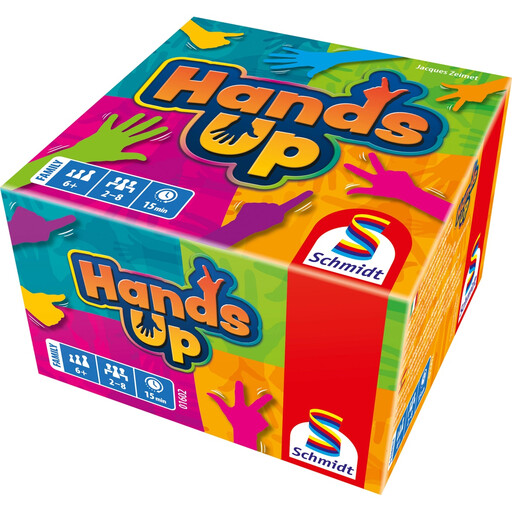
Why this product suits this profile: This card game is designed for children aged 6 and over and comes in a compact box measuring 10 × 10 × 6,8 cm. That makes it suitable for quick rounds at home or on the go.
The clear age recommendation and manageable card format reduce the risk of buying a family game that is too complex or impractical.
Suitable from age 6, no batteries required, sturdy cards and easy to store.

Why this product suits this profile: This cooperative board game is designed for two players aged 10 and over. With 21 airport scenarios and variable challenges, it appeals to families or couples looking for strategic gameplay and replayable entertainment.
Its fixed design for two players prevents false expectations of a large group game. The age limit makes the higher level of rules and planning clear.
Cooperative gameplay, 21 scenarios, no batteries and compact package dimensions of 25,7 × 18,6 × 5,3 cm.
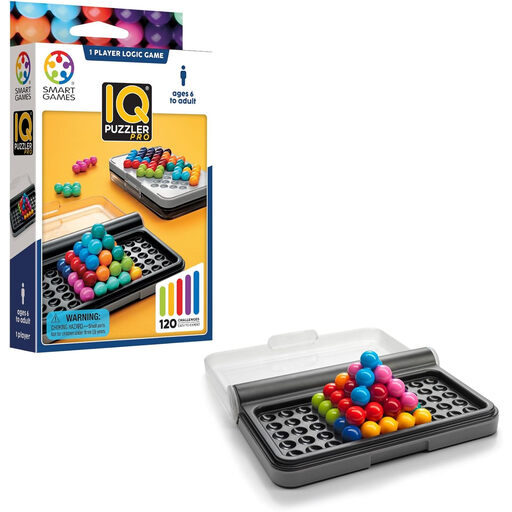
Why this product suits this profile: This single-player game is designed for children aged 6 and over and contains 120 challenges in three game modes, including 2D and 3D challenges. Its compact format fits easily into luggage or a school bag.
The specific number of challenges and the indication of “1 player” show that this is not a classic family game for several people.
120 challenges, three game variations, 13 pieces, no batteries and suitable for travelling.
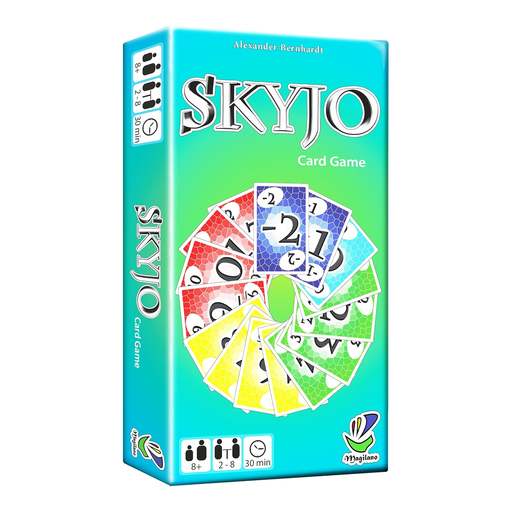
Why this product suits this profile: SKYJO is designed for 2 to 8 players aged 8 and over. The card game combines numbers, swapping and revealing cards, making it suitable for groups of different sizes.
The player count of 2 to 8 and the short set-up time make its possible uses clearer than a general description such as “for the whole family”.
2 to 8 players, from age 8, 150 cards, scorepad and multilingual instructions.
We have put together a complete, regularly updated list of products that fully meet these strict selection criteria and the safety regulations applicable in the EU.
Depending on the situation, other categories may also be suitable:
Look for an official age recommendation of 6 and over, easy-to-understand rules and a manageable playing time. Card games and simple brain games are often easier to introduce than extensive strategy games. Small pieces should be kept out of the reach of younger siblings.
A practical basic collection could include a short card game, a cooperative game, a single-player brain game and a puzzle. This provides a suitable option for different amounts of time, group sizes and ages, without relying exclusively on one type of gameplay.
Traditional board games, card games and puzzles normally require no batteries or ongoing additional costs. Electronic games or apps may be exceptions. With one-off games that use consumable materials, such as some escape-room games, you should also bear in mind that they can only be reused to a limited extent after one playthrough.