
Lieferung heute & morgen

Qualitätsgarantie

Willkommens-Angebote freischalten: KOSTENLOSE Lieferung | Bis zu 80 % RABATT | Kostenlose 30-Tage-JoyPlus-Testphase
App herunterladen
Family board games are meant to bring different age groups together around the table. In practice, though, not every family board game suits every group. A game for children aged 4 and up can quickly become too simple for older siblings, while a strategy game for families with children aged 10 and over may overwhelm younger ones.
That is why it is worth checking the age recommendation, number of players, playing time and materials before you buy. This way, you can avoid costly mistakes and find a game that fits your family’s routine, a family games night or a trip away.
The manufacturer’s age recommendation is not just decorative information. It takes into account rule comprehension, small game pieces and the concentration required, among other things. A game for ages 8 and up may be unsuitable for a six-year-old, even if they generally enjoy playing.
Also pay attention to safety warnings: many games contain small parts and are therefore not suitable for children under 3. For children between 3 and 6, an adult may be needed to help set up and explain the rules.
A game for two players is of limited use when you have six family members taking part. Conversely, a party game for 10 people can be unnecessarily bulky for a small family. So always check the “number of players” information and consider whether individual or team rounds are possible.
Short rules can still require strategic thinking, reading skills or spatial awareness. For family games that include both children and adults, a balanced difficulty level is important. For younger children, clear sequences and few rules are often more practical than complex game mechanics.
For families with children aged 3 or 4, games with large, clear components and short rounds are ideal. The game Hasbro Kristallica is designed for 2 to 4 players aged 3 and up, according to the product details. The concept involves removing ice cubes and can be explained without lengthy preparation.
From age 6, simple card, dice and reaction games become suitable. With family games for ages 6 and up, check whether children need to be able to read or whether symbols and actions are enough. For children aged 8 and over, areas such as quiz games, classic strategy games and cooperative board games open up.
A playing time of around 10 to 20 minutes works well for younger children or several short rounds. Longer games lasting 30 to 60 minutes are better suited to a planned games night. For travel, compact travel games for children that can be packed away quickly and don’t need a large playing surface are a good choice.
Examples from the selection:
Card games and board games made from cardboard need to be stored in a dry place. Plastic parts are usually easy to handle, whereas small cardboard cards can be damaged more quickly by moisture. Also check whether batteries are needed. Many classic dice games and board games work without electricity. For electronic party games, you need to consider the battery type, what’s included and whether replacements are required.
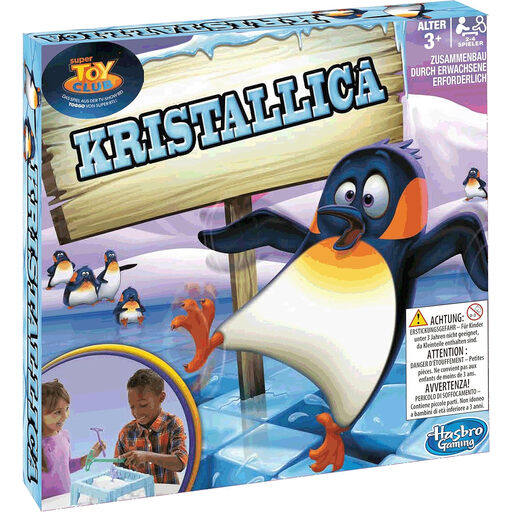
Why this product suits the profile: The game is designed for 2 to 4 players aged 3 and up, offering a simple introduction for families with younger children.
The age and player number details are clearly stated. There is no complex setup and no batteries required.
Quick to explain, 2–4 players, cardboard components and suitable for pre-school children aged 3 and up.
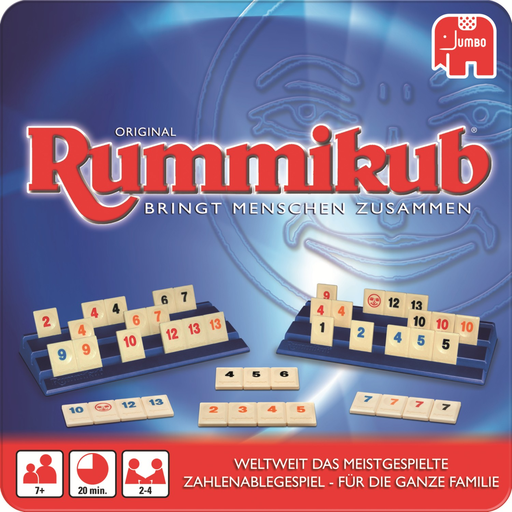
Why this product suits the profile: The number tiles and racks are made from plastic, designed for repeated play; the rules remain accessible nonetheless.
The contents are clearly listed: 106 tiles, 4 racks and a German-language instruction manual. This means you can check what’s included before buying.
2–4 players, around 20 minutes playing time, plastic components and no batteries required.
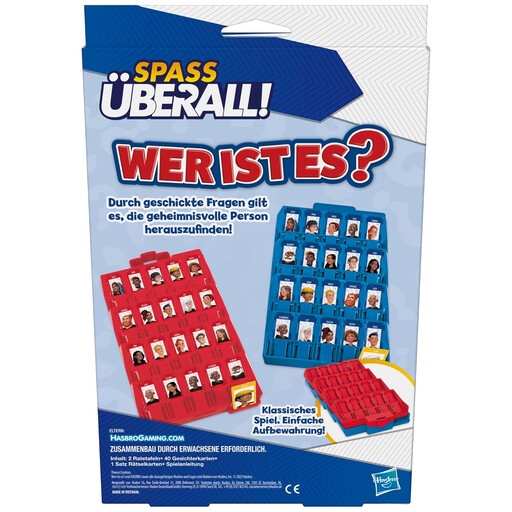
Why this product suits the profile: The compact version is ideal for train journeys, holidays and weekend trips with two players aged 6 and up.
The storage box keeps all the game pieces together and takes up less space than a large board game.
For 2 players aged 6 and up, compact design, quick setup and manual play with no batteries.
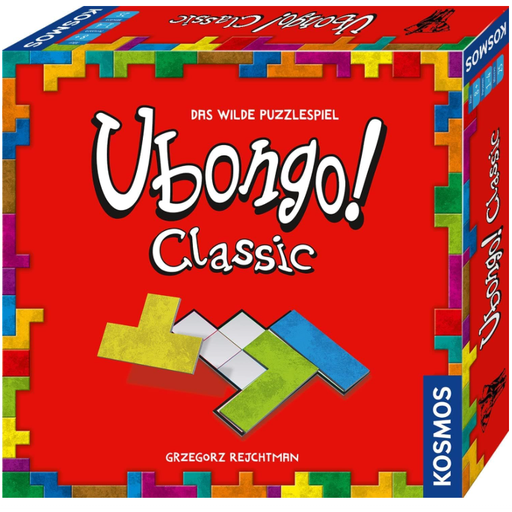
Why this product suits the profile: Simultaneously solvable puzzles and two difficulty levels make it suitable for families with different levels of gaming experience.
The age recommendation of 8 and up, the player count of 1–4 and the two difficulty levels make it easier to plan when to use it.
648 puzzles, two difficulty levels, cardboard game materials and an optional explanatory app.
We have put together a full, regularly updated list of products that fully meet these strict selection criteria and the safety regulations in force in the EU.
Games with simple rules, few steps and easy-to-grip pieces are suitable. The manufacturer, for example, recommends Ravensburger Cow & Co. for 2 to 6 players aged 4 and up. For pre-school children, adults should check the safety warnings and help explain the rules if needed.
For younger children, around 10 to 20 minutes per round is usually practical. From age 8, games lasting 30 to 60 minutes can also work well. When several age groups are taking part, games with short individual rounds or variable playing time are often easier to fit into family life.
Check the packaging size, weight, storage of the game pieces and the space needed. A compact box like Guess Who Grab And Go is suitable for two people. For larger groups, small card or dice games are often easier to transport than a full board game.